

S&P downgrades Eskom over insufficient government support


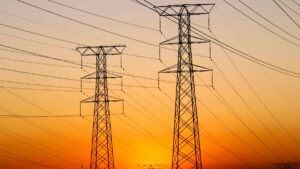
S&P Global Ratings lowered its long-term foreign and local currency issuer credit ratings on state-owned utility Eskom to ‘CCC+’ amid ongoing liquidity concerns and what it believes to be insufficient government support. The rating agency placed a negative outlook on Eskom.
“Eskom remains at risk of facing a distressed exchange situation or default in the next six months despite securing R30 billion in short-term funding from local and international funders so far this year.
“We now believe there is a lower likelihood that Eskom would receive extraordinary support from the government, reflecting our view that government support for the utility over the past few months has been insufficient given that the utility’s liquidity concerns persist,” the group said in a statement.
“We are therefore downgrading Eskom to ‘CCC+’ and ‘zaB’ from ‘B-‘ and ‘zaBB-‘,” it said.
S&P said that the negative outlook points to uncertainty regarding the extent and timeliness of government support for Eskom over the coming six months, considering the magnitude of the utility’s funding deficit and refinancing risks.
It said that, despite the near-term improvement in cash balances, Eskom has monthly debt service of R2 billion-R6 billion over the six months ending August 2018, excluding refinancing of its short-term bridge funding and recurring negative free cash flow.
The ratings agency also pointed out that a 5.2% sub-inflation tariff increase awarded by the regulator (NERSA) in fiscal year 2019 (ending March 2019), against a budgeted 10.5% increase, is likely to exacerbate negative cash flow generation and weigh on already low investor sentiment.
“We therefore anticipate pronounced pressure on Eskom’s fiscal 2019 financing plans, which include capital expenditures (capex) of around R55 billion and negative free cash flow, as well as refinancing R20 billion in bridge financing due August 31, 2018, and about R20 billion in scheduled debt maturities.
“Consequently, Eskom remains at risk of facing a distressed exchange situation or default in the next six months,” S&P said.
S&P said that while the government has taken measures to help Eskom, “we think that government support to the utility over the past few months has been insufficient”.
“Despite recent events indicating that the government would adopt a more constructive attitude toward supporting its state-owned enterprises, including statements by the President in his State of the Nation address, the support framework set forth in the budget speech on February 21, 2018, fell short of our expectations.
“In our view, the budget does not adequately address the amount and timing of financial support given Eskom’s imminent forthcoming liquidity requirements, and focused instead on previously announced planned strategic asset sale initiatives, extensions to the guarantee framework, and changes to management structure.”
Downside Scenario
“We could lower our long-term rating on Eskom by one or more notches if we consider that the likelihood of extraordinary government support has weakened further. We may conclude that the likelihood of government support has reduced if we see further weakness in the predictability and level of such support,” S&P said.
“This may be indicated by a further deterioration of Eskom’s financial position without offsetting measures taken by the government. Such a scenario could occur, for example, if we were to consider default or distressed exchange conditions were to become inevitable over a less than three months horizon while the government was not providing any additional support to the entity.
“We could also lower the long-term rating by one notch if we downgrade the sovereign, all other factors remaining unchanged,” the ratings agency said.
Upside Scenario
“We would consider revising the outlook to stable if pressure on Eskom’s liquidity eased sustainably, and the government provides additional funding to offset the company’s large negative free cash flow,” S&P said.














 Loading ...