

Pirates, hackers and Friday the 13th – here’s what is sinking ships around the world


Allianz Global Corporate & Specialty SE’s (AGCS) has released its annual safety & shipping review for 2018.
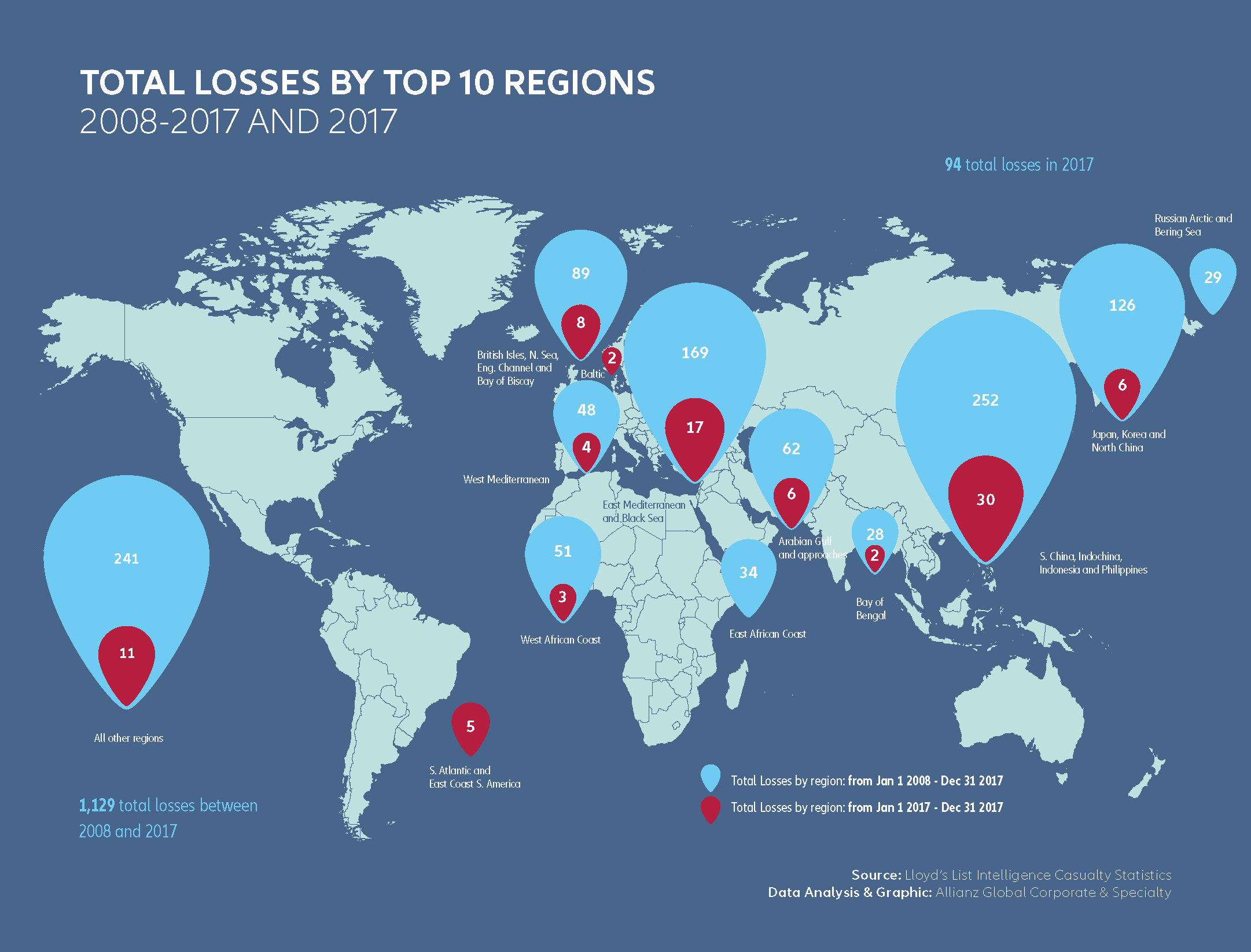
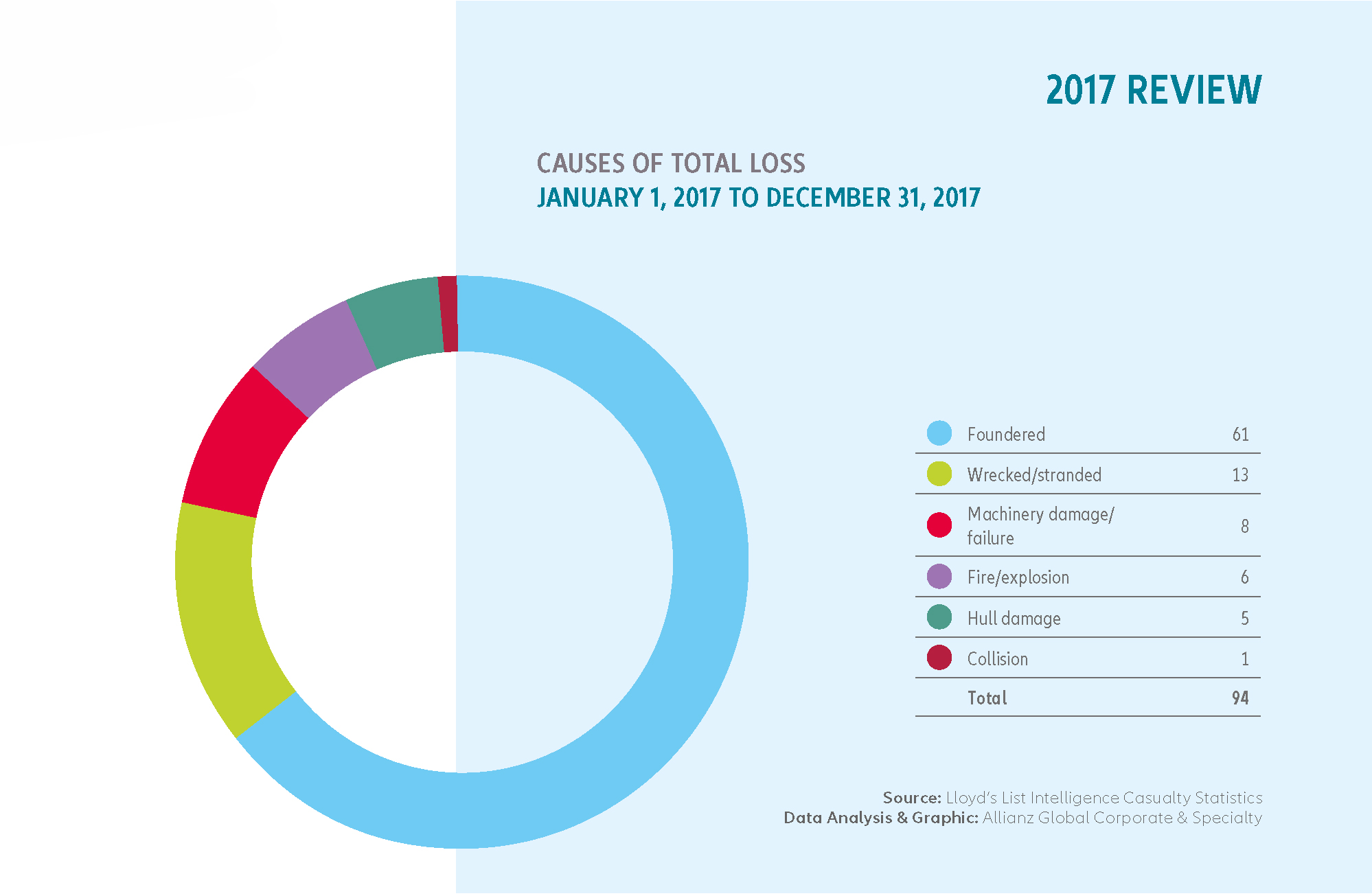
According to the review, there were a total of 94 shipping losses reported around the world in 2017, down 4% year-on-year (98) – the second lowest in 10 years after 2014.
“The decline in frequency and severity of total losses over the past year continues the positive trend of the past decade,” said Baptiste Ossena, global product leader for hull & marine liabilities at AGCS.
“Insurance claims have been relatively benign, reflecting improved ship design and the positive effects of risk management policy and safety regulation over time.”
However, he said that as new technologies are introduced to these vessels, the number of more technical claims will grow – such as cyber incidents or technological defects – in addition to traditional losses like collisions or groundings.
“There are multiple new risk exposures for the shipping sector: Ever-larger container ships – longer than the Empire State Building is high – pose fire containment and salvage issues,” he said.
“The changing climate brings new route risks, with fast-changing conditions in Arctic and North Atlantic waters posing new hazards.
“Environmental scrutiny is growing as the industry seeks to cut emissions, bringing new technical risks and the threat of machinery damage incidents at the same time. Shippers continue to grapple with balancing the benefits and risks of increasing automation on board.”
Piracy levels are down
AGCS found that piracy activity levels have declined year-on-year across Africa with 57 incidents in total during 2017, down 8% (62 incidents in 2016).
Africa accounts for 32% of piracy incidents globally (180 in total in 2017), second after South East Asia region.
The Gulf of Guinea remains the regional piracy hot spot with 36 reported incidents in 2017; accounting for 63% of African piracy incidents.
However, incidents off the coast of Somalia – which has seen dramatic safety improvements in recent years – increased year-on-year from two incidents in 2016 to nine in 2017.
“The threat of piracy remains, albeit less pronounced than in recent years,” said AGCS.
“Hijackings and the boarding of vessels continue, tied to inequality and the economic situation in parts of Africa and Asia. It behooves us all to understand that global economic and geopolitical conditions play on the security of shipping.”
Dangerous seas, Friday 13th and the unluckiest ship
Almost a third of shipping losses in 2017 (30) occurred in the South of China, Indochina, Indonesia and Philippines maritime region, up 25% annually, driven by activity in Vietnamese waters.
This area has been the major global loss hotspot for the past decade, leading some media commentators to label it the “new Bermuda Triangle”.
However the major loss factors are actually weather, said AGCS, and in November 2017 alone Typhoon Damrey caused six losses.
The analysis also showed that Friday is the most dangerous day at sea – as 175 losses of 1,129 total losses reported have occurred on this day over the past decade.
“Friday 13th really can be unlucky – three ships were lost on this day in 2012 including Costa Concordia, the largest-ever marine insurance loss,” said AGCS.
“The unluckiest ship of the past year is a passenger ferry operating in the East Mediterranean and Black Sea region – it was involved in seven accidents in 12 months.”
Human error
“Human error continues to be a major driver of incidents,” said Captain Rahul Khanna, global head of marine risk consulting at AGCS.
“Inadequate shore-side support and commercial pressures have an important role to play in maritime safety and risk exposure. Tight schedules can have a detrimental impact on safety culture and decision-making.”
Khanna said that better use of data and analytics could help, and he noted that the shipping industry produces a lot of data but could utilize it better – producing real-time findings and alerts.
“By analyzing data 24/7 we can gain new insights from crew behavior and near-misses that can identify trends. The shipping industry has learned from losses in the past but predictive analysis could be the difference between a safe voyage and a disaster,” he said.
Cyber-threats
Cyber incidents like the global NotPetya malware event have been a wake-up call for the shipping sector, said Khanna.
“As technology on board increases, so do the potential risks,” he said.
“At the same time, new European Union laws such as the Network and Information Security Directive (NIS), which requires large ports and maritime transport services to report any cyber incidents and brings financial penalties, will exacerbate the fall-out from any future failure – malicious or accidental.”
He added that legal, safety and cyber security issues are likely to limit widespread growth of crewless ships for now.
“Human error risk will still be present in decision-making algorithms and onshore monitoring bases,” he said.
“Drones and submersibles have the potential to make a significant contribution to shipping safety and risk management. Future use could include pollution assessment, cargo tank inspections, monitoring pirates and assessment of the condition of a ship’s hull in a grounding incident.”
Read: A new Insurance Act takes effect today in South Africa – here’s what you need to know

















 Loading ...