

The rand is undervalued right now – here’s where it is heading for the rest of the year: Nedbank


Global financial conditions are likely to become less supportive of the rand despite data showing the local currency is already undervalued, say economists at Nedbank.
In a research note published on Friday (27 May), the bank noted that the US Federal Reserves’ move to increase interest rates at pace will likely support the dollar, placing renewed pressure on emerging market currencies such as the rand.
“Tighter global monetary policies, high food and fuel prices, and the uncertainty of war increase the risk of policy mistakes and global recession. Recession worries would also tend to reinforce risk-off sentiment and dollar strength,” it said.
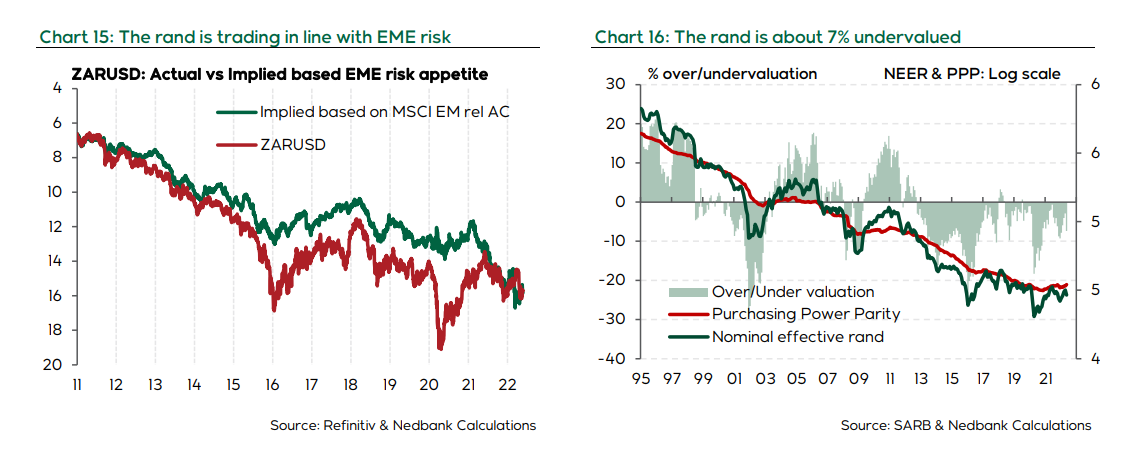
While the war-induced resurgence in commodity prices have supported the currencies of commodity exporters, the upward trend was only maintained in coal, oil, natural gas and food prices over May, the bank said.
“Apart from coal, the prices of most of South Africa’s largest commodity exports declined over the past month. We still expect South Africa’s terms of trade to weaken as the year progresses, while the disruptions to global trade, slower global demand and domestic electricity outages will weigh on export volumes.”
It added that the country’s trade and current account surpluses are forecast to narrow and gradually become less supportive of the rand.
“In contrast, the Reserve Bank is now expected to tighten monetary policy more aggressively. Rising domestic interest rates and relatively deep and liquid financial markets should sustain some foreign capital inflows, helping to prevent dramatic rand weakness.
“Despite the supporting factors, unsupportive global conditions are expected to result in a moderately weaker rand during the remainder of this year.”
Nedbank’s forecasts show that the rand could reach R16.18/dollar in Q3 2022 before moderating to around the R16/dollar level at the end of the year.

Some good news – but investors are still taking their money out
Despite this undervaluation, there has been some good news on the fiscal side for the country, Nedbank said.
“S&P Global left South Africa’s sovereign risk rating unchanged at below investment grade but upgraded the rating outlook to positive. The improved outlook reflects the progress made towards fiscal consolidation over the past year, evidence of expenditure restraint and some progress on structural reforms and the reduction in the country’s external vulnerability to global shocks, such as the anticipated tightening in global financial conditions.”
However, S&P Global stressed that there were upside risks to the fiscal outlook, including the threat of higher-than-budgeted increases in the public sector wage bill, the possible extension of the Social Relief of Distress grant and potentially further bailouts for troubled SOEs.
The agency also noted that growth prospects remained muted, undermined by the country’s electricity shortage and other structural constraints.
“While encouraging, the road to fiscal sustainability is challenging,” Nedbank said. “Continued expenditure restraint will be required over the next three to five years even as unemployment remains high and economic growth muddles along at a gradual pace.
“Given the many uncertainties attached to the fiscal outlook, a rating upgrade is unlikely over the next two years.”
However, the bank noted that fiscal policy developments have not harmed the rand over the past year, repeatedly surprising on the upside and propping up investor sentiment towards South Africa relative to other emerging markets.
“However, it has not stopped foreigners’ gradual but persistent withdrawal from the domestic bond market. The Reserve Bank notes in its latest Financial Stability Report that the reduction in foreign holdings of domestic bonds has significantly reduced liquidity levels in the market.
“The government still needs to prove that it can return the country’s finances to a sustainable path and reduce the debt burden to more manageable levels. Until then, fiscal risks will remain elevated, although not necessarily a significant driver of the rand’s future path.”
Read: How much money you need to be middle-class in South Africa


















 Loading ...