

Nasty petrol price blow to South Africa


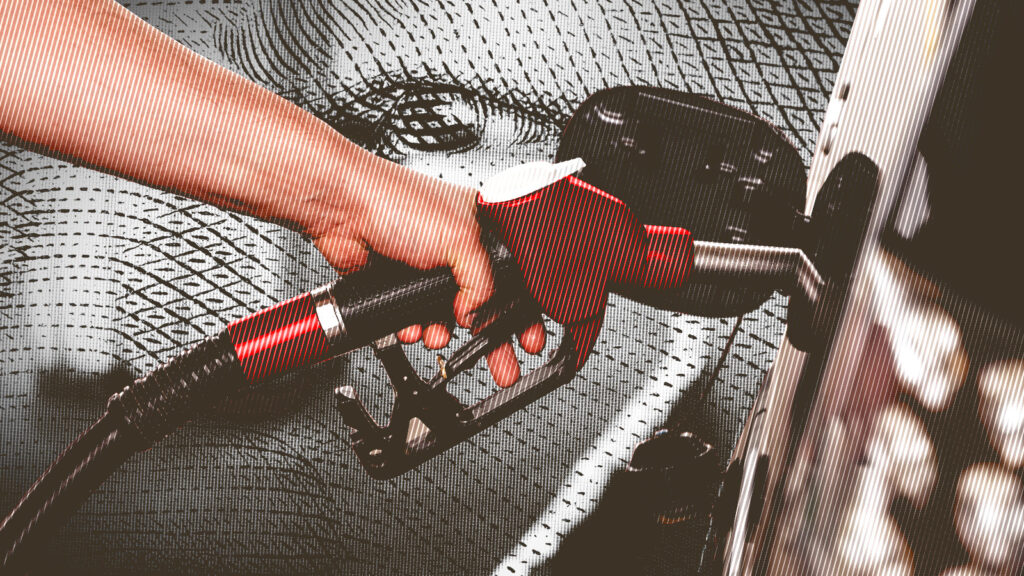
The sharp increases in fuel prices in May 2026 have led to a worse-than-expected spike in producer costs, sending producer price inflation (PPI) to 7.8%.
According to the latest data from Stats SA, PPI jumped from 4.8% in April to 7.8% in May, exceeding economists’ forecasts of 6.4% to 6.7%.
The largest contributor to the rise was a sharp increase in fuel costs, where producers and consumers saw prices rise to record levels.
May saw petrol prices increase by R3.27 per litre, taking prices to R26.63 per litre at the pumps (Petrol 95). Diesel was hiked by R5.27 per litre that month, with wholesale prices at R31.88 per litre.
The rise in fuel prices was caused by the blockage of the Strait of Hormuz, which kept global oil prices higher.
This lifted diesel and petrol prices by 21.9% month-on-month and 16.6% month-on-month, respectively.
As a result, the year-on-year increase in petrol prices surged from 8.6% to 28.1%, and that for diesel from
33.8% to 66.7%.
According to economists at Nedbank, the ‘other’ and ‘chemical products and rubber’ categories also exerted upward pressure.
“Consequently, inflation in coke and petroleum products accelerated further from 20.9% to 40.3%,” the finance group said.
Nedbank said that PPI is likely to remain elevated in June before moderating in the second half of the year.
Upward pressure in June will still be driven primarily by the increase in fuel prices at the start of the month, reflecting previously high global oil prices amid the closure of the Strait of Hormuz.
While petrol prices were at an over-recovery at the end of May, the National Treasury’s phased implementation of the fuel levy took effect, leading to another hike in June.
Petrol prices saw another increase of R1.43 per litre in June, taking pump prices to a record high of R28.06 per litre.
Diesel, meanwhile, saw some welcome relief with wholesale prices dropping by R2.62 per litre—although prices still sit far higher than June 2025.
On a year-on-year basis, diesel and petrol prices are projected to be 31% and 70% higher, respectively in June, pushing headline PPI to its peak, Nedbank said.
“Thereafter, inflation is expected to decline as the lower oil prices filter through to production costs.”
Feeding into this projection, even with the fuel levy relief being fully terminated in July, both diesel and petrol prices are lining up for a cut.
Current recoveries point to cuts of around R1.50 per litre for petrol (reduced from R3 per litre due to the fuel levy), and R3 per litre for diesel (reduced from R5 per litre due to the fuel levy).
Outlook is brighter

There is also more positivity surrounding global oil prices.
Recent geopolitical developments have been supportive, with the United States and Iran agreeing to extend their cease-fire and reopen the Strait of Hormuz while negotiating a deal to end the war.
In response, oil prices have fallen sharply, dropping to near pre-war levels, trading at $72.54 per barrel on Thursday.
“Moreover, food inflation is also likely to be kept in check by declining global food prices, robust domestic agricultural output, and the gradual normalisation of meat prices as the effects of foot-and-mouth disease subside,” Nedbank said.
However, administered prices will remain a persistent source of inflationary pressure beyond food and fuel.
The new financial year for municipalities kicks in from 1 July, which will see an escalation in electricity, water and other rates and taxes take effect.
This is expected to have an inflationary impact on both consumers and producers.
Nevertheless, Nedbank said the overall inflation outlook has improved materially, and it now expects PPI to decline gradually over the second half of the year.
“This outlook remains highly dependent on a sustained de-escalation in the Middle East and, critically, on the conditions under which the Strait of Hormuz is reopened, which remain uncertain,” it said.









 Loading ...