

Businesses slam Ramokgopa’s rushed Eskom plan


Plans to tackle the energy crisis are already well established – but implementation falls short due to the government being short-tempered with plans, says Busi Mavuso, the CEO of Business Leadership South Africa (BLSA).
BLSA represents business interests in South Africa as an organisation that works in collaboration with the government as a representative of the private sector.
Writing in her weekly newsletter, Mavuso said the National Energy Crisis Committee (NECOM), set up underneath President Cyril Ramaphosa, has put together skilled people and a plan that has the best chance of resolving the crisis fastest.
“Business has backed that plan, going so far as to raise R100 million to pay for the technical skills needed for its implementation,” she said.
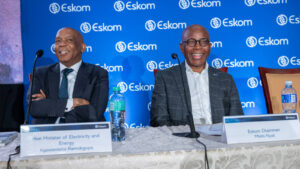
Mavuso said that business heavyweights had welcomed the new electricity minister Kgosientsho Ramokgopa and his promise not to be a creator of the new policy but an implementer of the existing NECOM plan.
However, BLSA said it was now disconcerting to see a major deviation from these plans when Ramokqopa proposed to the cabinet last week to focus on bringing ageing coal-fired power plants back up and running and delay the decommissioning of stations to boost short-term energy generation.
This proposal stands in stark contrast to the original energy plan outlined by NECOM and President Cyril Ramaphosa’s Just Energy Transition, which both have seen substantial amounts of investment.
“When a plan is agreed upon, it aligns many stakeholders. When it is then deviated from, it inevitably creates misalignment and a loss of trust,” said Mavuso.
“It was disconcerting to see last week a major deviation from that plan being proposed to the cabinet. It was rejected, with the instruction that it should first be considered by NECOM. But why did the new minister contemplate the proposal which envisaged a major new investment in coal and extending the life of coal-powered stations? Such plans must be considered carefully.”
“They require huge amounts of investment, can only affect electricity availability several years ahead of us, and may well face operating costs that are higher than the costs of alternative sources of new electricity,” the CEO added.
NECOM does envisage bringing some of Eskom’s units back into operation and introducing Kusile Unit 5; however, efficient management is key.
Mavuso said that the most value from coal power stations must be extracted. However, it must be done so considering costs and through the Integrated Resource Plan (IRP).
“The IRP is the single document that sets out a course for the future of electricity supply. It carefully assesses the different options and charts a course that delivers reliable energy at the least cost,” Mavuso said.
“The last one was published in 2019 and is outdated. It should be a document that is revisited every year. The NECOM plan envisages that, (despite) its deadline of a new IRP last month being missed,” said the CEO.
She said that the country should base its plans on evidence, not self-interest, for all social partners to focus on delivery. Businesses have shown commitment to the NECOM plan by dedicating resources, she added.
“Of course, we should improve the performance of parts of Eskom’s coal-powered fleet, but in some cases, the necessary interventions will be more expensive than the alternatives,” Mavuso said.
Read: Eskom eases load shedding for the week ahead – here is the schedule















 Loading ...