

Say goodbye to prime interest rates in South Africa


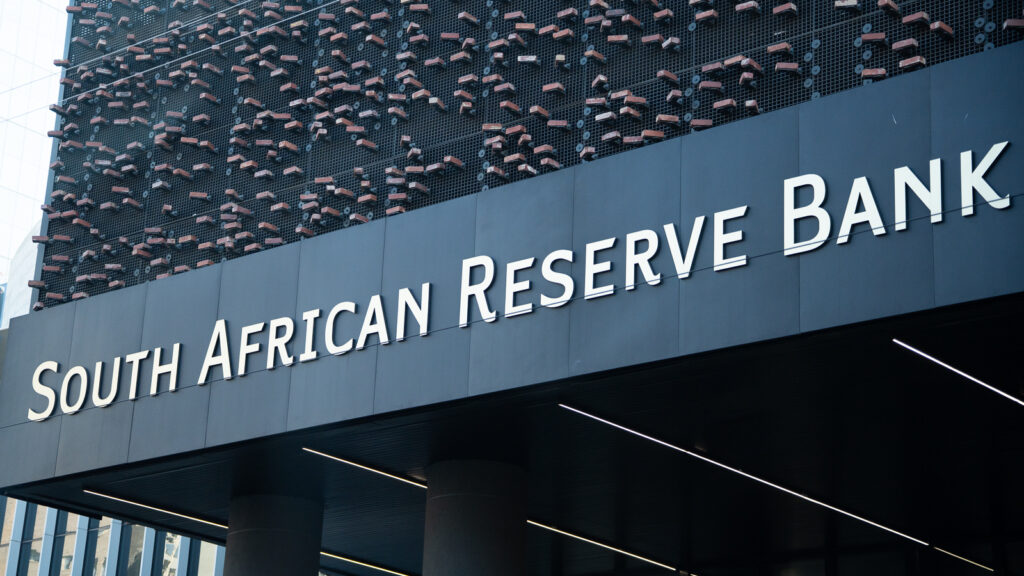
The South African Reserve Bank (SARB) plans to stop using the prime interest rate, instead using its own repo rate to price consumer loans.
The repo rate is the rate at which commercial banks and the SARB trade. The repo rate is set by the SARB’s monetary policy committee (MPC) and currently stands at 7.0%.
However, when consumers apply for credit from banks, quotes are based on the prime interest rate, which is 3.5 percentage points above the repo rate.
The SARB has proposed a new system in which rates are quoted according to the repo rate when banks deal with customers, ensuring greater transparency between banks and consumers.
In practice, this would see a credit product quoted at prime becoming repo plus 3.5. This would accurately reflect the margin banks earn on their products.
Speaking to the media, Deputy Governor Rashad Cassim said that the central bank will eliminate prime interest rates in the near future.
While no timelines on the process have been given, Cassim said that further details will likely be announced in 2027.
The central bank is engaging with commercial banks, some of whom have expressed concern over legacy contracts priced with prime in mind.
Big change coming this year

While the shift away from prime may take another year, Cassim stated that the central bank is set to switch from JIBAR to ZARONIA later this year.
South African consumers do not often engage with JIBAR (the Johannesburg Interbank Average Rate) and ZARONIA (South African Rand Overnight Index Average).
JIBAR and ZARONIA are rates at which financial organisations, mainly banks, lend to one another.
SA Home Loans was a rare example of a company that used JIBAR to price its products for retail customers, but has stated that it will switch to the standard prime rate for now.
Although not common among retail banking customers, the shift from JIBAR to ZARONIA markets represents a significant change in financial markets.
JIBAR was based on survey estimates and was subject to manipulation. ZARONIA, on the other hand, is anchored on actual market transactions.
ZARONIA is the volume-weighted mean of interest rates paid on eligible unsecured overnight call deposits and rounded off to three decimal places.
ZARONIA is seen as the more reliable, transparent, and risk-free reference rate (RFR), which is why it has been adopted.
The shift to ZARONIA also comes amid international benchmark reform programmes that have already been completed in several markets.
The shift to ZARONIA is nearing its conclusion with the JIBAR trading ceasing in May 2026, and full cessation is mandated by December.
Cassim said that there have been some teething issues. One hurdle is that international markets do not have to abide by ZARONIA.
The SARB is thus engaging with international players to get the system working. Back home, South African companies are setting contracts that factor in the changes.
Cassim said that the switch to ZARONIA and the legislative processes supported by the Cabinet have made it easier for the SARB to set new interest-rate norms, such as removing the prime rate.


















 Loading ...