

Big win for Joburg’s R48 billion problem


A new court ruling has boosted the City of Johannesburg’s (COJ’s) fight against illegal connections to the grid.
The Gauteng High Court has ruled that the city cannot be compelled to supply electricity to a large residential building in Hillbrow, which for years had benefited from an illegal connection to the grid since 2012.
“This court should not compel the respondents [COJ, City Power] to sell electricity to someone who has effectively stolen it from them in the past. The court should not encourage a breakdown in the rule of law, which it, in my view, would be doing if it were to overlook the conduct of the applicant and compel the respondents to provide electricity to it.”
Over the last few years, the property had sought court orders to prevent the city from cutting off the power, despite the city claiming that the property owed R2.9 million in payments.
The properties record showed that the building only paid R1,948 for electricity for the entire block of flats, meaning that the average tenant only paid R14.74 according to the respondents’ records and R15.01 according to the applicant’s records.
“On either version, the amount of electricity consumed by the occupants of the building is wholly unrealistic. This evidence demonstrates that the respondents’ claim that an illegal connection was discovered at the property is certainly not far-fetched or unrealistic,” the judgement said.
The court agreed that the electricity meter had been tampered with based on the figures above, and the applicant’s urgent application was dismissed with costs.
The judgment also found that “interim interdicts are capable of being, have been, and continue to be abused by the party that succeeds in securing or resisting one.”
The city said that it was pleased with the judgement as several defaulters have approached the court to stop the city from cutting off its services. When the interdict is awarded, defaults would often prolong them and not pay the city at all until the matter is fixed.
The city’s debtor’s book currently sits close to R48 billion for rates and taxes, sewers, electricity, and water, which it said is unsustainable. The situation has become so dire that the city’s rate collectors have joined the JMPD at roadblocks to find those who owe on their rates.
Joburg crisis
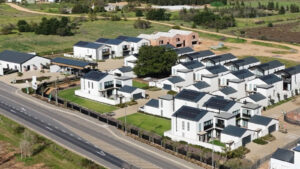
Johannesburg is also facing a crisis as many property investors are leaving the city due to political instability, crumbling infrastructure, and high municipal rates, with many going to the Western Cape.
“As a property investor, you follow the demand trend, which is set to continue in the Western Cape. People are searching for quality of life, and here you get higher salaries, more quality time, better scenery, a safer environment, good schools and good hospitals,” said property investor Heather Woodgate.
In addition, Johannesburg’s rates also increased by 2% while Cape Town’s dropped by 1.1%.
However, the Organisation Undoing Tax Abuse (Outa) noted that property rates increase is far worse in the context of the city’s latest General Valuation Roll – with some property values increasing by as much as 70%.
“These increases will become around one-fifth (20%) of a ratepayer’s monthly expense, just going to city rates and tariff charges,” said Outa Executive Head of Social Innovation, Julius Kleynhans.
Read: 2 new business laws for South Africa open for public comment















 Loading ...