

Ramaphosa hammers a nail in the coffin for Eskom’s monopoly in South Africa


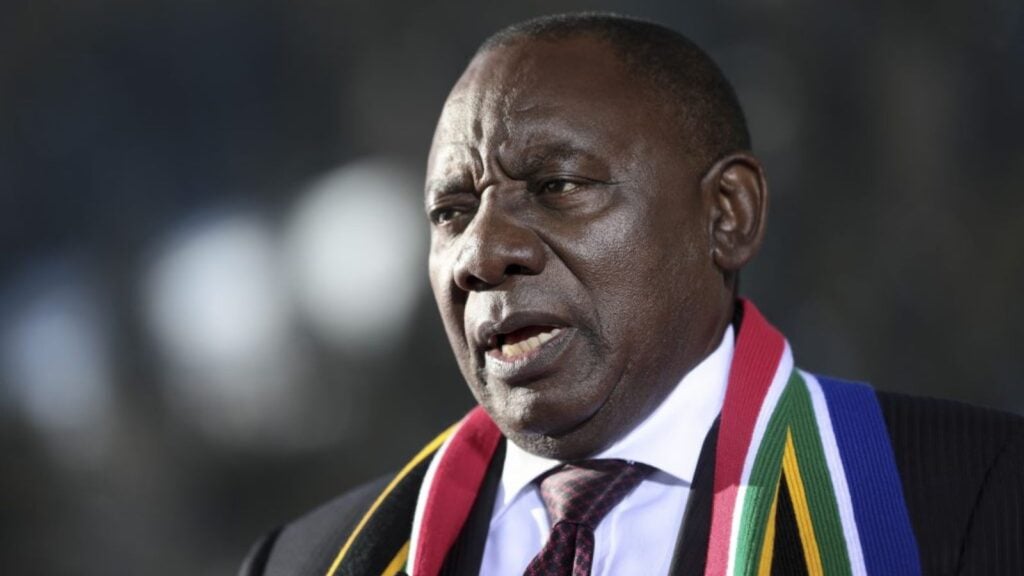
President Cyril Ramaphosa has endorsed the first phase report from the Eskom Restructuring Task Team (ERTT), which reinforces the plan to make South Africa’s transmission network fully independent of Eskom.
The report follows months of delays, as the ERTT missed submission deadlines on both 30 May and 30 June.
South Africa has been slowly moving toward implementing a 2019 plan to split Eskom into three stand-alone units to create a more competitive electricity market and make it easier to manage the divisions and their debt.
Under the plan, Eskom’s transmission unit is spun off as the National Transmission Company of South Africa (NTCSA).
However, Ramaphosa has made it clear that a new independent transmission company (TSO) will be established, separate from Eskom’s NTCSA.
To ensure no conflict in having Eskom owning and controlling the transmission network, Ramaphosa said the plan is to transfer these national assets to the TSO.
However, in a statement in December, Eskom announced that Electricity Minister Kgosientsho Ramokgopa had approved a “revised unbundling strategy”.
This revised plan would still split Eskom into its three parts, but the state utility would retain ownership of the grid, rather than transferring it to an independent transmission system operator.
This directly contradicted Ramaphosa’s plans and the country’s adopted policies.
Eskom and Ramokgopa argued that they had obligations to the group’s bondholders and that losing the transmission systems could have negative financial implications.
After widespread backlash for business leaders and industry players, Ramaphosa made it clear in his 2026 State of the Nation Address that the independent transmission company would have “ownership and control of transmission assets and be responsible for operating the electricity market.”
Following this, Ramaphosa established the ERTT to develop a detailed plan to establish the independent electricity transmission company and ensure this happened.
The team was also tasked with considering the optimal model for the company and the measures needed to ensure adequate independence from Eskom.
Crucially, the team’s proposal would have to balance the need to ensure that the transmission company could operate independently without causing financial harm to Eskom.
Eskom’s monopoly will disappear

Phase one of the ERTT’s report was delivered to Ramaphosa this month, paving the way for the unbundling of Eskom’s monopoly on the national grid.
“This report shows how government can ensure that the architecture of the electricity sector can change as the sector continues to evolve, creating the foundation for South Africa’s growth,” Ramaphosa said.
The presidency said the report was a key step towards creating competition and unlocking investment in South Africa’s energy sector.
“The report reflects a clear and unified vision across government to establish an independent Transmission System Operator (TSO) which will be separated from Eskom,” it said.
It said that the TSO would be a key part of creating a successful wholesale electricity market in South Africa, and would support economic growth.
The report included the following:
- An analysis showing that the restructuring is feasible, in line with international best practice and can be done in a manner that does not compromise Eskom’s financial sustainability.
- Highlighted that the growth in municipal arrear debt to Eskom would need to be addressed because of the threat to Eskom and the broader electricity sector.
- Identified several actions that can be taken immediately to enable the restructuring.
The ERTT proposed that a working group develop a consolidated action plan to address the growth in municipal arrears and reduce them.
It also proposed initiatives such as stronger credit controls, the introduction of smart meters, and the continued deployment of the municipal debt relief programme.
It said that some measures could be implemented immediately, such as strengthening the independence of the National Transmission Company of South Africa (NTCSA).
It said that the first steps should be taken towards unbundling municipal tariffs and clarifying how payments will be made in the restructured energy market.
Ultimately, the report stated that there would be a clear separation between the NTCSA and Eskom, with the NTCSA receiving full autonomy.
Critically, the presidency said there will be a clear delegation of authority from Eskom to the NTCSA for all decision-making related to the market, and the financial and operational ring-fencing of the NTCSA from Eskom.
“Decisions on access to the transmission network are to be relocated to the NTCSA and eventually to the TSO,” it said.
This includes cases in which connections are at the distribution level but have implications for the market or transmission network.
“Eskom Distribution will retain a Grid Access Unit to manage connections to its distribution network where projects connect at this level,” it said.
The report said that steps towards this autonomy can begin immediately, while the ERTT completes phase two.
Phase two of the ERTT’s report is set to start immediately and will be the final part of its proposal on the formation of a TSO.
This next phase is set to take approximately three months, meaning the full report will be completed by 31 October, 2026.















 Loading ...