

Cape wine cellar moves off-grid with R14 million solar plant


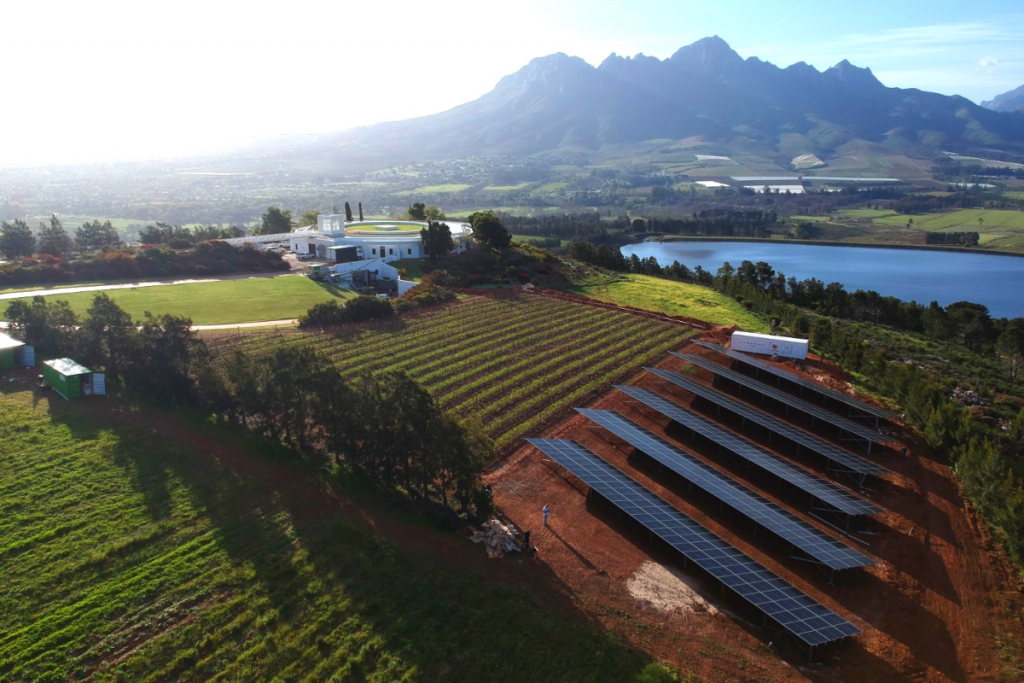
The luxury Vergelegen wine estate in Somerset West has taken its hilltop winery off-grid, with a R13.7 million solar and battery backup project to shed its reliance on Eskom and escape persistent load shedding in the country.
The group installed six solar tables, comprising 500 panels and covering 1,400 square metres to take the winery off-grid. The hilltop winery is the facility where the estate’s wine is made and aged.
To ensure operations can continue even when the sun is not shining, the estate also installed three inverters and a one-megawatt battery backup.
“The difference in carbon emissions will be determined over time, but the entire electricity bill for the cellar will be saved as the cellar will run 100% off the solar plant,” said Vergelegen environmental project manager Eben Olderwagen.
“There will also be the diesel cost saving and no emissions from the generator during load shedding.”
Having the winery go off-grid will also pass savings on to the rest of the estate, which remains grid-tied.
“The energy not used by the cellar will be pushed into the grid and be credited to the rest of the site’s account, resulting in money saving on electricity bills for the entire estate,” it said.

Solar boom
Vergelegen is not the first or the only wine estate to move towards solar. The estate is just the latest in the growing boom of solar users hitting South Africa amid record levels of blackouts.
Historical wine estate, Vrede en Lust, became one of the first farms in South Africa to invest in solar power to shift away from Eskom back in 2012, where it installed over 1,000 panels to escape rising electricity prices.
The project turned cash-positive after four years.
According to consultancy PwC, South Africa is experiencing rapid growth in solar installations, with over 4,400 MW of rooftop solar installed in the country outside of the government-procured solar.
This is expected to increase by 420% by 2030.
PwC said the strong increase in the number of jobs created over the past 12 months reflects a growing resilience of private companies against the negative impacts of load-shedding.
The import of solar panels also hit a new record, with R8.4 billion worth of panels being imported in the second quarter of 2023, over double the amount imported in the year’s first quarter.
The value of imports in the first half of 2023 is more than the entire value imported in 2022, which was R5.6 billion.
R12 billion worth of solar panels have been imported by South Africans so far in 2023, adding 2,200 MW of capacity to the grid.
Read: Another major problem for rooftop solar in South Africa
















 Loading ...