

South Africa’s richest city crumbling in front of everyone’s eyes


South Africa’s richest city, Johannesburg, is facing a series of challenges, with severe infrastructure problems, weak governance and rampant crime plaguing residents.
Johannesburg remains the nation’s financial hub, with several of the largest companies headquartered in the city.
The Johannesburg CBD was once the city’s business centre, with Standard Bank, Anglo America, the JSE, and many other corporations operating there.
However, governance failures during the final years of apartheid and the shift to democracy saw the CBD become increasingly unsafe, with many buildings entering into a state of disrepair.
Many companies moved their offices to the northern areas around Sandton, Rosebank and Midrand, with only satellite offices remaining in the CBD.
The CBD has now become a prime example of the poor condition of Joburg, which, despite being the wealthiest city on the continent, has seen several infrastructure failures.
The DA, the official opposition in the city, went on a walkabout of the CBD to understand the continued governance failures.
The party evaluated infrastructure damage around the once-renowned Bree Street, Small Street, and the Carlton Centre.
“Many businesses we visited are heavily secured with reinforced burglar bars and solid metal doors,” said DA Gauteng Leader Solly Msimanga.
“One electronics store had installed double burglar bars inside and outside after suffering four armed robberies.”
Other stores in Small Street and the Carlton Centre also use private security to protect their patrons, as they are victims of daily robberies.
On top of the crime challenges, the party highlighted that many businesses are struggling amid constant electricity outages, forcing them to spend thousands on fuel for generators.
Some owners are also being extorted by individuals demanding rent payments. There also appears to be a lack of bylaw enforcement, with some vendors operating in prohibited areas without consequence.
Msimanga also noted that the parties’ inspection of Bree Street confirmed what they had already suspected after the street was destroyed in an explosion two years ago.
“There is nothing tangible to show for the over R200 million reportedly spent on its rehabilitation. At this rate, it is impossible to believe that the August 2025 deadline will be met,” said Msimanga.
Police officers in the city centre reported extreme challenges, including unreliable vehicles breaking down while responding to incidents.
Not just the CBD

Although the CBD’s dire state is clear to see, other areas in the city have also not been spared from governance failures.
For instance, Rise Mzansi, a member of the Gauteng Executive, visited Africa’s richest square mile, Sandton, earlier this month to highlight the governance problems.
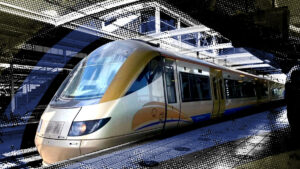
The party visited a massive sinkhole in Pretoria Road, Sandton, near the headquarters of Sasol and Discovery, as well as the Gautrain station.
The sinkhole caused the road to be closed in 2024 and has remained unfixed since then. Rise Mzansi said that two vehicles have since fallen into the hole.
Locals told the party that they were also concerned that disconnected streetlights could cause an increase in crime, resulting in a less safe environment for all.
Although Johannesburg Water and the Johannesburg Roads Agency apologised for the state of the road, Rise Mzansi said it does not absolve the city of its responsibility to maintain critical infrastructure.
State of Joburg









 Loading ...