

Calm before the storm for businesses in South Africa


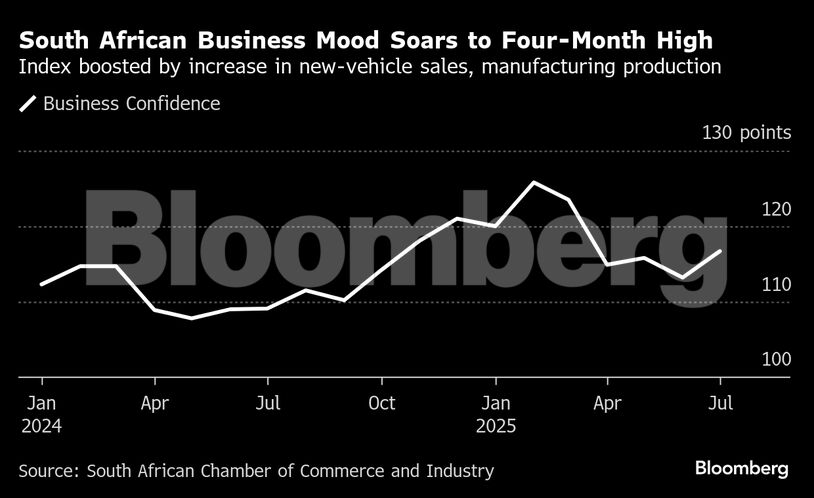
South African business confidence climbed to a four-month high, signaling a better operating climate, although uncertainty from US President Donald Trump‘s tariffs threatens to reverse the gains.
A measure of sentiment compiled by the South African Chamber of Commerce and Industry rose to 116.7 in July from 113.2 in the previous month.
The index averaged 118.6 in the first six months of the year, 7.7 points higher than a year earlier, Sacci said in a statement on Wednesday.
The improved reading was because of an increase in new-vehicle sales that boosted manufacturing output, as well as lower inflation and rising global prices for precious metals that the nation produces, the chamber said.
While domestic business confidence has stabilized, uncertainty stemming from US tariffs may hamper sentiment, it said.
The US imposition of a 30% tariff on goods from the country “could have unintended and austere consequences for the South African economy and for longer-term business relations,” Sacci said.
“Given South Africa’s open economy, with 32% of output being exported, it remains obligatory that all global economic and business relationships be fostered.”
Trump applied varying duties on trading partners on 7 August, with South Africa’s the highest in the sub-Saharan region after the two nations failed to agree to a bilateral trade deal.
The levies are a threat to South Africa’s automotive and agriculture sectors and to gross domestic product in the continent’s most industrialized economy.
As many as 30,000 jobs are at risk, according to the trade department.
Sacci noted that economic growth could improve if trade negotiations lead to a predictable tariff framework.
“Negotiations should support business and investor confidence, predictability, and sustainability prior to other considerations,” it said.
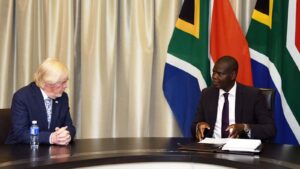
South African Trade Minister Parks Tau on Tuesday said the country’s negotiation team was ready to submit a revised offer to the US in the hope that Washington will reduce the 30% tariff.













 Loading ...