

The new crime tactic taking South Africa by storm


Deepfakes and AI-driven fraud are taking South Africa by storm, and regulators need to step in to renew trust in the country’s digital environment.
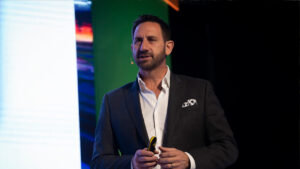
This is the warning from Amritha Reddy, Senior Director of Fraud Product Management at TransUnion Africa, who has sounded the alarm over this dangerous new crime tactic.
Incidents of deepfakes and AI-driven fraud are exploding. In South Africa, cases linked to deep fake manipulation have surged by 1,200% in just a year.
According to Reddy, deepfakes are synthetic media—videos, images, or audio—created with artificial intelligence to impersonate someone convincingly.
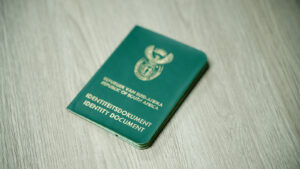
“A deepfake is a synthetic media using AI to realistically impersonate someone. Often used in fraud, misinformation, or identity theft, these include fake videos of public figures, cloned voices used in scams, or altered biometric data,” she explained.
She noted that South Africa’s high digital penetration is fueling the rise. “We’re a very digitally orientated country, with internet penetration at about 79%, over 50 million users, and 124 million mobile connections. That gives rise to exploitation,” said Reddy.
“Social media is also thriving, with about 27 million users. It’s the access, the availability, and the modern times that are allowing this type of threat to be so amplified.”
The sectors most affected by deepfake crime are wide-ranging. “The hardest hitting environments have been the fintech industry and banking, largely because of modern platforms,” Reddy said.
“Insurance has been targeted through altered claim videos and fake medical records. Retailers have seen fake storefront scams, and the media and government are hit with voice impersonation and political disinformation.”
She described this as a “trust crisis” for South Africa. “This is more than a tech challenge, it’s a trust crisis for business, for government, and for consumers,” she said.
While deepfakes are exploding locally, she stressed the problem is global. Globally, deepfake-related fraud increased 7%, and these are similar trends we’re seeing worldwide.
Regulators need to step in

Reddy explained that businesses need stronger defences to combat the threat.
“For businesses, it comes down to the right technology—detecting real from synthetic, real-time anomaly detection, biometric authentication, and liveness detection to verify faces and voices,” Reddy said.
“We then double that with device fingerprinting, behavioural analytics, and consortium data sharing across banks, fintechs, telecoms, and government.”
Some worry that fraud prevention tools may inconvenience customers, but Reddy added that consumers actually want more security.
“From one of our consumer pulse stats, 88% of South Africans indicated that they would prefer security in these platforms more than pricing and quality of products,” she noted. “They don’t really mind the inconvenience. What they do mind is how their personal information is trusted, used, and protected.”
Reddy argued that the fight against AI-driven crime requires fighting fire with fire. “AI is great because it allows businesses to scale, but the shadow side of AI is what we’re experiencing now,” she said.
“So it’s about having strong defences, smart strategies from businesses, awareness and training, and digital literacy. Our youth are digitally savvy, but very naïve, and therefore can be exploited. Digital literacy is an important part of the defence.”
Regulators also have a role to play. “There should be laws against individuals abusing deepfake technology, and when found, the book of the law should be thrown at them with the hardest outcome,” she said.
“We also need to modernise compliance rules and frameworks so that AI is embedded into regulation, because currently there’s a gap.”
She warned that the gap must be closed quickly. “Deepfakes are soon, if not already, becoming impossible to distinguish from reality, and it’s going to make building a digital world that people trust more and more difficult,” Reddy cautioned.
“We need cross-sector and cross-country collaboration, fraud intelligence sharing, and continuous engagement. These threats are often cross-border but impact South Africans directly,” she added.
“So it’s about turning insights into action and building a holistic framework that combats fraud across people, processes, systems, businesses, and society.”
















 Loading ...