

Taiwan hits pause on South African restrictions


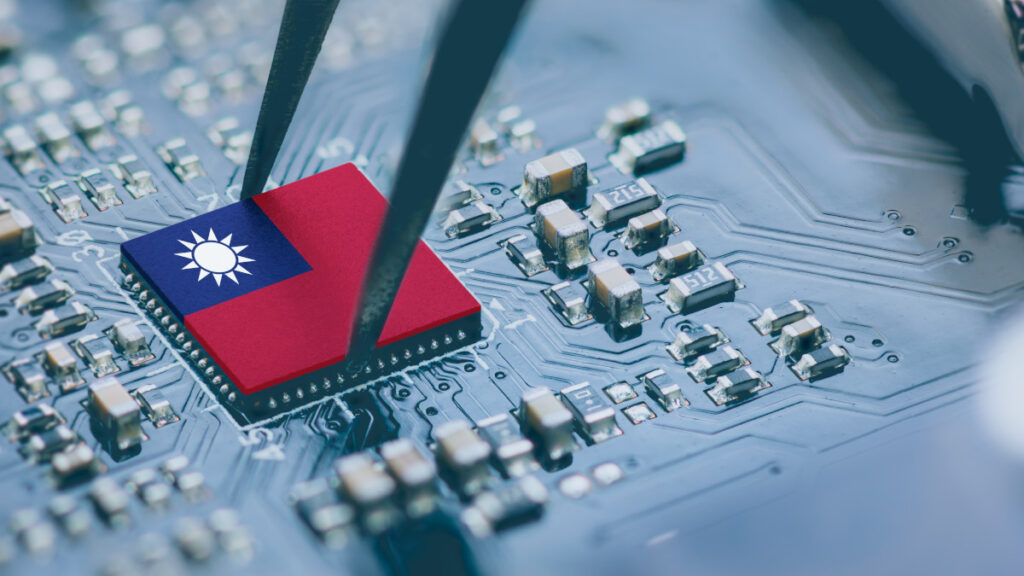
Taiwan is holding off on chip export controls it placed on South Africa just two days ago — a sign it is uncomfortable with using the key tech export as a weapon in diplomatic disputes.
The Economic Ministry said in a statement sent to reporters via Line on Thursday that after discussion with the Foreign Ministry it had “decided to suspend the release of this announcement.”
Taiwan’s Foreign Ministry later said in a statement that the move was linked to South Africa asking for negotiations on its demand that Taiwan move its de facto embassy.
On Tuesday, Taipei for the first time unilaterally imposed semiconductor export controls on a country, limiting shipments to South Africa for actions that “undermined our national and public security.”
That marked the latest twist in a long-running spat over the nation’s efforts to weaken ties with Taiwan — a key demand of Beijing from its formal partners.
The chip curbs appeared to be part of a strategy to increasingly use economic and trade policy for diplomatic goals, and similar measures could be imposed on other unfriendly nations, Bloomberg News reported previously.
However, officials in Taipei seem to have had second thoughts about the approach, possibly over the impact on companies like Taiwan Semiconductor Manufacturing Co., whose advanced chips are central to the AI revolution.
China is one of the markets most exposed to any attempts by Taiwan to tighten chip controls. It had lashed out at the curbs on South Africa, with a spokesman for the Chinese Foreign Ministry saying that Taipei “deliberately destabilized global” supply chains.
The export restrictions were in a 60-day notice period and would have taken effect in late November.
The curbs would have been somewhat symbolic given official data from Taiwan show that last year it exported to South Africa roughly $4 million worth of the goods included on the export suspension list.
Taiwan’s spat with South Africa, which cut official ties with self-ruled archipelago nearly three decades ago, centers around Taipei’s de facto embassy in the country.
Taiwan said South Africa began pressuring it to relocate its office from the capital Pretoria to Johannesburg in 2023, shortly after hosting a BRICS summit attended by Chinese leader Xi Jinping.
In recent months, South Africa has been intensifying its request as it prepares to hold the Group of 20 leaders’ meeting in November, which Xi is expected to attend.
The decision to hold off on chip export controls on South Africa marks a reversal for Taiwan President Lai Ching-te, who has pushed to take a tougher stance on cross-strait issues.
China views the self-run democracy as territory that must be brought under Beijing’s control, by force if needed. Taiwan rejects that view, and Lai has made standing up to China and its aggression more stridently than his predecessors a hallmark of his tenure.
That has not always been popular with the public, which wants his government to focus more on livelihood matters.
Adding to Lai’s headaches, in July the US hit Taiwan with tariffs of 20%, above the level granted to its regional competitors like Japan and South Korea.
Following the tariffs and other setbacks, Lai in August reshuffled his cabinet, the first shake-up of his presidency.
Lai also has to deal with mounting doubts over how committed the US — Taipei’s main military supporter — is to Taiwan.
Last week, the Trump administration reportedly declined to approve a more than $400 million military aid package — a move that came as the US and China try to forge a trade deal.















 Loading ...