

South Africa tanks in global ranking for safety – now behind Kyrgyzstan, Israel, and Ecuador


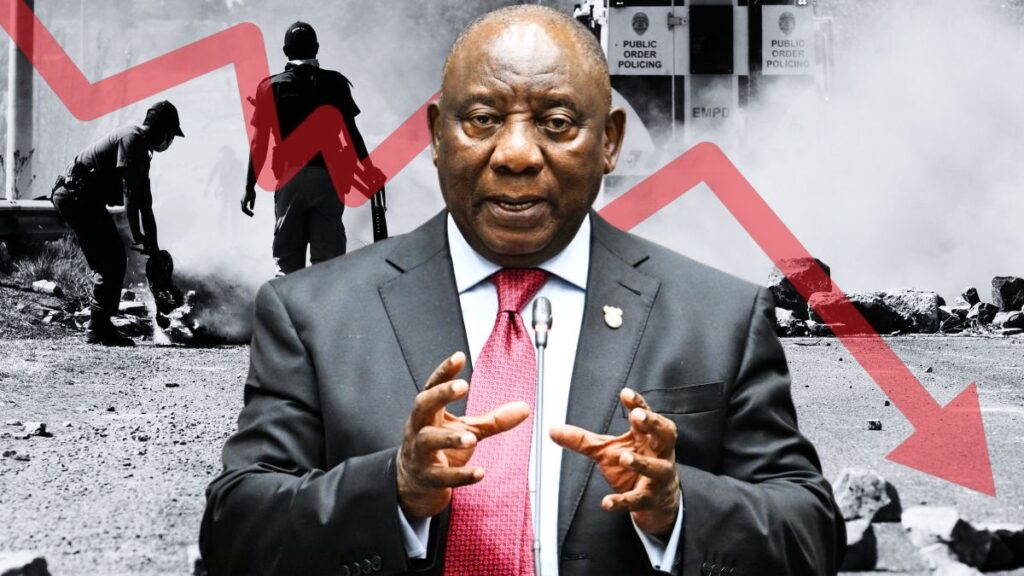
South Africa has plunged 50 places in the global ranking for safety, due to escalating crime statistics and political uncertainty.
This is according to CS Global Partners’ Global Safety Index, which ranked 166 countries on safety and security, and painted a concerning picture of South Africa’s deteriorating standing among other countries.
The Global Safety Index used data from the Global Peace Index and the World Bank’s Worldwide Governance Indicators to assess how countries perform on safety, political stability, and rule of law.
CS Global Partners said that in today’s world, safety means much more than physical protection—it also includes good governance, the rule of law, and a stable political environment.
“Secure jurisdictions with strong governance frameworks are now viewed as strategic assets, offering peace of mind and a foundation for prosperity,” the report said.
It added that safety concerns differ from country to country. “For high-net-worth individuals in war-affected areas such as Ukraine, safety often means physical security and immediate protection.
In South Africa or Nigeria, it may refer to personal safety in day-to-day life, such as protection from violent crime,” the report said.
In the United States, safety fears are linked to gun violence and social unrest, while in Europe, wealthy individuals value consistent law enforcement and privacy protections.
Countries at the top of the 2025 ranking include Iceland, Switzerland, Denmark, Ireland, and Liechtenstein—all known for stability, low corruption, and strong governance.
Austria and the Netherlands also perform well. However, some of the world’s largest economies, such as the United States and the United Arab Emirates, scored lower than expected, sitting in the middle third of the ranking.
By contrast, South Africa’s fall is far behind many developing nations. It now ranks below Zambia (82), India (96), and Israel (114), and is close to countries such as Kyrgyzstan (121), Cambodia (125), and Ecuador (126).
“In South Africa, issues like infrastructure decline, violent crime, and political instability have boosted the appeal of other countries,” CS Global Partners said.
| Rank | Country | Score (out of 100) |
|---|---|---|
| 1 | Iceland | 95.8 |
| 2 | Switzerland | 92.8 |
| 3 | Denmark | 90.5 |
| 4 | Ireland | 90.4 |
| 5 | Liechtenstein | 89.3 |
| 5 | Austria | 89.3 |
| 6 | Netherlands | 88.7 |
| 7 | Luxembourg | 88.5 |
| 8 | Finland | 88.3 |
| 9 | Norway | 87.7 |
| 129 | South Africa | 44.7 |
| 158 | Somalia | 31.9 |
| 159 | Eritrea | 31.2 |
| 160 | Iraq | 28.9 |
| 161 | Central African Repulic | 27.9 |
| 161 | Russian Federation | 27.9 |
| 162 | Syria | 22.8 |
| 163 | Sudan | 22.4 |
| 164 | Afghanistan | 22.3 |
| 165 | Yemen | 21.1 |
| 166 | Venezuela | 20.7 |
South Africa’s reputation for violent crime
The report warned that instability and insecurity are not only making South Africans feel unsafe but are also driving investors and wealthy individuals to look for safer places to live and invest.
“Safety and security have emerged as paramount concerns for high-net-worth individuals. These factors shape where people choose to live, invest, or relocate,” it said.
South Africa’s reputation for violent crime is backed up by other data, too. The Mexican Council for Public Security and Criminal Justice—working with the Mexican Commission on Human Rights—also lists several South African cities among the most violent in the world.
Its annual ranking, which tracks the 50 cities with the highest murder rates, has included South African metros for more than a decade.
In the 2024/25 list, five South African cities were included, led by Gqeberha (Nelson Mandela Bay), with Buffalo City joining for the first time.
Cape Town, Durban, and Gqeberha have appeared on the list since 2013, and Johannesburg has been there since 2015. These cities consistently rank among the most dangerous in the world based on murder rates.
According to Statistics South Africa, crime continues to affect people across all parts of the country, from big cities to small towns.
“Whether in metropolitan centres or small rural towns, households and individuals continue to face the risk of break-ins, robberies, theft and other crimes that disrupt daily life,” Stats SA notes.
While official police statistics only count reported crimes, the agency’s Governance, Public Safety and Justice Survey shows that many crimes go unreported, meaning the true scale of violence and insecurity is even greater.


















 Loading ...