

New high-tech speed cameras coming to Cape Town


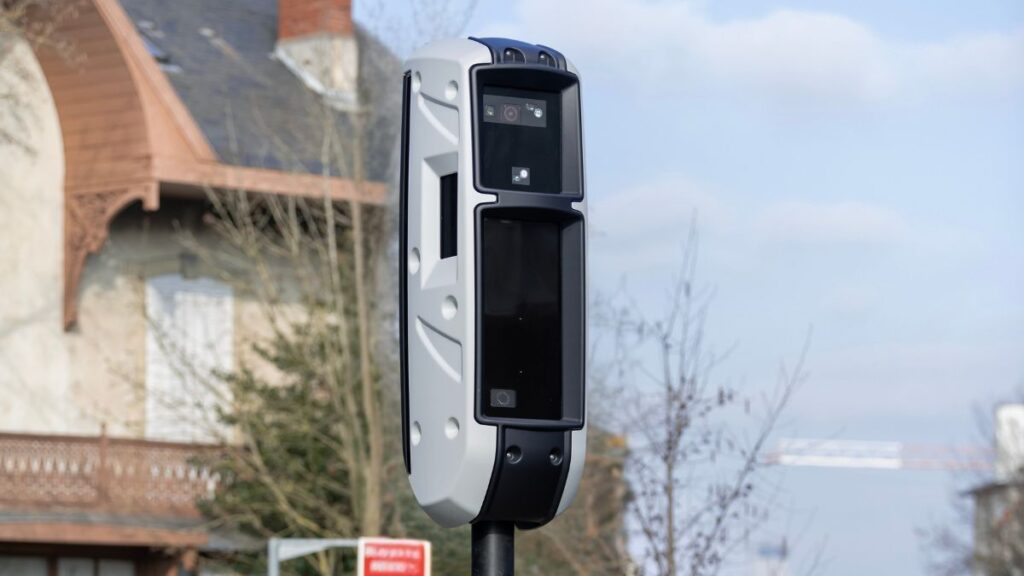
Five years ago, Cape Town had just 26 fixed enforcement cameras. The city has increased this number by 196% to 77 in 2025, and officials say this is still not enough.
As a result, the city has noted that new high-tech cameras will be gradually introduced, and more officers equipped with manual traps will also be deployed.
Speaking with CapeTalk, Alderman JP Smith, the City of Cape Town’s Mayoral Committee Member for Safety and Security, confirmed that more permanent traffic enforcement cameras are being installed across the city.
Smith explained that the 77 cameras erected across the city include both speed and red-light cameras.
“It’s probably not enough. We should probably have a significantly larger number if you compare us to other cities around the world,” he said.
Commenting on the new speed traps, Smith added that the new cameras being installed are more modern and use technology that makes them less conspicuous.
“The cameras are of a slightly more modern design. We’re less likely to see a flash because they use optical systems that don’t require visible flash enhancement. The infrared flash is not visible to the human eye,” he said.
Asked whether these cameras actually change driver behaviour, Smith admitted that their impact is limited.
“Driver behaviour is changed by a camera only in the immediate vicinity of that camera. People will slow down for the camera and speed up immediately after,” he said.
“Cameras are therefore placed where speed needs to be reduced—based on accident data, serious or fatal collisions, or community petitions about congestion or red-light violations.”
He added that because fines arrive long after the offence, they don’t have an immediate effect on motorists’ behaviour.
“The connection between bad behaviour and punishment is not immediate. So, I don’t think cameras on their own are particularly effective in shaping driver mindset,” Smith said.
AI cameras on the cards

Because of this, Smith also believes that manual speed enforcement is more effective. “The manual movement of speed cameras around the city is more effective because those locations are not predictable,” he said.
He added that they would be most effective and reduce loss of life the greatest if they were concealed, but the public is very earnest that cameras should not be concealed.
“You should, of course, never be speeding, so you shouldn’t be worried about where the cameras are,” Smith said.
“However, many people spend a vast amount of energy arguing with us about whether cameras are too concealed. Our speed enforcement policy, therefore, emphasises visibility—though I don’t think it necessarily aids road safety.”
The City has also been stepping up visible enforcement. “We are slowly but surely deploying more officers,” he said.
“We’ve seen a concerning level of contempt for intersections, traffic lights and stop streets. A lot of pedestrian accidents happen within intersections,” he added.
“So over the last seven or eight months, we’ve stepped up our enforcement there, and with the new neighbourhood safety officers being deployed, we’re doing more at stop streets and traffic lights.”
Many of Cape Town’s cameras now have dual functionality. “They are activated both by speeding and by skipping the red light,” Smith explained.
“There are also increasingly effective AI cameras now available, for which we are currently waiting approval from the the Director of Public Prosecutions (DPP).”
“Once approved, they’ll help detect vehicles driving on the shoulder, over solid lines, or committing similar offences.”
The City has been testing technology capable of identifying drivers not wearing seatbelts. As for officers filming traffic violations from their vehicles, Smith confirmed this is legal.


















 Loading ...