

Two men cost South Africa half a million jobs in a crucial industry


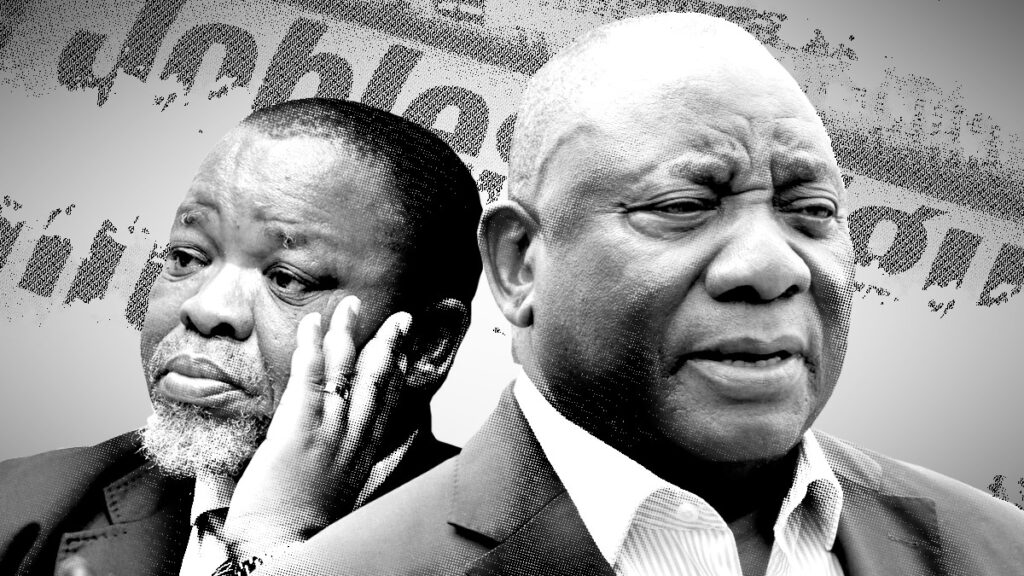
Modern Corporate Solutions mining analyst Peter Major stated that two men, Cyril Ramaphosa and Gwede Mantashe, have cost South Africa over half a million jobs.
Major is one of South Africa’s most respected mining experts with over four decades of experience in the sector.
He has won numerous awards for his work in the South African mining sector, including two Raging Bull Awards and two Top Fund Manager awards.
He told Biznews that President Cyril Ramaphosa and Minister of Mineral Resources and Energy Gwede Mantashe have done tremendous harm to the industry.
Their biggest failing, Major said, is their inability to address the concerns raised by the local mining industry.
South Africa’s mining industry has been plagued by policy uncertainty, threats of nationalisation, and deteriorating infrastructure.
South Africa’s mining output has remained flat for the past 20 years, as companies have been hesitant to invest in new projects or expand existing operations.
More worryingly, no new exploration for minerals has occurred in South Africa for the past two decades, resulting in an entire lost generation of mines.
Major told BizNews that the warning lights about stagnation in the sector have been flashing for years, with the reality finally beginning to hit home.
He said Mantashe had a fantastic opportunity to ignite the South African mining industry with his closing address at the Joburg Mining Indaba.
However, he failed. Mantashe did not deliver any fresh ideas to revive the once-powerful industry in South Africa.
“He just ignored the entire panel before him, which outlined all of the challenges the mining industry is facing in South Africa,” Major said.
He added that Mantashe and Ramaphosa’s actions, or lack thereof when needed, cost 450,000 gold miners and 100,000 miners in other sectors their jobs.
“It would have been so easy to rise to the occasion and show some concern for these miners. However, he does not seem to care about those people,” Major said.
South Africa’s mining sector is struggling

For many decades, South Africa’s mining sector was the backbone of the local economy, employing a significant proportion of the population.
However, over the last two decades, it has experienced a profound structural decline, moving from a global powerhouse to a troubled industry.
The industry has experienced declining output, reduced investment, and substantial job losses at many of the mines.
A combination of operational, infrastructural, and regulatory challenges has made mining in South Africa much less attractive.
In 1980, the mining industry contributed 21% towards South Africa’s Gross Domestic Product (GDP). By 2024, it only contributed approximately 6.1% to GDP.
Although there are factors which the government cannot control, like declining gold ore grades, most of this decline could be avoided.
Load-shedding, Transnet’s collapse, which caused difficulties getting products to ports, higher costs, and policy uncertainty, have damaged the industry.
“We were a leviathan in 1980. Nobody could beat us. Anglo American was the largest investor in the United States. The Americans were terrified of us,” Major said.
However, when the new government took power in 1994, it decided to try to totally revamp the mining law in South Africa and copy what other African nations did.
“It said, ‘We will nationalise these mines and take them back. They are no longer private property but are the state’s property,” Major said.
He said companies which invested billions into mining projects were suddenly threatened with state ownership.
“As if nationalising property was not enough, they put on all these horrendous conditions that drove capital away,” he added.
“New investments stopped. Exploration and expansion stopped. It made no sense to invest in a project which the state can take.”
“You are seeing what happened in Zambia and in Zimbabwe now happening in South Africa. It has not turned around. It is still going down.”

















 Loading ...