

Trouble for braai lovers in South Africa


The latest Braai Index shows that meat prices in South Africa are still running hot, and cooling inflation for side dishes isn’t enough to balance it out.
Despite inflation cooling for food in general in South Africa, the pressures being felt in the red meat industry are adding pressure to pricing, making the country’s favourite pastime a costly affair.
On top of the ongoing national outbreak of Foot and Mouth Disease affecting cattle in most provinces, an isolated case of Rift Valley Fever in the Northern Cape has also put the industry on alert.
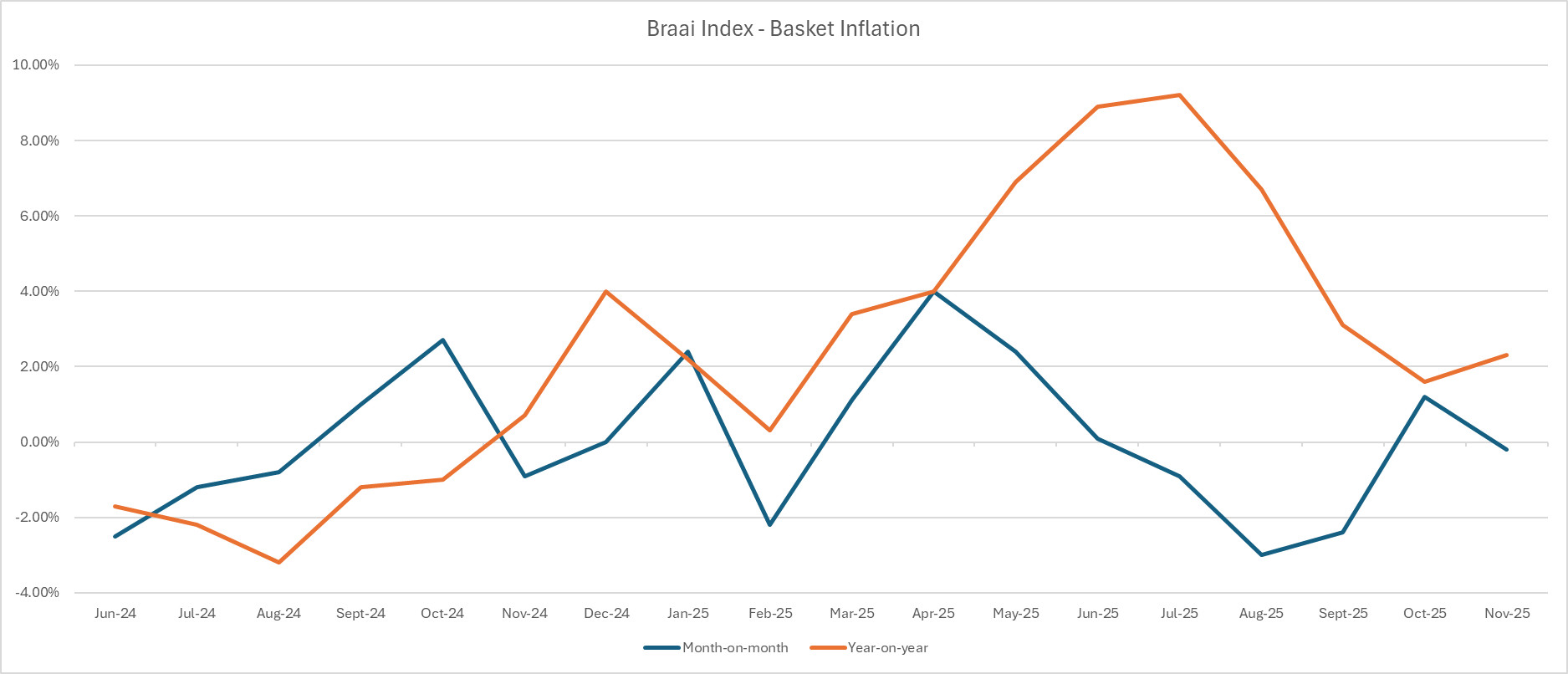
The latest Braai Index for November shows that price pressure on the basket has been flat month-on-month and is tracking higher from the same time last year.
The index is compiled monthly by BusinessTech using pricing data from the Pietermaritzburg Equity Justice and Dignity (PMBEJD) group.
The PMBEJD’s data reflects real “on the ground” pricing across South Africa’s major provinces and reflects the items found in the shopping baskets of the majority of South African households.
The Braai Index, in turn, tracks the prices of a selection of essential items typically used for a South African braai, offering a more focused view of inflation at the grill.
The index includes meat (beef, wors, chicken portions), vegetables (spinach, carrots, tomatoes, potatoes, onions, green pepper) and others (samp, maize, curry powder, salt).
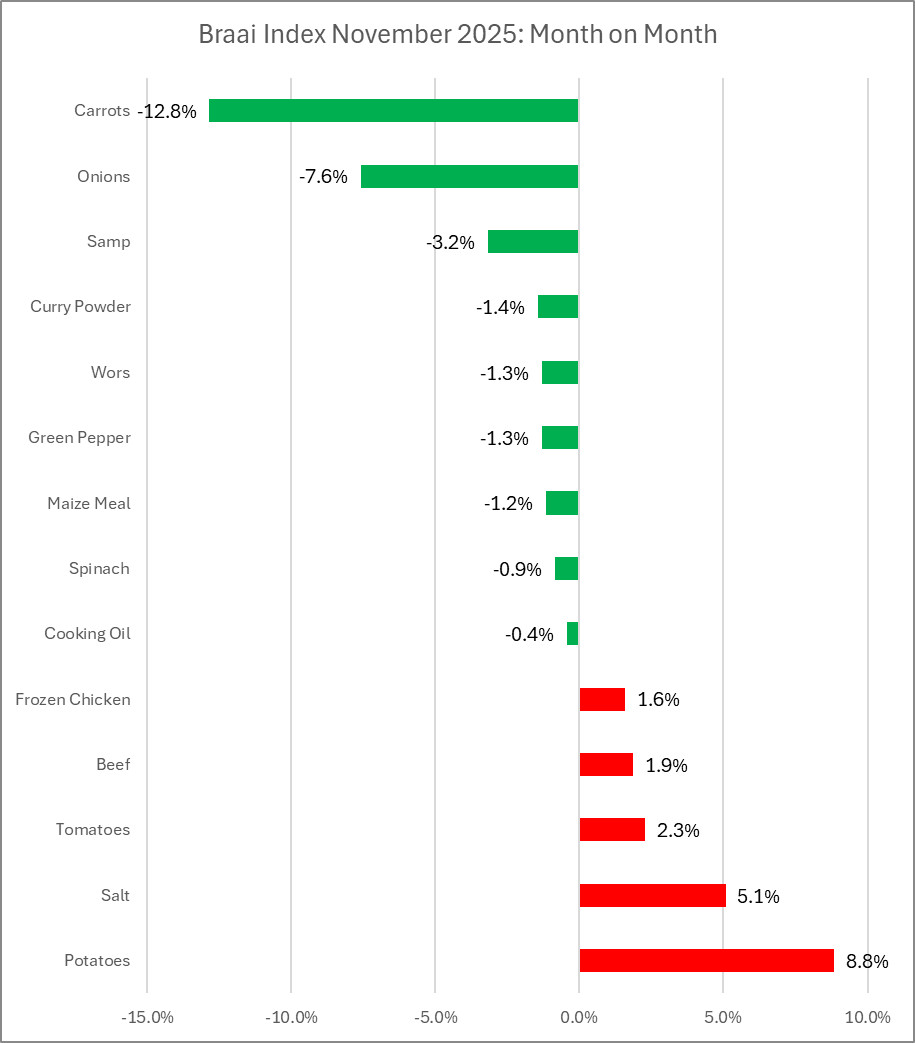
According to the latest index, prices cooled by 0.2% between October and November, driven lower mainly by declines in carrots, onions and samp.
This countered higher prices for potatoes, salt and tomatoes, with the other basket items remaining relatively flat.
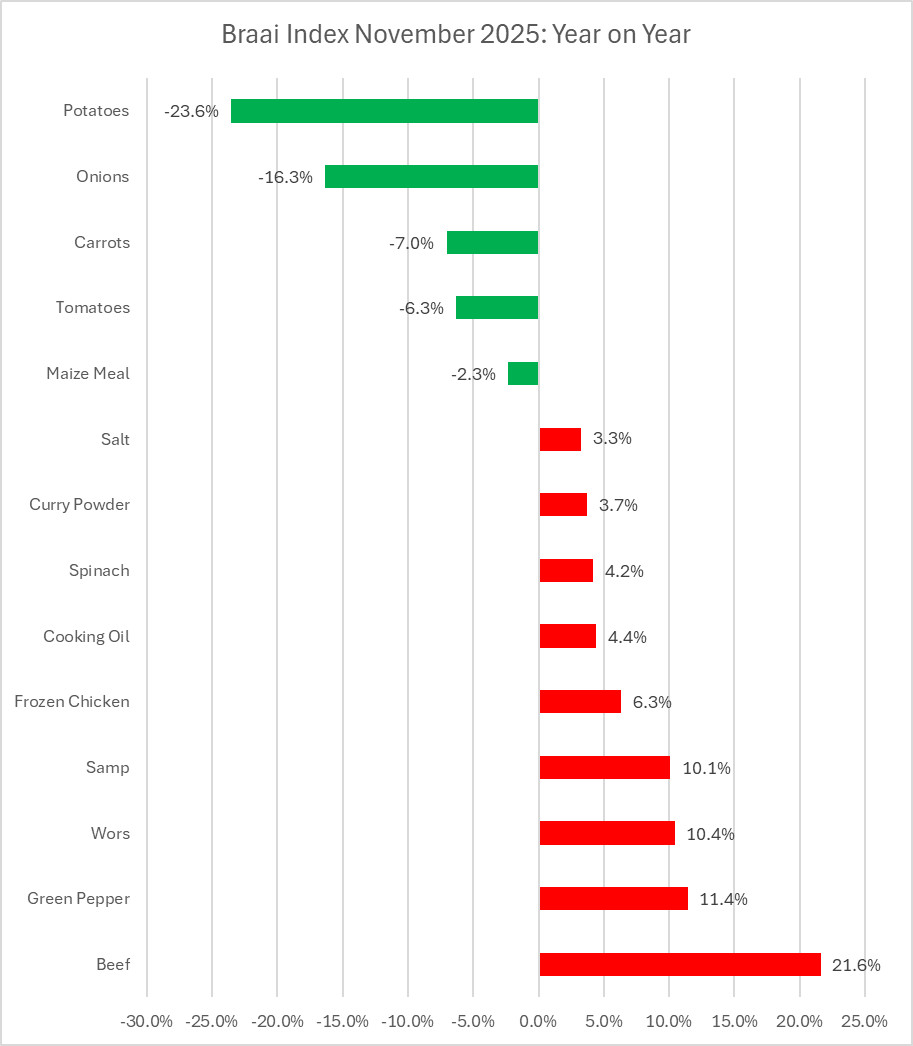
However, the year-on-year pricing for the month saw the basket increase by 2.3% versus November 2024, with meat prices again being the main driver.
With beef prices rising 22% and wors up 10%, the basket was balanced by steep declines for potatoes and onions, meaning the side salads should be making up some savings when hosting a braai.
The index shows that inflationary pressure for food items is still present and rising.
Month-on-month index change [-0.2%]
Year-on-year index change [+2.3%]
Beefy issue
It should be noted that the Braai Index is heavily influenced by two proteins: beef and chicken.
Other proteins, such as pork and lamb, are not tracked in the PMBEJD basket and thus do not feature on the index.
Producers of these proteins have criticised the data presented in the index, noting that braai affordability could differ greatly if consumers choose alternative proteins.
Data from the IDC, citing food producers, note that poultry is by far the most widely consumed protein in South Africa, followed by beef.
This explains the prominence of these proteins in the PMBEJD’s basket tracking.
According to the data, 49% of animal protein consumed per person in South Africa is poultry, 26% is beef, 13% is eggs, 7% is pork, and 5% is mutton and goat.
Consumption of poultry is increasing, while red meat consumption is decreasing, the group noted.
At present, South African red meat producers are grappling with and trying to contain outbreaks of FMD, which have impacted pricing, especially in the latter half of the year.
Similar basket pressure was seen in the past, especially in 2024, when chicken prices also inflated due to outbreaks of the avian flu.
During that time, consumers turned to proteins like pilchards, which proved to be a valuable and affordable alternative.
Overall, the Braai Index remains a broad indicator of food inflation, tracking the most widely consumed food products, as tracked by the PMBEJD. Costs will vary depending on what you actually eat.


















 Loading ...