

New brand taking over coffee shops across South Africa



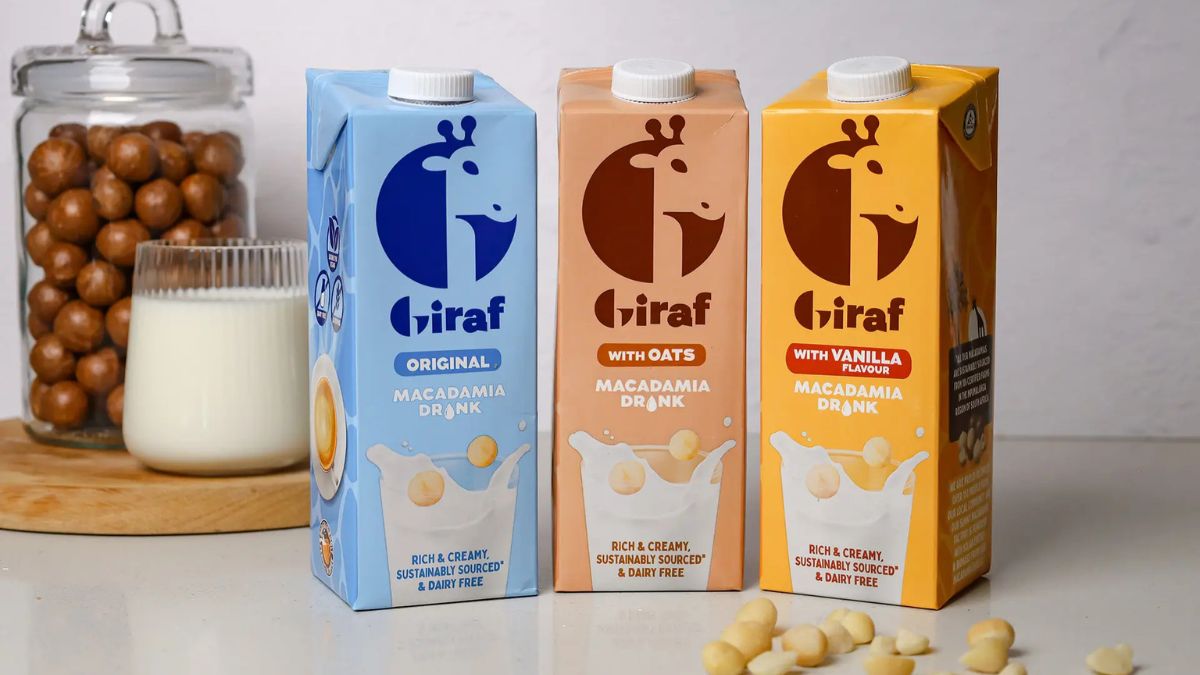
Giraf Macadamia Milk is becoming a familiar sight in coffee shops across South Africa, thanks to its compatibility with coffee, while also supporting local farmers.
Founder Philip Moufarrige explained that the brand began in the Lowveld, close to the region’s macadamia farms.
The milk is produced at the AmberMacs Macadamia Factory in White River, which supports more than 200 farmers.
These farmers operate in a market where global prices and demand for macadamias can shift quickly.
Moufarrige said this uncertainty encouraged him and his team to find alternative uses for the nuts, especially in seasons when demand might drop.
Turning macadamias into milk, nut butter, and spreads offered a way to ensure nothing went to waste. Macadamias also lend themselves naturally to milk production.
Moufarrige highlighted that they contain high levels of omega fats, very few carbohydrates, and more healthy fats than other nuts.
This gives the milk a naturally creamy texture without relying on added seed or vegetable oils.
“Unlike oat and almond milk, our milk is always rich and creamy without adding vegetable or seed oils,” he said.
The milk is low in sugar and calories but still works well in coffee, which has helped it gain a foothold in cafés across South Africa.
The project took three years to develop and was officially launched in May 2024, despite production and logistical delays. The initial launch included Original, with Oats, and Vanilla variants.
Moufarrige noted that although Giraf is a plant-based product, he does not position it as an anti-dairy alternative.
“Don’t get me wrong, I love dairy,” he said. Instead, he views it as an option for individuals who wish to incorporate more plant-based products into their diets.
He said the milk’s texture “foams beautifully,” which has been key to its adoption by baristas looking for something that performs reliably.
One of the main distinctions, according to Moufarrige, is that the milk avoids many of the additives used in other plant-based products.
Growing demand for plant-based products
Environmental considerations form another part of the brand’s approach. Macadamia trees use significantly less water than almonds and grow well in drier climates.
All of Giraf’s supplying farmers are AmberGAP-certified, meaning they follow farming methods that protect soil health, encourage biodiversity, and manage water use carefully.
The company also uses solar power for processing and turns macadamia shells into biochar to help regenerate soil.
Giraf currently produces four variants—Original, Vanilla, Unsweetened, and Macadamia with Oats.
Moufarrige aksi highlighted that the nutritional profile of macadamias contains monounsaturated fats, magnesium, potassium, antioxidants, and other nutrients linked to heart and brain health.
While these are notable, he stressed that the product’s appeal comes mainly from its texture and versatility, not from being marketed as a health product.
The milk is now widely available in major retailers, including Dis-Chem, Spar, Pick n Pay, Wellness Warehouse, Faithful to Nature, and Takealot.
South Africa is a major player in the global macadamia industry, with farms concentrated in Limpopo, Mpumalanga, and KwaZulu-Natal.
As the industry grows, local producers are exploring more value-added products such as nut butters, chocolates, and dairy alternatives.
Giraf fits into this trend, offering a locally made option that taps into both the country’s agricultural strengths and growing demand for plant-based products.
Moufarrige said macadamia milk’s lower water and carbon footprint compared to dairy and almond milk also adds to its practicality, particularly in a country facing increasing pressure on water resources.
For consumers looking for a dairy alternative, he said Giraf offers a simple option that suits everyday use.
“It’s best served chilled, great in coffee, with your cereal, or just on its own,” he says. For those who can’t consume dairy, it provides a straightforward, plant-based substitute.














 Loading ...