

NHI ‘peace’ plan falls flat in South Africa


Litigants challenging the National Health Insurance (NHI) Act say the government’s call to settle the matter out of court is “questionable”, given that it has long ignored industry concerns about the laws.
Finance Minister Enoch Godongwana last week suggested that litigants work with the government to resolve legal disputes over the NHI.
This was because there was apparent agreement by everyone on the fundamental principle of universal healthcare, so there should be enough common ground to find a solution, he said.
“Despite a series of court cases, I believe that we can find a solution. These (court cases) will delay the implementation of the NHI,” he said.
“It is my submission that these parties must meet and craft a settlement. We want to move ahead with the implementation of the NHI. These court cases are going to delay it for more years,” Godongwana said.
However, various critics, including union Solidarity, the Hospital Association of South Africa and the Western Cape government, have rejected the notion of settling.
The litigants have argued that the years of engagement and feedback during the legislative process were ignored by the government, which forced the court challenges in the first place.
Had the government listened to concerns during the mandated processes, legal action may not have been required.
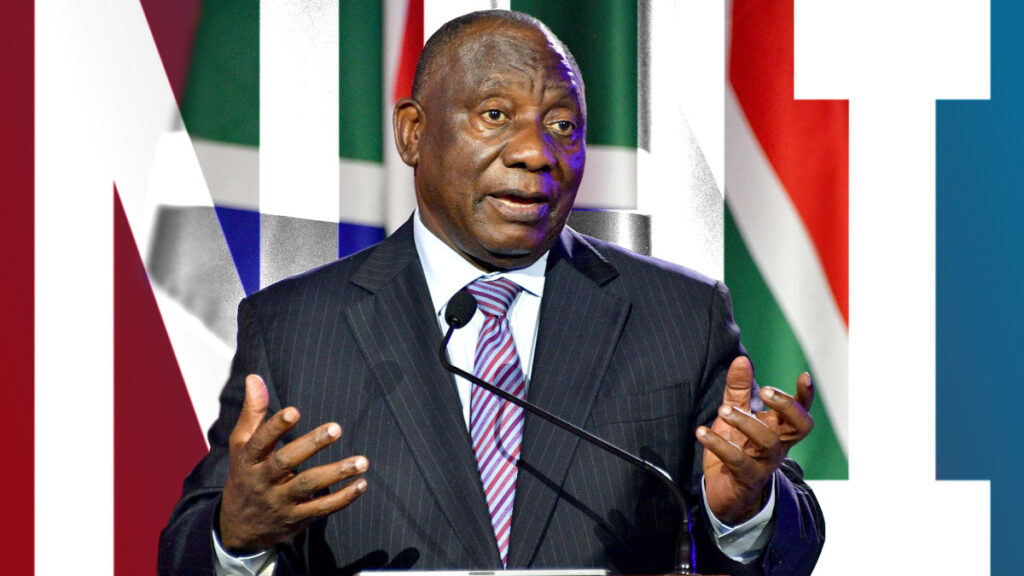
The NHI Act was signed into law by President Cyril Ramaphosa in May 2024, ahead of the National Elections.
In process for almost two decades, the laws were contested at every step, with industry bodies and provincial stakeholders raising various concerns about implementation and constitutionality.
Despite these warnings—including from parliament’s own legal advisors—the government pushed ahead with the scheme.
Multiple economists and analysts have laid out the sheer unworkability of the scheme, both from a funding perspective and an administrative one.
Renowned economist Dawie Roodt noted that the scheme would be a disaster for taxpayers and the national fiscus due to the cost, and remarked that the National Treasury itself was fully aware of this.
There is no clarity on how much the NHI will cost or what services it will offer. Estimates range between R300 billion and R1.5 trillion a year.
The Health Department has rejected the notion that the scheme will cost that much, but has neither conducted nor publicly provided any costing of its own.
Roodt said that, at face value, South Africa is spending around R20 billion a year on the NHI, but this is not direct financing for the scheme.
In the broader context, the budget does not allocate or provision much for the NHI, which is the Treasury’s way of saying that money could be better spent elsewhere, he said.
Legal cases pushing forward

According to trade union Solidarity, not only is Godongwana’s call for a settlement coming long after the proverbial horse has bolted, but it also seeks an outcome where the NHI can continue.
The union said it does not want the NHI implemented in any form.
“No form of the NHI is acceptable to us,” said Solidarity SRI researcher, Theuns du Buisson.
“While Solidarity remains open to constructive dialogue and engagement, this will only be possible if a sustainable alternative is seriously considered – and not any version of the NHI.”
The group said the government has not given meaningful consideration to alternatives to the NHI, opting to stick with its unworkable and unaffordable plan.
This renders the call by Godongwana to engage “questionable”, it said.
“As long as the NHI remains the Minister’s point of departure, reconciliation is simply not possible,” it said. “Solidarity will not abandon its opposition to the NHI.”
Other litigants, including the Western Cape government and private-sector bodies, have confirmed they will continue their cases, also citing the government’s unwillingness to consider alternatives.
The NHI is currently facing a multitude of legal challenges from groups representing medical aids, doctors, private businesses, unions, and political parties.
The legal cases range from challenging the constitutionality of the NHI Act to more specific procedural issues, including the rationality of President Cyril Ramaphosa signing the Act into law in the first place.
Outside of the legal challenges, serious concerns have been raised about potential corruption and looting of the scheme, with the national government having a particularly poor track record of shielding state funds from these activities.
With healthcare, in particular, the recent R2 billion Tembisa Hospital looting scandal thrust the viability of the NHI into the spotlight.
After signing the NHI Act into law in 2024, Ramaphosa tried to assure the nation that the fund would be corruption-free.
He said that the government had learned from the past and has put mechanisms in place to ensure that the NHI funds won’t be looted.
















 Loading ...