

One of South Africa’s dams could collapse at any moment


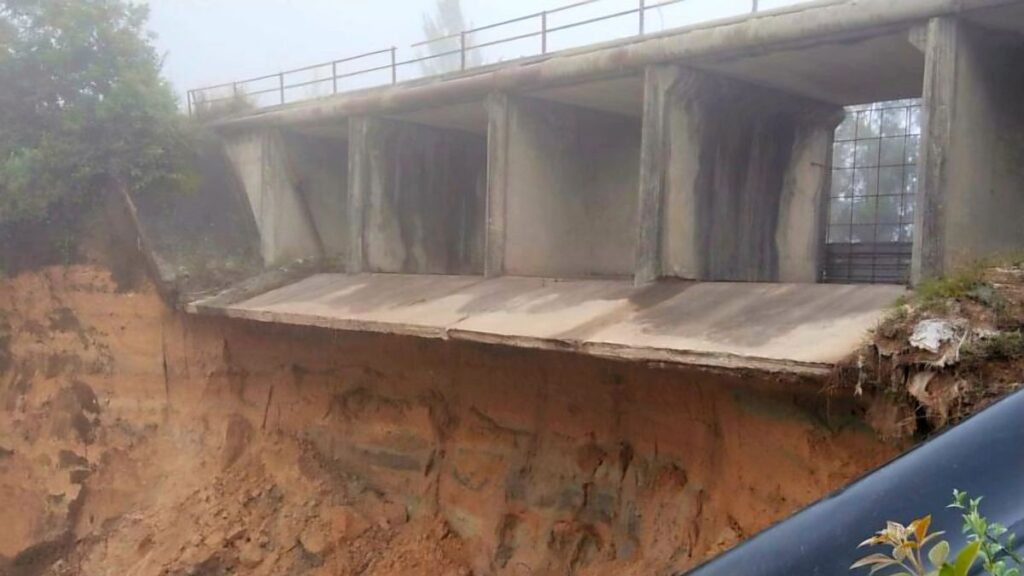
South Africa’s Department of Water and Sanitation (DWS) has issued a warning that a dam in Mpumalanga could collapse at any moment.
The DWS issued urgent evacuation instructions for communities downstream, raising serious concerns about safety, accountability, and the potential scale of destruction.
The dam, officially registered as My Own Dam but publicly known as Senteeko Dam, is located in the Die Kaap River catchment near Barberton.
It is owned by the Shamile Communal Property Association (CPA) and is used primarily for irrigation.
According to the DWS, the dam is a medium-sized structure, standing 26 metres high with a storage capacity of about 1.8 million cubic metres of water.
In a statement issued on Friday, the department said an emergency safety assessment by its Dam Safety Office found that the dam’s condition had deteriorated to a critical level.
“The dam’s spillway structure has suffered severe and irreversible deterioration, including advanced erosion and undercutting, leading to structural instability,” the department said.
It warned that “failure of the dam is imminent and may occur without further warning.”
The department said an uncontrolled release of water is likely and would pose an immediate and serious threat to downstream communities, infrastructure, and the environment.
As a result, all people living or working downstream of the dam have been instructed to evacuate flood-prone areas immediately.
The DWS noted that public access to the dam site is strictly prohibited and that emergency interventions are currently in place.
The City of Mbombela has echoed these concerns and stressed that the situation remained highly volatile.
Speaking in an interview, the city’s spokesperson, Joseph Ngala, said authorities are treating the risk of a collapse with extreme seriousness as engineers continue to monitor the dam wall.
“The latest assessment of the dam wall is that it is continuing to slowly but surely crack a bit, so the risk is still a bit high,” said Ngala.
Cost of repair in the millions
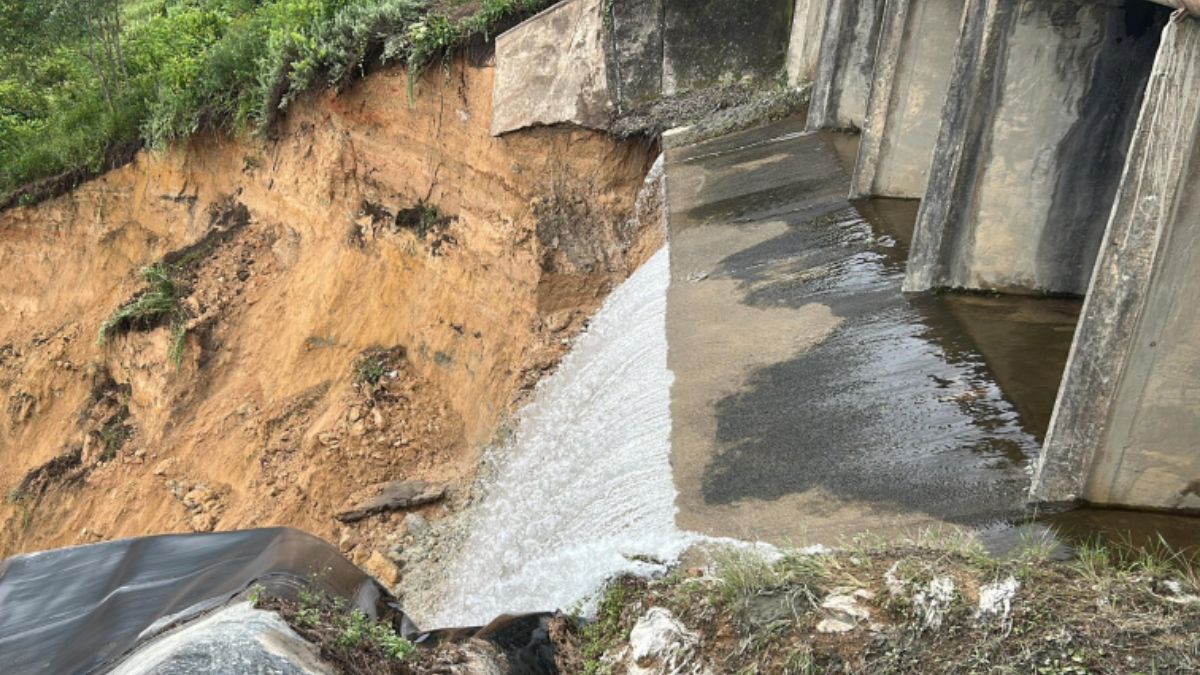
Engineers were sent to the site after reports of structural problems, particularly following heavy rainfall in the area.
Ngala added that officials quickly realised that the impact of a collapse would not be limited to properties closest to the dam.
“Had it broken its walls, it would have affected the tributaries that go down to a number of rivers and subsequently to the Crocodile River that goes as far as Mozambique,” he said.
While landowners nearest to the dam moved quickly to evacuate people in the immediate danger zone, the municipality broadened its response to include communities further downstream.
“Along that valley, there are quite several communities that had to be alerted to the fact that there would be an added amount of water as a result of the dam collapse,” Ngala said.
Ngala also addressed the issue of responsibility. “The principal owner of any water resource is the National Department of Water and Sanitation,” he said.
He noted that the department acted quickly by dispatching engineers once the risk was identified.
However, he stressed that Senteeko Dam is privately owned, and responsibility rests primarily with the CPA, along with “adjacent landowners and companies that benefit from the dam.”
According to Ngala, cooperation from the dam owners has been strong. “As we speak, they’re actually on site. Their teams are monitoring the situation,” he said.
The dam’s long-term outlook will be costly. “The initial assessment runs into millions,” Ngala said, adding that the CPA plans to approach the government for funding once the immediate danger has passed.
Ngala is also concerned that if the dam does fail, assigning liability will not be straightforward.
“The dam owner is obviously aware of those obligations, but I guess even the adjacent landowners who are beneficiaries of the dam being there would obviously have to bear some cost towards that eventuality.”















 Loading ...