

United States sanction warning for South Africa


Renowned economist Dawie Roodt says that the United States could easily impose financial sanctions on South Africa if it really wanted to damage the country, but individuals are more likely to be targeted.
Speaking on the Praag Podcast about the latest political and economic tensions between the US and South Africa, Roodt said that sanctions are a big stick in the US government’s arsenal.
He noted that South Africa is no stranger to sanctions, with international governments, including the United States, using them against the country in the 1980s to force the apartheid government to the negotiating table.
Roodt said that financial sanctions imposed against South Africa in the late 1980s led to a major debt crisis in the country, where the government could not repay its loans, leading to a spiral.
“A lot of international banks refused to roll over some of our loans, which means they refused to provide us with further credit,” Roodt said.
“South Africa did not have sufficient foreign reserves, and it eventually stopped the repayment of the foreign loans…this, of course, further contributed to the fact that the foreign financial institutions did not want to lend us any more money.”
The South Africa of today is in a very different position ideologically, but economically, the government is still vulnerable to the same tactics being used.
At the heart of the problem is South Africa’s low growth, Roodt said.
South Africa’s economy is not growing enough to keep up with government spending. To keep financing government plans, the state either has to raise more revenue from its shrinking tax base or borrow more.
With a significantly high debt-to-GDP ratio, the country runs the risk of falling into a debt trap—and if the economy doesn’t grow, it risks spiralling.
Finance Minister Enoch Godongwana is aware of the problem, Roodt said, which is why SARS is aggressively chasing down every bit of tax it can find, and National Treasury has tried to cut spending where it can.
Despite this, government spending continues to balloon, and while growth is on an upward trajectory, it is not enough to stimulate the economy and cover spending.
It’s this precarious economic reality—high debt and low growth—that makes South Africa so vulnerable to sanctions.
According to Roodt, about 20% of South Africa’s state debt is held by foreign investors, and this is a key vulnerability.
He said that the “real big stick” US President Donald Trump could wield against South Africa isn’t through tariffs, but rather an executive order that could hit South Africa in this spot.
“(Trump’s) real stick is actually financial sanctions that he can impose against South Africa—and the consequences of that, believe me, could be very, very painful,” Roodt said.
How sanctions could hurt
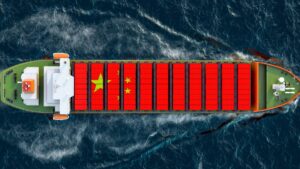
Roodt said sanctions could take many forms, from an executive order barring the purchase of South African government bonds to booting South Africa from the SWIFT payment system, as happened in Russia.
An executive order can be made with relative ease, he said, with immediate and damaging consequences.
If the US government issued an executive order prohibiting American institutions from holding South African bonds, these investors would be forced to sell immediately.
This would cause long-term interest rates to spike and the rand to weaken sharply as capital is pulled out of the country, Roodt said.
This could trigger a financial crisis, forcing local banks to absorb debt and crushing the rand.
While the threat of sanctions is present, Roodt offered some consolation by noting that it’s not necessarily something he thinks will happen; it’s just a very real option at the United States’ disposal.
“This isn’t what I think is going to happen; these are just the options the United States has at its disposal if it gets really angry with South Africa and really wants to hurt the country,” Roodt said.
He added that if the US opted to go that route, targeted sanctions against individuals would be the ‘stick’ more likely to be used.
This is already evident in US legislative processes, where lawmakers in the US House and Senate have tabled similar bills that target sanctions against politicians and government officials, rather than against South Africa as a whole.
“The US can certainly freeze South Africans’ investments abroad as well. To tell the truth, if there is some kind of action from Trump’s side, then I would say that’s probably the first thing he will do,” Roodt said.
In this process, the US government would identify certain individuals with foreign investments, or investors with political connections or “who have obtained money illegally, whatever the case may be”.
“I don’t know if there are such individuals, but suppose there’s some South African politician who has seriously got his hands on money and he has now put it in a bank account in America, for example, then that money can be frozen without any doubt.”
“There’s already a lot of talk of individual sanctions against certain individuals in South Africa from the American side. So there are a lot of things that Donald Trump can do against individuals.”









 Loading ...