

Nail in the coffin for green ID books in South Africa


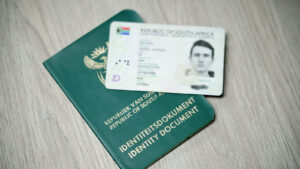
The Department of Home Affairs (DHA) says it issued a record 4 million Smart ID cards in South Africa in 2025, with an accelerated rollout of digital services set to end the fraud-prone green ID book.
According to the DHA, it issued 4,002,964 Smart ID Cards in the 2025 calendar year, marking the highest delivery rate in the department’s history.
“This milestone represents a 17% increase on the 3,427,468 Smart IDs issued during 2024, which was itself a new record at the time,” it said.
The 2025 performance is about 1.3 million more than the number of Smart IDs issued in 2023 and 2022, respectively.
It said that the record sets the tone for the future rollout of Smart ID services, with the Home Affairs @ Home initiative taking shape.
Through the initiative, the DHA is finalising a major rollout of its new digital partnership with South Africa’s banking sector, which will give access to Smart IDs at hundreds more bank branches around the country, close to where they live.
The rollout is expected to take shape over the coming months, with the DHA planning to have services at 100 more branches by the end of March 2026, and at 1,000 more branches by 2029.
Most of South Africa’s major banks have signed onto the project, including Capitec, TymeBank, and others that will be offering these services for the first time.
The DHA said the accelerated Smart ID rollout serves its aim of eliminating the old green ID book in the country.
“Smart IDs are vastly more secure than the fraud-prone green barcoded ID book,” it said. “The green bar-coded ID book has become a soft target for fraudsters and is estimated to be 500% more vulnerable to fraud than the Smart ID.”
It previously expressed plans to stop producing green ID books as early as 2026, with an ultimate goal of discontinuing the document by 2030.
The long-term goal is to move towards a digital ID along similar timelines, with a target of having a digital ID system in place by the 2029 general elections.
Ending downtime

The DHA said that one of the key changes that has allowed it to ramp up the issuing of Smart IDs is the upgrade to the country’s Online Verification Service (OVS).
Minister Leon Schreiber noted that this system was previously underfunded and abused by some external users.
The department last year increased verification fees from R0.15 to R10, with a bulk offline fee of R1.
“Correcting this has led to higher uptime and better performance of the population register at Home Affairs offices, directly contributing to giving more South Africans access to Smart IDs than ever before,” the DHA said.
The change has not gone unchallenged, however.
A lobby group representing South Africa’s largest telecommunications network operators has started legal proceedings against Home Affairs over the increased fees.
The Association of Communications and Technology NPC (ACT) launched the legal challenge, claiming that the 6,500% increase in the cost of utilising the OVS has a direct negative impact on ACT members’ processes and, ultimately, on consumers.
“This huge increase will make it far more expensive for network operators, banks and other companies to verify their customers’ identities,” it said.
In response, Schrieber welcomed the legal challenge, saying that it gives the DHA an opportunity to expose how businesses had been abusing the system.
“Home Affairs welcomes the opportunity to now expose before the courts, in granular detail, how some users came to rely on unsustainably underpriced access to the personal information of South Africans to drive profits under the previous fee structure at public expense,” he said.
“This even included apparently creating intermediaries to on-sell data at a premium, on the basis that the OVS that they had themselves driven to near-collapse through underfunding and abuse, was unreliable.”
















 Loading ...