

New tax laws for medical aid credits, companies, and spousal donations in South Africa


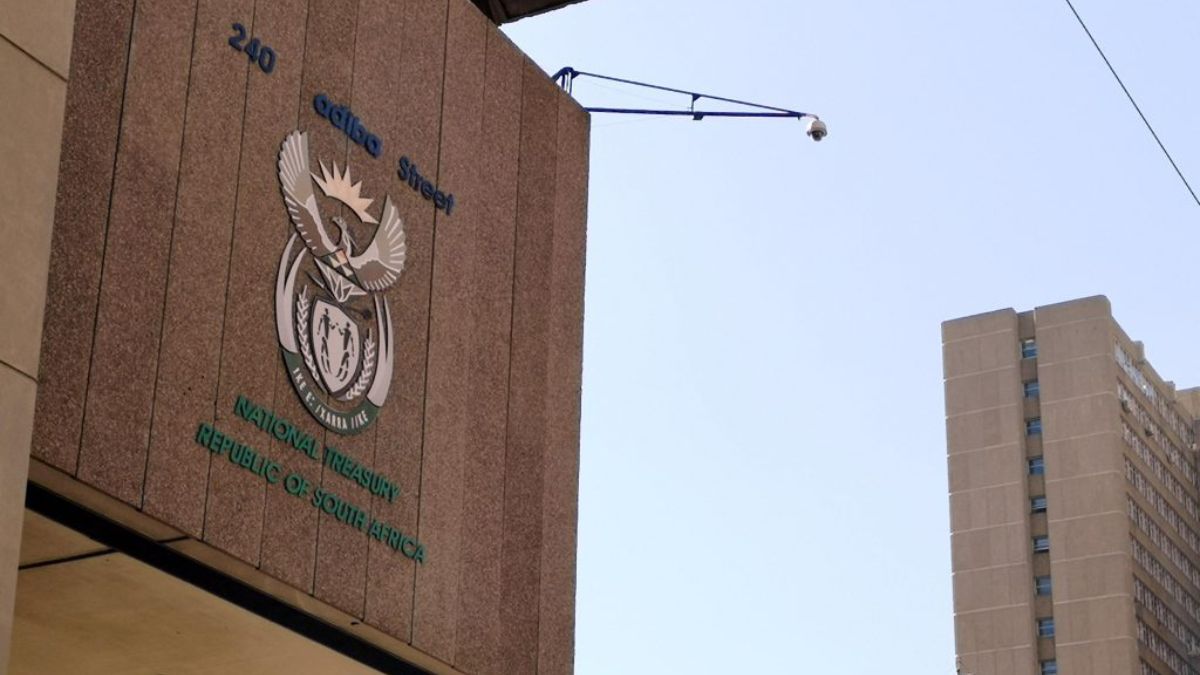
The National Treasury and the South African Revenue Service (SARS) have published the 2026 Draft Taxation Laws Amendment Bill (TLAB) and the 2026 Draft Tax Administration Laws Amendment Bill (TALAB) for public comment.
The proposed tax changes for 2026 aim to update regulations that prevent tax avoidance, including limiting spousal donation exemptions to South African residents and applying the arm’s length principle to Special Economic Zones.
Certain medical tax credits will be extended. The legislation also tightens tax administration by requiring stricter documentation for second-hand goods, allowing banks to hold suspicious tax refunds for up to two days, and correcting inconsistencies in tax compliance status reporting.
These draft bills include the tax proposals outlined in the National Budget presented in February 2026.
Written comments on the 2026 draft TLAB and TALAB must be submitted to the National Treasury and SARS by the close of business on 28 August 2026.
The Treasury indicated that the 2026 Draft TLAB and Draft TALAB include legislative amendments needed to implement the tax announcements in the 2026 Budget Review, as well as other technical corrections related to tax administration.
Treasury explained that the publication of the draft bills offers an opportunity for public consultation, clarifies certain aspects, and introduces administrative improvements.
The proposed amendments in the 2026 Draft Taxation Laws Amendment Bill (TLAB) address various aspects of income tax affecting individuals, savings, employment, and businesses.
Tax Consulting SA explained that these amendments also tackle business incentives, financial institutions, international tax matters, value-added tax (VAT), and the Carbon Tax Act.
The new tax laws
Key tax proposals in the 2026 Draft TLAB include:
Limiting donations tax exemptions for non-resident spouses: It is proposed to restrict the inter-spousal donations tax exemption so that it only applies to donations made to a spouse who is a South African tax resident.
This change aims to prevent spouses from intentionally delaying their tax residence status to evade paying donations and capital gains tax.
Introduction of domestic transfer pricing rules for special economic zones (SEZs): The proposal suggests applying the arm’s length principle rather than the anti-profit-shifting rule to domestic transactions.
This includes transactions between SEZ companies qualifying for the 15% corporate tax rate and their related companies outside the SEZ.
Extending medical scheme fees tax credits: The proposal aims to extend eligibility for the medical scheme fees tax credit and the additional medical expense tax credit to members of restricted medical schemes.
A definition of “restricted medical scheme” will be introduced for tax purposes to include certain statutory medical schemes that are not regulated by the Council for Medical Schemes due to legislative exclusions.
Aligning currency translation rules for Controlled Foreign Company (CFC) and Domestic Treasury Management Company (DTMC): Amendments related to the interaction between CFC and DTMC currency translation rules are proposed to take effect on January 1, 2027.
National Treasury highlights the following key tax proposals contained in the 2026 Draft TALAB:
- Expanding documentary requirements for second-hand goods
Treasury said that, to reduce the risk of fraudulent claims for notional input tax, it proposes updating the documentation requirements for second-hand goods vendors to align with those set out in the Second-Hand Goods Act and its regulations.
- Permitting pre- or post-deposit screening of refunds by banks
Banks are required to report any suspicious tax refunds to SARS and must hold these refunds for up to two business days while SARS conducts an investigation.
The proposed amendment seeks to explicitly allow banks to screen refunds either before or after they are deposited, which would facilitate a smoother refund process.·
- Amendment of section 256 of the Tax Administration Act, 2011
Section 164(6) of the Tax Administration Act temporarily suspends a taxpayer’s obligation to pay taxes while waiting for SARS to make a decision on a request for suspension of payment.
According to section 256 of the Act, during this interim period, the taxpayer must still be marked as “tax compliant.”
Section 256 of the Act does not currently allow for the automatic suspension of a taxpayer’s obligation to pay taxes while awaiting the outcome of a request for remission of penalties. The proposed amendment seeks to correct this issue.
After the public consultation process, the National Treasury and SARS will review the submissions received before finalising the legislation for introduction in Parliament.


















 Loading ...