

Reserve Bank holds interest rates in South Africa


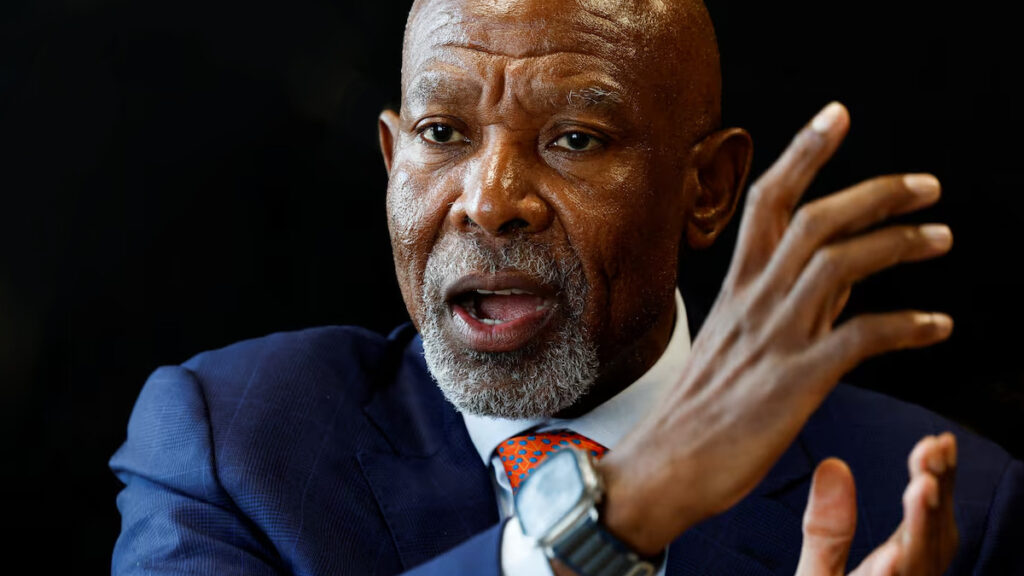
The South African Reserve Bank (SARB) Monetary Policy Committee has voted to hold South Africa’s interest rates.
This leaves the repo rate at 6.75% and the prime lending rate at 10.25%. The decision was not unanimous, with four members of the MPC voting to hold and two voting to cut by 25 basis points.
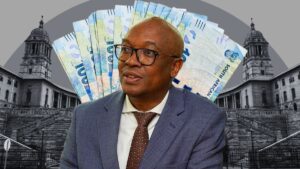
Reserve Bank governor Lesetja Kganyago said that 2025 proved to be a year filled with uncertainty and significant imbalances across markets.
“Despite these fragilities, asset prices have been resilient and global growth is holding up, supported by investments in AI, as well as fiscal stimulus in major economies,” he said.
“Inflation generally slowed last year, and many central banks have had space to adopt more neutral policy settings. Financing conditions for emerging markets remain benign.”
While growth forecasts for South Africa have improved, the main growth driver has been household consumption, up by more than 3% last year, compared to an estimated 1.3% for the overall economy.
At the same time, investment has been weak, he said, contracting during the first half of 2025.
“Our forecasts continue to show growth moving somewhat higher, approaching 2% over the medium term. We see some upside risks to these projections,” he said.
Notably, the governor said that the SARB believes that local inflation peaked in December at 3.6%, with the expectation that it will now continue to fall.
However, there are concerns about food inflation, driven by the outbreak of Foot and Mouth Disease, as well as a rise in administered costs, such as electricity prices, where Eskom is looking to draw billions of rands more from consumers.
Overall, inflation expectations are lower, though, with risks to the inflation outlook seen as balanced.
Against the backdrop of higher global uncertainty and a gradual slowing of inflation locally towards the 3% target, the SARB elected to hold rates.
The decision was broadly in line with market expectations, where the outcome was seen as a close call, though tilted to a hold.
Most commentators flagged the SARB’s new 3% inflation target as the biggest sticking point for cuts, noting that the MPC would likely opt to wait and see how previous cuts played out in the economy.
Adding to the view is uncertainty in global politics, with the United States again proving to be a source of volatility in trade. This was reflected in the SARB’s statement.
This was also seen in the US Fed’s decision to hold rates on Wednesday (28 January), which also added support to the call on a hold.
On the other hand, several economists and analysts argued that the strong rand rally, benign inflation, and positive sentiment toward South Africa presented a prime opportunity to cut.
Looking ahead, South Africa’s rate-cutting cycle is expected to continue, despite the hold. Forecasts are for 50 bps of cuts in 2026, with a possible 25 bps cut in 2027.
The SARB’s Quarterly Projection Model continues to forecast gradual rate cuts as inflation subsides.
The model interprets the policy stance as moderately restrictive currently, with rates reaching neutral levels during 2027.
“As before, this rate path remains a broad policy guide. Our decisions will continue to be taken on a meeting-by-meeting basis, with careful attention to the outlook, data outcomes, and the balance of risks to the forecast,” Kganyago said.












 Loading ...