

South Africa’s big matric problem


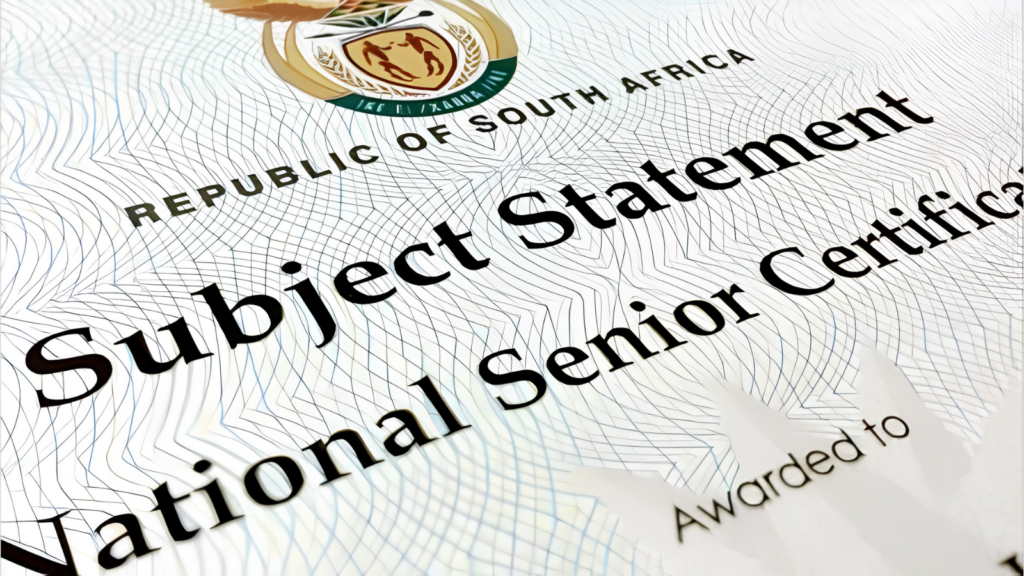
While South Africa has made significant progress in literacy rates over the past two decades, nearly half of adults still lack a matric qualification.
According to Statistics South Africa’s latest General Household Survey (GHS), as of 2025, 47.1% of adults aged 20 and older, which is approximately 18.9 million people, do not have a Grade 12 qualification.
Although this figure is substantial, it also indicates considerable progress since 2002, when only 30.5% of adults had attained matric, compared to 52.9% today.
The survey presents a mixed picture of South Africa’s education system. Basic education participation is nearing universal levels up to age 15, with a participation rate of 97.1%.
The percentage of individuals aged 20 and older who are considered functionally illiterate, defined as those who have received no schooling or have not completed Grade 7, has decreased significantly from 28.5% in 2002 to 8.7% in 2025.
“Although a simple definition of literacy is the ability to read and write in at least one language, the simplicity of this measure is complicated by the need to know what is read and written, and for what purpose, and also how well it is done,” said Statistician-General Risenga Maluleke.
Risenga said that the General Household Survey has historically measured adult literacy rates based on an individual’s functional literacy, e.g. whether they have completed at least Grade 7, as it is quite difficult to measure literacy.
Individuals over 60 years old consistently have the highest rates of functional illiteracy, followed by those aged 40 to 59 and then individuals aged 20 to 39.
However, the large number of adults without a matric qualification continues to have significant social and economic implications.
Speaking to Newzroom Afrika, Unisa’s College of Graduate Studies Head of Quality Assurance and Enhancement Professor Gezani Baloyi, said that this statistic reflects more than just an educational issue.
“18 million South Africans do not have matric qualifications, despite the fact that a large amount of this country’s budget is spent on education, and we do have a Constitution which says every learner, or even adult learners, has a basic right to education,” he said.
Baloyi said that while educational attainment has improved significantly over time, many young South Africans still feel disconnected from both education and employment opportunities.
“If we look at the trend, in 2002 only 30.5% had matric certificates, and in 2025 only 52.9% had matric certificates.”
Unemployment rates worsen in South Africa

In the first quarter of 2026, South Africa’s unemployment crisis worsened, with the official unemployment rate rising to 32.7%, according to the latest Quarterly Labour Force Survey (QLFS).
Stats SA reported that the number of discouraged job seekers has increased by 178,000, bringing the total to 3.9 million.
The number of available job seekers rose by 55,000, bringing the total to 910,000, while the number of unavailable job seekers grew by 6,000, bringing that total to 49,000.
On a positive note, the number of individuals outside the labour force for other reasons decreased by 75,000, lowering the total to 12.4 million.
The data outlines a troubling situation in the labour market: 345,000 fewer South Africans are employed, bringing the total to 16.8 million.
These statistics indicate that more households are now facing uncertainty due to lost income, rising living costs, and the ongoing challenge of making ends meet.
For many South Africans, these numbers represent significant challenges.
Behind the statistics are families dealing with difficult financial decisions daily, whether to put food on the table, pay for transportation to work or school, keep up with debt repayments, or cover basic household expenses.
This situation has been exacerbated by recent increases in food and fuel prices, which put additional pressure on already stretched household budgets.









 Loading ...