

Here is the expected petrol price for July


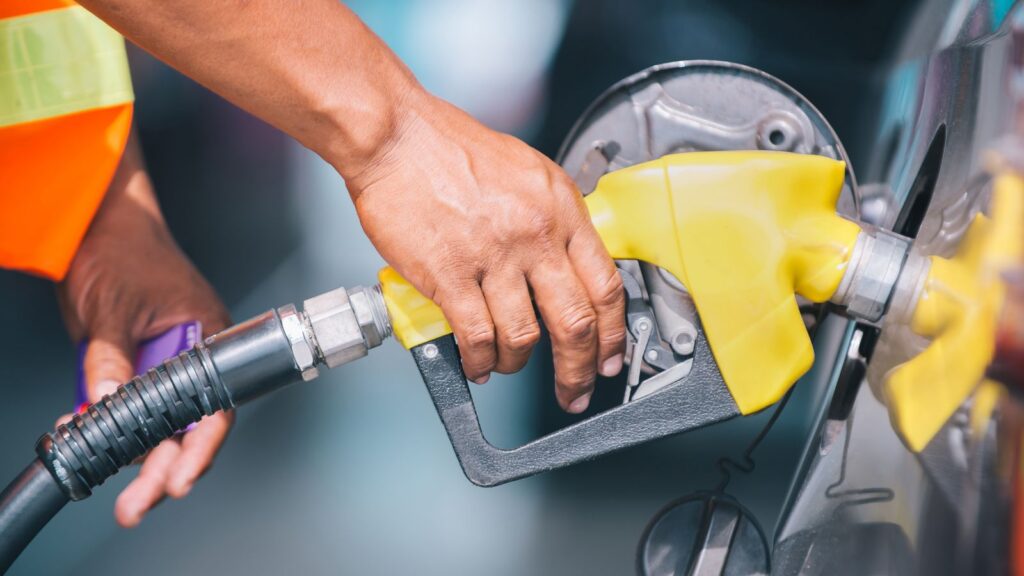
A sharp drop in oil prices, and the rand marching towards R16/$, is putting South African motorists in line for welcome relief next month—even with the end of the fuel levy relief.
Mid-month data from the Central Energy Fund (CEF) shows significant over-recoveries for petrol, diesel and illuminating paraffin for July.
Petrol price recoveries are well over R2.50 per litre, while diesel is lining up for another significant cut, with over-recoveries above R4.20 per litre.
These are the recoveries at mid-month:
- Petrol 93: decrease of R2.60 per litre
- Petrol 95: decrease of R2.57 per litre
- Diesel 0.05% (wholesale): decrease of R4.28 per litre
- Diesel 0.005% (wholesale): decrease of R4.59 per litre
- Illuminating paraffin: decrease of R4.57 per litre
Typically, over-recoveries at these levels would put huge price cuts on the cards for motorists; however, the end of the National Treasury’s fuel levy relief will offset this.
After adding half the fuel levy relief back into prices in June, the fuel levy relief will fully terminate in July.
This will see R1.50 per litre be added back into petrol prices in July, with diesel prices having R1.96 per litre reintroduced.
However, even with the levies being added back, the fuel recoveries remain positive—meaning a cut at the pumps is still likely for July.
The table below outlines how the July fuel prices could be impacted by their return.
| July projections | (Under)/Over recovery Mid-month | Fuel tax added back in July | Projected change |
|---|---|---|---|
| Petrol 93 | R2.60 | (R1.50) | R1.10 |
| Petrol 95 | R2.57 | (R1.50) | R1.07 |
| Diesel 0.05% | R4.28 | (R1.96) | R2.32 |
| Diesel 0.005% | R4.57 | (R1.96) | R2.61 |
This is how the price changes will reflect at the pumps, including the full fuel levy being added back into the price.
| Inland | June Official | July Expected |
| 93 Petrol | R27.95 | R26.85 |
| 95 Petrol | R28.06 | R26.99 |
| Diesel 0.05% (wholesale) | R27.92 | R25.60 |
| Diesel 0.005% (wholesale) | R29.26 | R26.65 |
| Illuminating Paraffin | R22.47 | R17.90 |
| Coastal | June Official | July Expected |
| 93 Petrol | R27.16 | R26.06 |
| 95 Petrol | R27.19 | R26.12 |
| Diesel 0.05% (wholesale) | R27.05 | R24.73 |
| Diesel 0.005% (wholesale) | R28.00 | R25.39 |
| Illuminating Paraffin | R21.42 | R16.85 |
Note: the above only considers the fuel levy being added back in July, as well as the current recovery data. It does not consider changes to the slate levy, which may also affect final pricing.
A welcome change in fortunes

The massive over-recoveries are being driven by sweeping drops in global oil prices, which have fallen from highs above $110 a barrel to around $83 a barrel on Monday (15 June).
The fall can be attributed to more positive market sentiment and confidence that the war between the United States and Iran is drawing to a close.
Oil sank after the US and Iran agreed to an interim deal to end their months-long war, potentially allowing the Strait of Hormuz to reopen and easing a supply crunch that has rattled global energy markets.
President Donald Trump said in social media posts that he was authorising the “toll-free opening” of Hormuz, as well as ending a blockade of the Islamic Republic, with the strait to reopen when the deal is signed on Friday (19 June).
Traders and analysts are still cautious, however, highlighting the lack of fine-print detail on the text, hurdles for the shipping industry to restart transits of the waterway, and a drawn-out timeline for fields to restart pumping.
The impact of the fuel price spike in May is expected to be laid bare this week, with economists anticipating a CPI reading of close to 5% year-on-year—the highest since mid-2024.
Nevertheless, a reversal in oil prices will feed into lower energy prices, which will have a ripple effect, easing inflationary pressure over the longer term.
Another boost for the rand comes from the US-Iran deal, which has strengthened on news that the agreement is to be signed.
Investors have generally pulled out of emerging markets amid the turmoil, with an end to the war bringing back appetite for risk.
The rand has been uncharacteristically resilient over the past few months, however, as other commodities and precious metals gained amid the oil crisis.
This kept the rand in a relatively stable trade range around R16.50/$. The unit has now pulled towards R16/$, trading at R16.17 to the dollar early on Monday.
Outside of the Iran War, the rand has also been supported by a turn in local sentiment, with ratings agencies upgrading the country’s credit rating and setting the outlook to positive.
Other economic fundamentals are also pointing up, including higher-than-expected growth and a larger-than-expected current account surplus.
Traders will be keeping an eye on other economic data coming out in the weeks ahead for further indications of the health of the country’s economy.
With Bloomberg and Reuters.


















 Loading ...