

New ‘winter mafia’ taking hold in South Africa


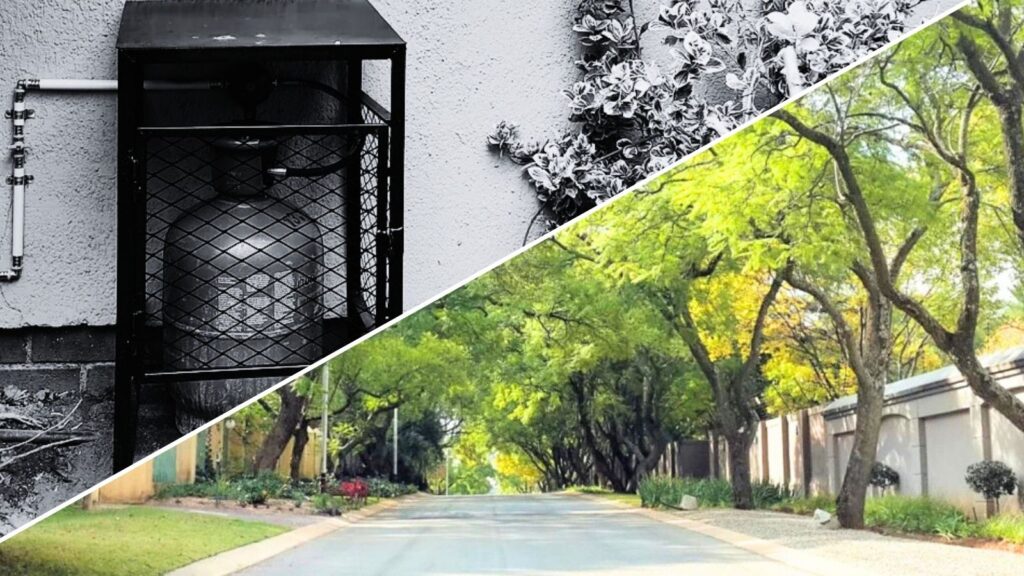
South Africa’s gas cylinder sector faces challenges, with over 25% dominated by illegal businesses and individuals.
PayGas CEO and Co-Founder Philippe Hoeblich said in an interview on Cape Talk that there are two profiles in the illegal LPG refilling market in South Africa.
He said that one of the illegal profiles is that of large refilling plants with large storage, which act more as syndicates.
This profile, according to Hoeblich, is quite well documented and is usually under the responsibility of the South African Police Service (SAPS) and law enforcement to regulate.
The other illegal profile is the “seasonal refilling dealer,” who operates mainly for the winter season, purchasing 48kg gas bottles and refilling them with a manual pump.
Hoeblich said that in both cases, the victim is the customer. He urged South Africans who exchange their gas cylinders to avoid “smarties shops.”
“A smartie shop is a shop where you have got all the colours, all the branding, because this is forbidden in South African law. You can’t have multi-brand, so as soon as you see multiple colours like the Smarties chocolates, avoid,” said Hoeblich.
“For the refilling one, when it’s your own cylinder, like Cadac, Alva, Bush Baby, always ask for the slip where you can see the quantity of gas that has been refilled.”
In May 2026, the Minister of Mineral and Petroleum Gwede Mantashe announced the adjustments of fuel prices and the Maximum Refinery Gate Price (MRGP) and the Maximum Retail Price (MRP) of LPGas that is imported through the Port of Saldanha Bay.
As of 6 May 2026, the MRP of LPGas increased by R5,07 per kilogram in Gauteng and R5,78 per kilogram in the Western Cape.
These increases, caused by the Iran-US conflict, add up to around R50 extra per refill for a 9 kg cylinder.
Price increases may lead to illegal refills
Hoeblich said that the price increases in gas “have stressed the model of swapping cylinders,” as many people have chosen to opt for illegal refilling so as to balance their budgets.
He said that it is very important for people to understand the regulations of South Africa.
“You’ve got two types of cylinders, the branded cylinders that belong to the brand like Easigas, Total, Afrox, which you can only swap with dealers of those brands, and then you’ve got Cadac, where you can refill wherever you want.”
Hoeblich said that since the gas price increases, partial refills have increased dramatically as flexible refilling is a way of absorbing the shock of increasing prices.
However, he also said that this opens opportunities for illegal refills, which is why Hoeblich urges people to be careful when refilling and ask for safety checks and the receipt.
Easigas, a supplier of LPGas, stated that illegal refilling of LPGas is becoming an increasing issue in South Africa.
They said that unlicensed individuals and unauthorised businesses are refilling cylinders without proper training, equipment, or permits.
“These illegal practices bypass critical safety procedures, creating serious risks for consumers, communities, and the environment,” said Easigas.
Easigas explained that illegal refilling occurs when a company-branded LPGas cylinder is filled with LPGas outside of the company’s filling plants or its official distributors’ locations.
It also includes any cylinder filled by a company without a license. This means they do not have:
- A Department of Mineral Resources and Energy (DMRE) license,
- Zoning certificates,
- A valid fire permit.
“These operations are not only non-compliant, but they also are dangerous and put lives and property at risk,” said Easigas.
Illegally filled cylinders are often cheaper because they may be underfilled. A simple way to verify this is by checking the weight of the cylinder.





 Loading ...