

People had more chance of finding a job during the Great Depression than South Africans do in 2026


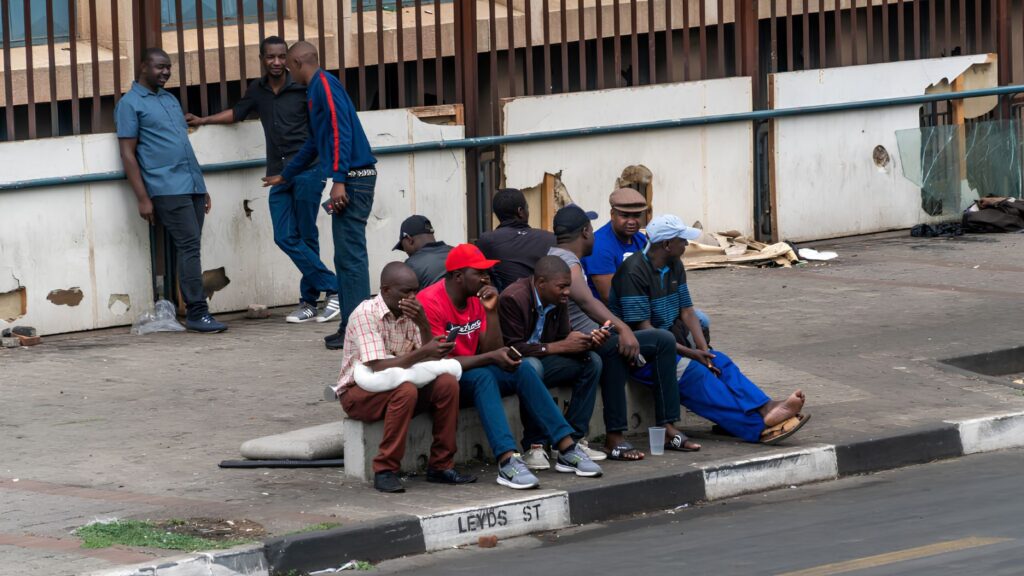
South Africa’s unemployment crisis has reached levels that exceed those experienced by countries such as the United States and Britain during the Great Depression of the 1930s.
Unemployment data suggests that people in these countries, devastated by the Great Depression of the 1930s, had a better chance of finding work than South Africans do today.
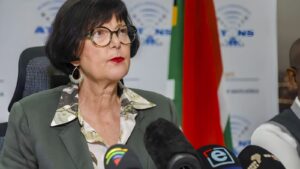
This is the feedback from Justin Visagie, Associate Professor at the Southern Centre for Inequality Studies at Wits University.
Drawing on a decade of tax data made available through a secure facility established by the National Treasury, Visagie said the country’s labour market is facing a challenge unlike anything seen in most modern economies.
Speaking on The Money Show, he said the figures reveal a stark mismatch between job creation and the growing number of people seeking work.
“To be honest with you, it’s something that’s been keeping me up at night because the numbers really don’t add up,” said Visagie.
“If you look at our performance over the last 10 years, we’ve created only 130,000 new formal work opportunities, and yet, our total unemployed job seekers have gone from 8 million to 12 million over the same period.”
Visagie said the severity of South Africa’s unemployment crisis becomes clearer when compared with one of the worst economic downturns in modern history.
“I think our eyes need to open, that this is at a level that we haven’t seen in the world,” he said.
“To put it into context, during the Great Depression in 1933, countries such as the United States of America and Britain had unemployment rates which were starting to reach 20% or 25%.”
By comparison, South Africa’s expanded unemployment rate, which includes discouraged workers who have stopped actively seeking jobs, has hovered around 40% since the Covid-19 pandemic.
“Whereas in South Africa, we talk about a 40% unemployment rate, including the discouraged work seekers. And that’s been going on since Covid. So we’re at a level that is sort of unprecedented,” said Visagie.
South Africa’s labour market is part of the problem
Statistics South Africa’s latest data highlights the extent of the challenge. The official unemployment rate rose by 1.3 percentage points to 32.7% in the first quarter of 2026.
The number of unemployed people increased by 301,000 to more than 8.1 million. The expanded unemployment rate climbed to 43.7%, while total labour underutilisation reached 46.3%.
Visagie argued that the scale of the problem is so large that South Africa would need to double the size of the formal economy overnight just to break even in solving the unemployment problem.
He stressed that unemployment is not only the result of years of slow economic growth in the country.
“Even our best-case growth scenarios still won’t be enough for millions of South Africans looking for work within their own lifetime,” he said.
Part of the challenge lies in the structure of South Africa’s labour market. While many developing countries rely on large informal sectors to absorb workers who cannot find formal employment, South Africa’s informal economy remains relatively small.
“In Latin America and in much of sub-Saharan Africa, where the unemployment rate is lower, it’s because the informal economy plays a bigger role,” he explained.
“Part of the reason we have such large unemployment is that our informal economy isn’t playing the role that it plays elsewhere.”
Young people continue to bear the brunt of the crisis. Youth unemployment among those aged 15 to 34 stands at 45.8%, and Visagie’s analysis found that younger workers have struggled to recover after the pandemic.
He warned that prolonged joblessness among young people could have lasting consequences. “We know if young people aren’t able to get a foot into the labour market early on, their chances of being structurally excluded within the economy increase in the long term,” he said.
According to Visagie, even relatively strong economic growth would take decades to solve the problem.
“If we look at the numbers, clearly the formal economy, even if it grows at 3%, if it creates 5% jobs every year, it would take us 20 years for us to wipe out the problem,” he said.
For that reason, he believes South Africa has entered “extraordinary territory” and requires a stronger government response alongside private-sector growth.
He added that while economic growth remains essential, policymakers also need to find ways to support the millions of people currently excluded from meaningful economic participation.
“I think it needs to be combined with a much more active and caring state that can try and think about what other options we can provide to an underutilised resource, which is many warm bodies in South Africa who don’t seem to be participating meaningfully.”











 Loading ...