

Severe weather conditions confirmed for South Africa


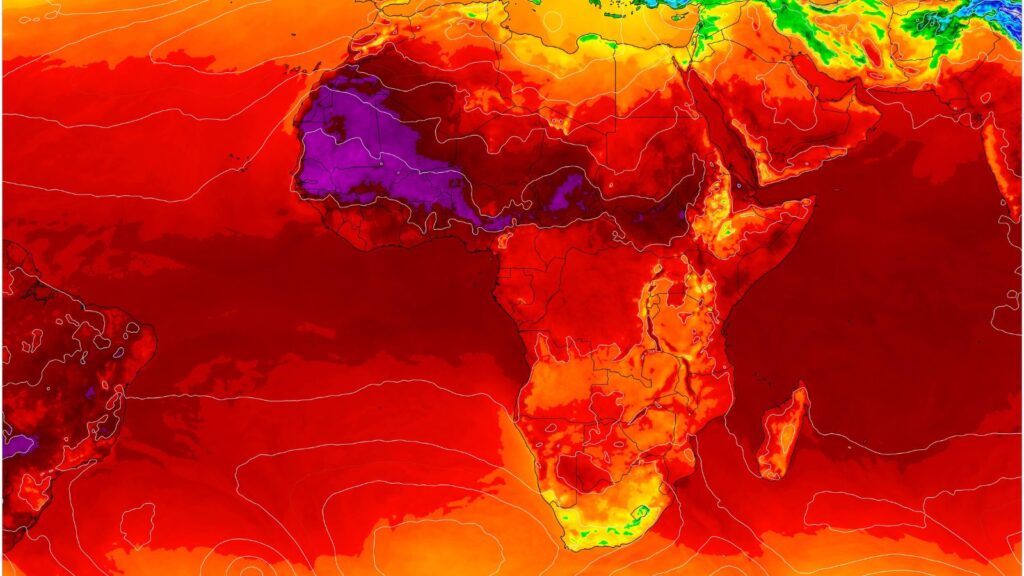
South Africa is likely to face significant weather-related risks over the coming months after major international climate agencies confirmed that an El Niño weather phenomenon has developed.
This is the feedback from Investec Chief Economist Annabel Bishop, who noted that several of the world’s leading climate monitoring organisations have now confirmed the return of El Niño.
El Niño is a weather pattern often associated with drought in southern Africa and can have serious consequences for agriculture, food prices, inflation, and economic growth.
The latest report from the NOAA Climate Prediction Centre concluded that El Niño conditions are present, and that equatorial sea surface temperatures (SSTs) are above average across the central and eastern Pacific Ocean.
The International Research Institute for Climate and Society (IRI) reported that El Niño conditions are strengthening and show a steady upward trend that continues to intensify.
The World Meteorological Organisation (WMO) has also warned that El Niño conditions are set to influence global temperature and rainfall patterns, increasing the risk of extreme weather.
Bishop explained that changing rainfall patterns linked to El Niño can have severe consequences worldwide. While some regions experience prolonged drought, others face excessive rainfall and flooding.
Citing warnings from the United Nations Food and Agriculture Organisation (FAO) and the World Food Programme (WFP), Bishop said a strong El Niño weather pattern expected to intensify through late 2026 and into next year could trigger another wave of climate-related disruption.
The agencies warned that changing rainfall patterns associated with El Niño are expected to bring drought to some regions and severe flooding to others.
This threatens harvests, livestock, water supplies and food production across Africa, Asia, the Pacific and Latin America.
For South Africa, the primary concern is the impact on agriculture. The country’s farming sector recently benefited from La Niña conditions, which improved soil moisture levels and supported crop production.
Food inflation risks are increasing

Agriculture contributed positively to South Africa’s first-quarter 2026 economic growth rate of 0.5%. However, Bishop cautioned that the outlook could deteriorate as El Niño strengthens.
While current soil moisture levels should continue supporting agricultural production through the second and third quarters of 2026, she warned that conditions are expected to become less favourable heading into the next planting season.
“The El Niño is currently indicated to be moderate overall, but forecasts also show a reported period of intensity from November this year to January next year, which could dry out soils during a critical period for crop development,” Bishop said
This poses a particular threat to South Africa’s maize harvest. Maize is one of the country’s most important staple foods, and Bishop said the crop is especially vulnerable to adverse weather conditions expected during the upcoming rainy season.
The NOAA Climate Prediction Centre expects El Niño conditions to strengthen into the Northern Hemisphere winter 2026-27, a period that coincides with South Africa’s summer rainfall season and could damage newly planted crops.
As a result, Bishop believes food inflation risks are increasing. Although strong harvests are expected to keep food prices relatively contained for most of 2026, she warned that 2027 could look different.
“With food prices the largest single contributor to CPI inflation, we have lifted our 2027 CPI inflation forecasts to 3.7% year-on-year from 3.3% year-on-year previously,” she said.
Bishop added that maize prices are expected to rise globally, which could cause South Africa’s cereals inflation index to shift from its current deflation into an inflation driver.
Bishop stressed that weather forecasts remain uncertain and that El Niño conditions are currently expected to weaken during the second quarter of 2027.
However, she warned that prolonged and severe El Niño events have historically caused multi-year droughts in South Africa, pushing food inflation into high double digits and driving overall consumer inflation sharply higher.

















 Loading ...