

War brewing over plan to impose BEE laws on Springboks vs All Blacks Tour


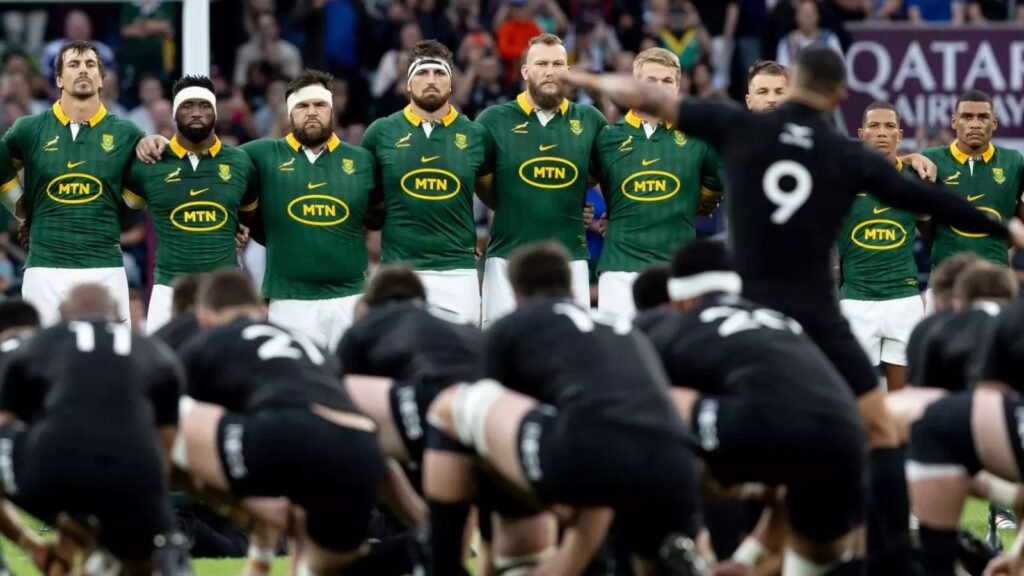
A legal battle is brewing over the government’s plan to grant special protected status to the upcoming Rugby’s Greatest Rivalry 2026 Tour.
The tour will see South Africa’s Springboks take on New Zealand’s All Blacks between August and September this year.
The Department of Trade, Industry and Competition (DTIC) recently published a notice proposing that the tour be declared a protected event under Section 15A of the Merchandise Marks Act of 1941.
If approved, the designation would give organisers additional legal protection against the unauthorised use of event-related branding, logos, slogans and trademarks associated with the Springboks, All Blacks and the tour itself.
The protection would cover a wide range of names and visual marks, helping organisers combat counterfeit merchandise and unauthorised commercial activity linked to the event.
However, the proposed declaration comes with a number of conditions that have sparked criticism from trade union Solidarity.
The union argued that the government wants to impose procurement and Broad-Based Black Economic Empowerment (B-BBEE) requirements on what is essentially a private sporting event.
Under the notice, the South African Rugby Union (SARU), as the organiser, would be required to align its procurement processes with constitutional procurement principles, including fairness, equity, transparency and competitiveness.
The organisation would also have to comply with the Preferential Procurement Policy Framework Act and apply the DTIC’s B-BBEE codes of good practice when evaluating suppliers.
In practical terms, this means a supplier’s B-BBEE status must be considered alongside price and other factors when contracts for the tour are awarded.
The notice also requires organisers to support South African businesses, particularly those from previously disadvantaged communities.
They will also have to submit an impact assessment report to the Minister of Trade, Industry and Competition between six and twelve months after the event concludes.
The report would need to outline the tour’s economic and social impact and demonstrate how opportunities were created for local and disadvantaged businesses.
Opens the door to greater state control

Supporters of the approach argue that the conditions ensure that major events deliver broader economic benefits and create opportunities for historically disadvantaged enterprises.
However, Solidarity has strongly opposed the proposal and has indicated that its legal team is already preparing submissions against the regulations.
According to Theuns du Buisson, economic researcher at the Solidarity Research Institute (SRI), the government should not use the protected-event designation to enforce procurement policies on independent event organisers.
“Our biggest concern is the attempt to impose BEE regulations and procurement requirements on the organisers of the All Black tour,” he said.
“Solidarity is already challenging the Public Procurement Act in court. Imposing these requirements on independent events while the Act is still being challenged makes no sense.”
He argued that the proposal could interfere with existing commercial arrangements and create uncertainty for businesses that have already entered into contracts related to the tour.
“Where does this decision leave businesses that have already signed contracts for supporter jerseys, marketing and other products?” he asked.
Du Buisson further warned that the requirements could have significant consequences if applied strictly.
“If the law is applied to its fullest extent, only 100% black-owned businesses may have the right to manufacture or sell Springbok supporter jerseys. Such an outcome is simply absurd.”
Solidarity also believes the proposal could establish a precedent that extends government influence over private events beyond rugby.
“Once a minister can declare anything to be in the ‘public interest’ and subsequently subject it to state procurement requirements, there is virtually no limit to state interference,” Du Buisson said.
The organisation has also raised concerns about the administrative burden imposed by the reporting and compliance requirements associated with protected-event status.
“Mandatory impact reports to the minister and other regulatory requirements increase the cost of hosting major events. South Africa should encourage international sporting and cultural events, not deter them through excessive state control,” he said.
The proposal is open for public comment, with interested parties given 15 days from publication of the notice to submit feedback.
The notice, in its entirety, along with the protected marks and terms, can be viewed below.
















 Loading ...