

D-Day for South Africa has arrived


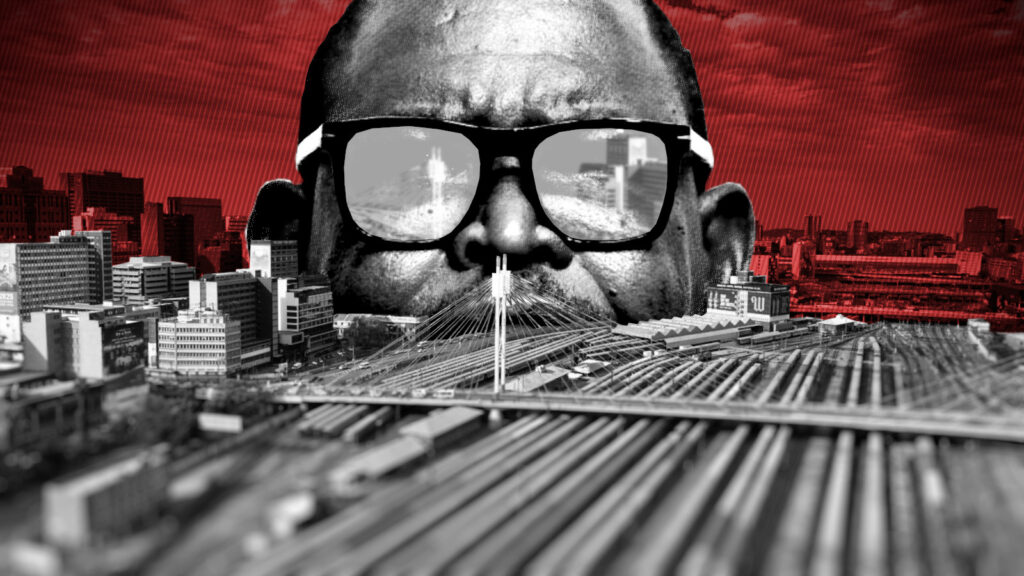
South Africa has finally reached the brink of widespread municipal collapse, with BLSA CEO Busi Mavuso warning that the City of Joburg risks taking the rest of the country with it.
Writing in her weekly newsletter, the Business Leadership South Africa (BLSA) lead said that D-Day has arrived with the National Treasury’s decision to withhold the July equitable share transfer from 69 municipalities.
This follows auditor-general reports going back more than 10 years, where irregular expenditure—a strong indicator of corruption—increased year after year, with no effective measures taken to stop the rot.
Auditor-General Tsakani Maluleke presented her 2024-25 audit outcomes report to Parliament’s Portfolio Committee on Cooperative Governance and Traditional Affairs in June, laying out widespread issues across the country’s municipalities.
This is nothing new, as the AG has been sounding the alarm and laying out warnings about collapsing municipalities for years—warnings that continued to go unheeded.
This culminated with a statement issued last week by Finance Minister Enoch Godongwana, announcing that funding would be withheld.
Godongwana noted that, since 2021-22, the affected municipalities have racked up R145.21 billion in cumulative irregular expenditure—R40.14 billion of it in 2024-25 alone.
This is together with R118.13 billion in unauthorised expenditure and R24.12 billion in fruitless and wasteful spending.
Nearly half, 116 municipalities, adopted budgets they could not fund, he said. Mavuso said the country has now hit the edge.
“We have finally come to the brink of widespread municipal collapse,” she said.
“Municipal collapse is now hitting three of South Africa’s eight metros, including Johannesburg, Mangaung and Nelson Mandela Bay.”
Mavuso said this collapse directly reflects a failure of leadership and accountability, with local government politicians having largely proven themselves to be a serious part of the problem rather than making any sort of progress in finding solutions.
She said that instead of placing the “right people in place”, politicians continued to focus on factional battles, power grabs and vested interests.
As a result, service delivery collapsed, with underdeveloped areas hit the hardest.
This was echoed by the Auditor-General, who said the root causes of continued poor audit outcomes and municipal failures can be traced to persistent failures in the accountability ecosystem at multiple levels.
“Our audits again confirmed that accounting officers, senior managers, mayors and councils are not doing what legislation requires of them, or they are not effective in performing these duties,” she said.
A national crisis

Mavuso reiterated that, among the collapsing municipalities, the City of Joburg has the potential to do the most damage to South Africa as a whole.
“Business has repeatedly made the point that Johannesburg is a national problem: if Johannesburg fails, the consequences ripple through the entire economy,” she said.
Johannesburg’s mayor, Dada Morero briefed the media last week, acknowledging that work needs to be done to turn things around, but also disputed that the city was collapsing or in crisis.
He said that the 2026/27 budget had been certified as funded, and that the executive was working with National Treasury to address its concerns.
However, Mavuso said that the mayor’s promises and assurances don’t “square with the numbers”.
Specifically, the National Treasury requires municipalities to hold 32 days of cash cover, and Johannesburg currently has only 12.
Its historical backlog of unauthorised, irregular, fruitless and wasteful expenditure stands at about R23 billion.
“That is an emergency situation, especially in the face of the city’s arrears of about R3.7 billion to Eskom and R1.2 billion to Rand Water, according to NT’s figures,” Mavuso said.
While the city has committed to paying these utilities this week, the BLSA head pointed out that it must also cut its unauthorised, irregular, fruitless and wasteful expenditure balance by 25% by 30 September.
This is if it wants any hope of receiving its equitable share from the Treasury.
“South Africa cannot build a competitive economy on the back of collapsing municipalities. The AG has told us where the failure lies, and NT is now showing the consequences of failing to address the problems,” Mavuso said.
“Political parties should seriously contemplate this crisis when putting forward candidates for councillors and mayors in the November local elections.”

















 Loading ...