

The 207-year-old town in South Africa that ranks among the top in the world


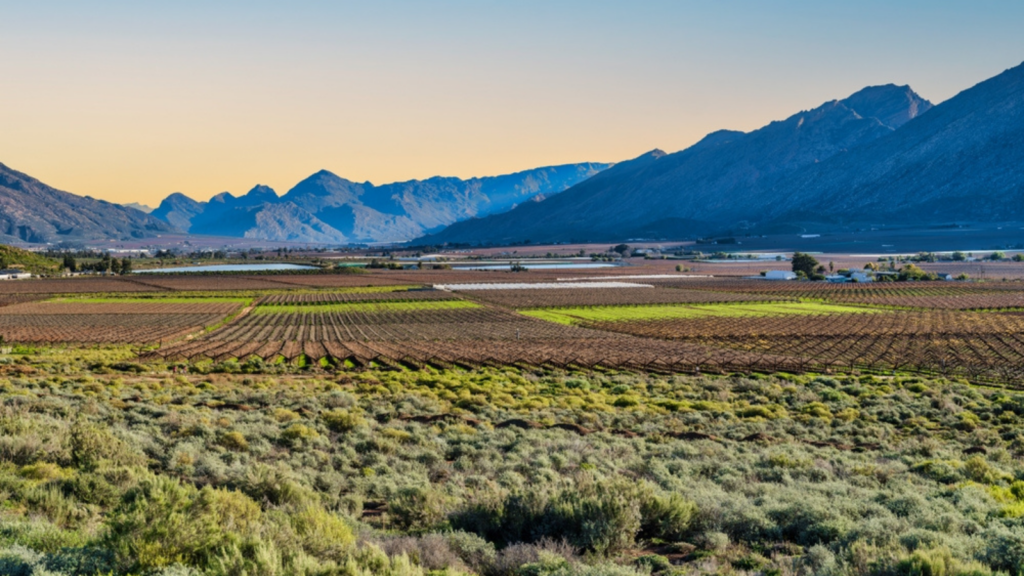
De Doorns is a 207-year-old small town situated in the Cape Winelands region of the Western Cape, South Africa and exports 17 million crates of grapes every year.
Located in the Hex River Valley, De Doorns is 32 km northeast of Worcester and 40km southwest of Touwsrivier, making it a key stop on the main route to and from Cape Town, Johannesburg, and Port Elizabeth.
De Doorns is a major player in the global fruit industry. Located in the Hex River Valley, it is South Africa’s largest producer and exporter of table grapes.
Because of its export volume and quality, the region is considered the heartland of the South African table grape export industry, which frequently ranks among the top Southern Hemisphere exporters globally.
Because the town’s Hex River Valley produces the largest concentration of table grapes in the country—accounting for roughly 25% of South Africa’s 78.3 million export cartons—De Doorns ranks as one of the single most dense and productive table grape export hubs in the world.
The town was established in 1819 when it was proclaimed a Sub-Drostdy of Tulbagh. Two farms were purchased to lay out the town. By 1822, De Doorns was elevated to the status of a full Drostdy.
This means that it became a magisterial and administrative district under the jurisdiction of a Landdrost during the 17th, 18th, and early 19th centuries.
In 1875, the De Doorns farm was acquired by the Government of the Cape, under Prime Minister John Molteno, for the construction of a railway station.
This station was part of the expanding Cape Government Railways and connected De Doorns to Cape Town, eventually reaching Montagu Road (now Touws River).
The town developed around the railway station. De Doorns lies at the heart of the Hex River Valley, known for its role in South Africa’s table grape industry.
This valley is home to 200 table grape farms, historic Cape Dutch homesteads, and snow-capped mountains in winter.
The name “De Doorns” translates to “the thorns” in Dutch, referring to the Acacia thorn trees that line the banks of the Hex River.
The De Doorns Wine Cellar has the longest harvest season in the world, running from December to April.
Unlike standard vineyards that experience a brief and intense harvest period of just a few weeks, De Doorns benefits from an extended five-month production window.
The longest grape harvesting season in the world

In most vineyards worldwide, grapes ripen at roughly the same time, leading to a high-pressure race against the clock.
Winemakers typically have only four to six weeks to pick, transport, and crush the grapes before they spoil or are damaged by adverse weather conditions.
However, since De Doorns has a five-month harvest season that begins in December, the initial wave of fruit during this period is different from that of winemaking grapes.
The initial wave consists of surplus and “thinned” table grapes, which are meant for eating rather than winemaking. Table grapes have different sugar and acidity profiles compared to traditional wine grapes.
To make the most of these early-season grapes, De Doorns processes them into non-alcoholic sparkling grape juices, sweet sparkling wines, and base spirits for bulk brandy production, such as their own 5-Year-Old Pot-Stilled Brandy.
Small winemaking towns such as De Doorns contribute significantly to South Africa’s export industry, with De Doorns alone exporting nearly 17 million cartons of grapes annually.
The mountains in the De Doorns valley are home to a wide variety of birdlife, including large raptors such as black eagles, which are often seen hunting high above the cliffs.
These mountain ranges also serve as a reminder of the valley’s earliest human inhabitants.
Rock art found on the cliffs and in the caves of the mountains has been dated to approximately 7,000 years old and indicates that the area was inhabited by the /Xam San, the southern branch of the San tribe of hunter-gatherers.
The San people were the original inhabitants of the Western Cape, and DNA analysis has shown that they are the closest living relatives to early humans.
Evidence suggests that these prehistoric tribes used the valley as a seasonal migration route, following antelope herds into the Karoo during winter and returning to the permanent rivers in the Western Cape valleys in summer.

















 Loading ...