

South Africa hit with extra R56 billion fuel bill shock


Since the start of the conflict in the Middle East in February 2026, South Africa’s fuel imports have cost an additional R56 billion.
The war has created the largest and most sustained price shock since the 1990 Gulf War.
According to the Finland-based Centre for Research on Energy and Clean Air (CREA), markets worldwide have had to pay a high price for sudden increases in oil prices.
CREA’s reports indicate that South Africa incurred a net total of $3.5 billion (roughly R56 billion) in additional fossil fuel import costs between March and August 2026.
Within Africa, South Africa was the second-largest payer in this crisis, following Egypt, which spent $5.2 billion, and ahead of Morocco, which paid $2.2 billion.
This $3.5 billion expenditure has a significant economic impact, accounting for 0.88% of South Africa’s GDP.
The report categorises South Africa with other highly affected nations, including Chile, Thailand, Vietnam, and the Philippines, all of which spent more than 0.65% of their GDP on crisis-related costs.
According to CREA, South Africa used the equivalent of 3.2 days of its entire national income to manage the fuel price surge caused by the war.
The largest component of South Africa’s costs was the spike in imported diesel and gasoil, which accounted for $2.1 billion, or around R33.9 billion, in additional expenses.
This positioned South Africa’s net diesel markup on par with those of major European economies such as France and the United Kingdom, both of which incurred net additional diesel costs of $2.1 billion.
CREA reported that the transition to clean energy significantly mitigated what could have been an even worse financial disaster.
The report indicates that in the first five months of the crisis alone, the clean power generation infrastructure developed globally since 2020 saved importing countries an estimated $36 billion (R581 billion) in avoided fossil fuel imports.
This includes $22 billion (R355 billion) in gas, $10 billion (R161 billion) in coal, and $5 billion (around R80 billion) in oil.
The savings were led by China, which saved $7.9 billion, and Japan, which saved $4.9 billion.
To illustrate the scale of the crisis, global monthly fossil fuel markup costs reached $55.3 billion (R892 billion).
This was nearly equal to the entire global monthly investment in renewable power projected for 2025 at $58 billion (R936 billion).
The price shock is evident in local fuel prices, which are close to R7 per litre higher for petrol and R12 per litre higher for diesel since before the war began.
With another significant hike lined up for October, fuel users will continue to suffer.
Post-Iran War price adjustments
| Month | Petrol 95 | Diesel 0.005% |
|---|---|---|
| March | +R0.20 | +R0.65 |
| April | +R3.06 | +R7.51 |
| May | +R3.27 | +R5.27 |
| June | +R1.43 | -R2.62 |
| July | -R1.96 | -R3.59 |
| August | -R0.52 | +R1.23 |
| September | +R1.34 | +R3.15 |
| Total difference | +R6.82 | +R11.60 |
| October (projected) | +R2.22 | +R3.11 |
| Total projected difference | +R9.04 | +R14.71 |
Jet fuel shortages
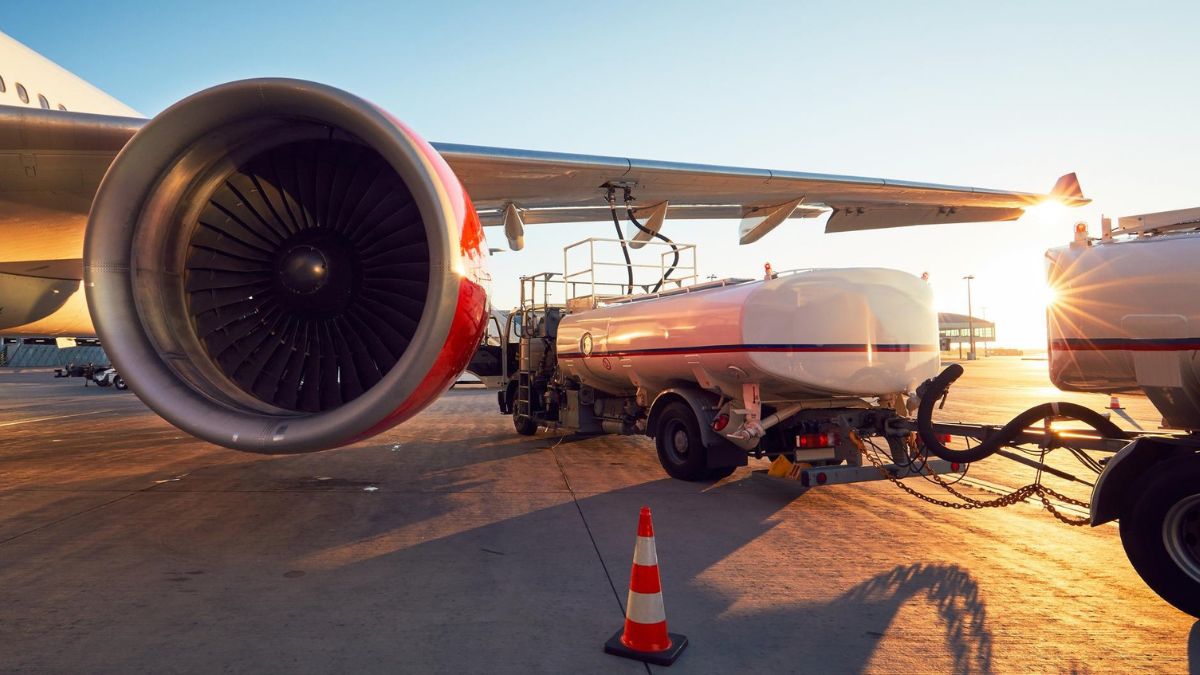
Sasol recently announced that an unplanned stoppage at its Natref refinery has limited jet fuel supply to South Africa’s busiest airport, OR Tambo International.
This situation has led airlines to develop contingency plans to prevent future disruptions.
Natref, located in Sasolburg, is South Africa’s only inland crude oil refinery and a vital supplier of fuel to the country’s economic centre.
According to Sasol, the outage of a downstream unit affected its ability to fulfil its full supply commitments for several fuel grades, including jet fuel for customers at ORT.
The company stated that it will continue to partially supply its jet fuel customers at the airport and is implementing measures to minimise the impact.
Natref is working to restore normal operations as soon as possible.
Sasol CEO Simon Baloyi said that he was surprised at the inadequate levels of jet fuel maintained by suppliers.
He was especially surprised in light of current geopolitical developments, which have led to both price increases and supply disruptions due to the conflict in Iran.
“You can’t run with low inventory. Operational plants are operational plants; they’ll go up, they’ll go down,” said Baloyi.
Baloyi said that South African jet fuel suppliers must keep higher stock levels to prepare for potential production outages.
The Department of Energy held an emergency meeting with the Airports Company South Africa and the Fuels Industry Association of Southern Africa last week, as reported by the Airlines Association of Southern Africa.
This disruption follows planned maintenance at the Natref refinery, which was worsened by a technical problem, according to FlySafair.
FlySafair has arranged to temporarily increase supplies from alternative providers to manage any shortfall.
FlySafair plans to implement a “moderate tankering adjustment,” which involves carrying extra fuel to reduce the amount needed at their destination.
This strategy, along with other measures, aims to ensure fuel security for its operations, according to its Chief Marketing Officer, who responded to inquiries via email.
In July, the Department of Mineral and Petroleum Resources proposed that reserves should cover 60 days of demand, with approximately two-thirds crude oil and the rest oil products.
Under this plan, licensed wholesalers and importers would be required to maintain an inventory that lasts for 21 days.

















 Loading ...