

R39,500, medical aid, and housing for Afrikaner refugees in the US, and up to R3.15 per litre pain



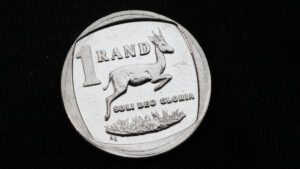
The South African rand traded cautiously on Monday morning, impacted by a stronger dollar, rising oil prices, and declining prices for precious metals.
Additionally, comments from US Federal Reserve Chair Kevin Warsh indicated that further interest rate hikes might be necessary to control inflation.
The rand was quoted at 16.1225 against the dollar, losing earlier gains after reaching nearly 15.90 last week.
At the Jackson Hole symposium on Friday, Warsh stated that the central bank would have “work to do” if inflation did not move convincingly towards its 2% target.
Following Warsh’s comments, markets significantly adjusted their expectations regarding a potential US rate hike in September.
This led to gold prices falling to their lowest level in almost two weeks. Like other risk-sensitive currencies, the rand often reacts to global developments, including U.S. economic data and policy signals.
ETM Analytics reported that the rand is under pressure due to declining gold and platinum prices—key exports for South Africa—alongside a recovering US dollar.
They noted this scenario negatively impacts South Africa’s terms of trade, with rising oil prices and falling precious metal prices.
As a result, the rand is expected to lose some gains, particularly if tensions in the Persian Gulf escalate this week.
On the Johannesburg Stock Exchange, the Top-40 index was down 0.9% in early trade. Additionally, South Africa’s benchmark 2035 government bond weakened, with yields rising by 1.5 basis points to 8.545%. [Reuters]
On Tuesday, 1 September 2026, the rand was trading at R16.11 to the dollar, R21.82 to the pound, and R18.70 to the euro. Gold is trading at $4,426.28, while oil prices were at $91.45 a barrel.
5 important things happening today

Afrikaner refugee benefits: Afrikaners who go to the United States through the refugee programme enjoy many benefits, including a $2,450 grant (R39.500), housing, medical aid, and job assistance. This information was shared by Milan Devetak, the director of the African Community Centre, in a discussion with Colonel Chris Wyatt. [Newsday]
Petrol price pain this week: The Department of Petroleum and Mineral Resources has published the official fuel price adjustments that will take effect on Wednesday, 2 September 2026. Petrol and diesel drivers are both feeling pain from Wednesday, with petrol prices increasing by R1.34 per litre and diesel by between R2.94 and R3.15 per litre. [BusinessTech]
Eskom sales drop 6.2%, but profit increases 116%: Eskom sold 178 terawatt-hours (TWh) of electricity in its 2026 financial year, a 6.2% decline from 2025 and the lowest since 2000. Despite the drop in sales, revenue increased due to above-inflation tariff hikes, and after-tax profit rose from R14 billion to R30.3 billion. [MyBroadband]
South Africa’s government borrowed R288.8 billion: The South African government borrowed R288.8 billion from international financial institutions, but it is still not enough, and it is getting more loans to make ends meet. [Daily Investor]
Uber job cuts in South Africa: Uber’s decision to shut down its affordable UberX ride option will lead to job losses, as many operators will no longer be able to work on the app. [TopAuto]
















 Loading ...