

South Africa gets R5.6 billion loan from France and Germany


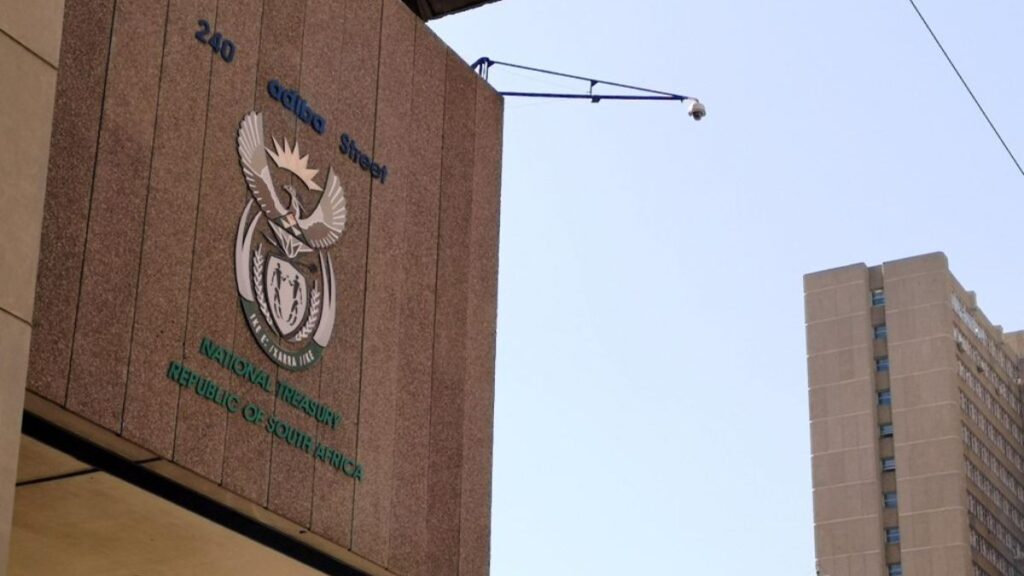
Germany and France have provided a €300 million loan, equivalent to approximately R5.6 billion, to South Africa to support the Metro Trading Services Reform (MTSR) program.
Johannesburg is one of eight metropolitan municipalities included in this initiative, collectively serving over 22 million residents.
The Treasury has linked the financial sustainability of these municipalities to South Africa’s overall economic growth.
The funding aims to enhance electricity, water supply, sanitation, and solid waste services.
This improvement should enable reinvestment in infrastructure while reducing outages and addressing investment backlogs.
The loans fall under France’s and Germany’s Just Energy Transition (JET) mandates, which aim to support the municipal aspects of the JET investment plan.
This plan is designed to unlock further public and private investments in electricity distribution networks.
Germany contributed €200 million through the KfW Development Bank, while France contributed €100 million through the Agence Française de Développement (AFD).
Over the past two years, Germany’s KfW Bank has provided €350 million (approximately R6.5 billion) to Johannesburg and Cape Town to upgrade their electrical grids and integrate renewable energy sources.
France’s AFD has a long-standing relationship with South African cities, including Johannesburg, Cape Town, and eThekwini, funding infrastructure projects aimed at reducing inequality and enhancing climate resilience.
The Metropolitan Trading Services Reform (MTSR) is designed to support improvements in three essential services: electricity, water supply and sanitation, and solid waste management, across South Africa’s eight metropolitan municipalities.
The goal of this reform is to enhance the efficiency and financial stability of these services, allowing them to generate revenue that can be reinvested in repairing local infrastructure, minimising outages, and addressing maintenance backlogs.
The program recognises that the financial sustainability of metropolitan municipalities is crucial for achieving economic growth in South Africa through improved service delivery.
A R54 billion project over six years
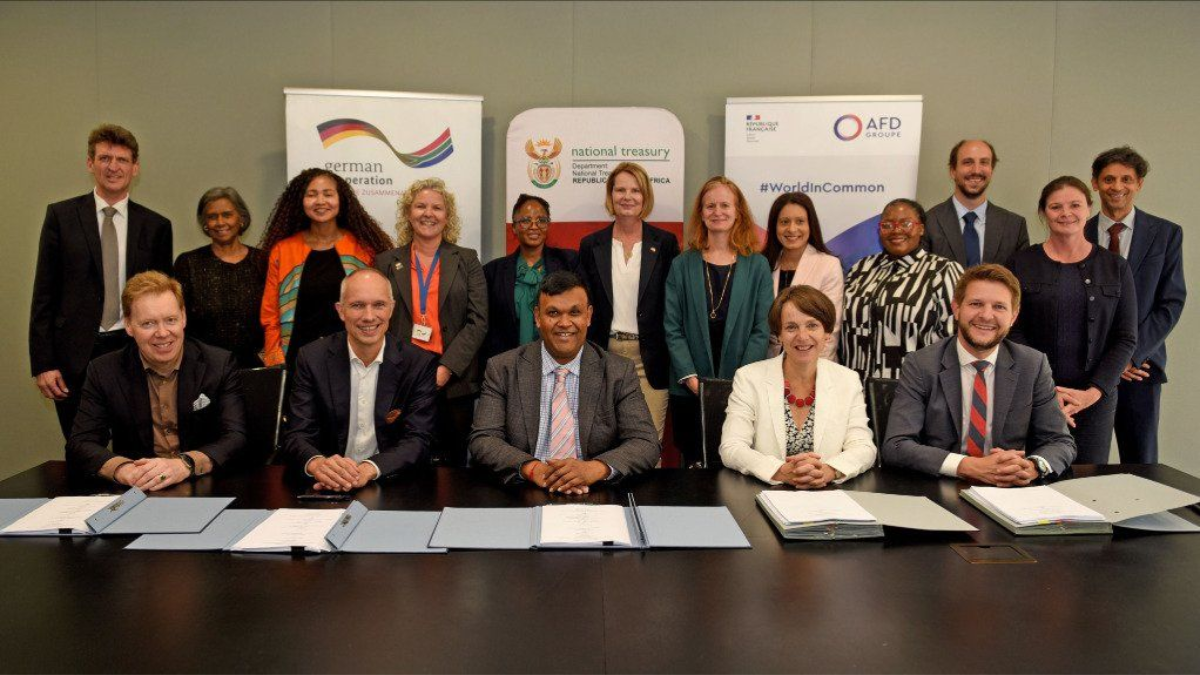
KfW Development Bank Senior Energy Expert Carla Rooseboom told Talk Radio 702 that the programme has a total value of R54 billion, which will be implemented over six years.
She said that, in addition to the KfW Development Bank and the Agence Française de Développement (AFD), there are about four or five other development partners providing funding to the National Treasury.
“A lot of work went into designing this programme, both by the National Treasury and the World Bank,” said Rooseboom.
She said that the design process spanned two years, during which technical teams evaluated each of the metro’s trading services—water, electricity, and waste—to understand the governance and technical issues as well as the investment requirements.
“Germany and France are key partners to South Africa under the JET programme, which was conceptualised at the end of 2023, and at that time, a number of countries made commitments of $8.5 billion to support the South African government.”
She said that since that commitment, Germany has tripled its regional commitments and has now committed over three billion euros to the South African government.
Rooseboom said that France’s commitments to South Africa have increased to 1.1 billion euros.
“The distribution of electricity is a key focus of this JET programme, and its associated investment plan,” she said.
Agence Française de Développement Senior Project Lead for Urban Development and Municipalities, Camille Chaigneau, told Radio 702 that the key principle for ensuring long-term stability is good governance.
She said the metros will be responsible for implementing the turnaround strategies, as will the National Treasury, which will oversee and verify that the performance indicators are met.
She explained that once Treasury provides progress updates, the funders, such as AFD, can decide whether they need to step in further and provide additional support.













 Loading ...