

Interest rate hikes back on the menu for South Africa as diesel takes a turn for the worse


The ongoing war between the United States and Iran has taken a turn for the worse, sending global oil prices higher and putting diesel on track for an R3-per-litre hike.
This, in turn, is expected to add further pressure on domestic inflation and may prompt the South African Reserve Bank (SARB) to hike rates later this month.
Oil moved above $97 a barrel on Thursday (3 September), putting it near the psychological $100 level.
According to Investec Chief Economist Annabel Bishop, the rising prices reflect worsening concerns over future supplies.
Flare-ups in the Middle East have caused delays to the global oil market’s recovery, while the ongoing conflict between Russia and Ukraine is exacerbating the issue.
Iran and the United States have returned to a blow-for-blow exchange of strikes, reversing a recent recovery in barrels transiting the Strait of Hormuz.
The war shows little sign that diplomacy can achieve a lasting resolution.
Iran’s military said on Thursday it targeted US bases in Kuwait and the UAE, the state-run Islamic Republic News Agency reported.
Adding to the threats in the region, Israel indicated that it was prepared to return to the fighting if necessary, spurring worries that the war could widen once again.
In Russia, drone strikes by Ukraine have forced Moscow to import refined oil products to meet its domestic demand, further tightening supplies.
Bishop noted that the risk is now that oil prices could reach US$100 a barrel.
The International Energy Agency noted its supply estimates for the rest of the year have been lowered by 4%.
“[US] President Donald Trump did say most recently that the conflict in the Middle East may not last much longer, but in the interim, he threatened more missile strikes, and this has ratcheted up oil prices,” Bishop noted.
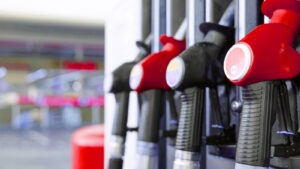
Another above-R1/litre hike in petrol prices is now building for South Africa in early October, as well as another near-R3.00/litre hike in diesel prices, as per the Central Energy Fund (CEF).
“Should these building fuel price under-recoveries bring the indicated, or higher, fuel price hikes, this will push CPI inflation higher,” Bishop warned.
Inflation and interest rates are coming into scope

While CPI inflation is expected to have peaked, a further sustained escalation in the war in the Middle East would undermine this, she added, increasing the chances of further interest rate hikes.
Bishop noted that the South African Reserve Bank has taken a cautious approach to the oil price shock and its impact on fuel prices and inflation in South Africa, hiking interest rates by 25bp in May.
However, it also looked through the initial inflation shocks, skipping hikes at its April and July MPC meetings.
But with an MPC meeting this month, the SARB may hike by 25bp as the oil price shock has flared up again, which could impact inflation if it persists, she said.
“The MPC meeting this month is on the 23rd, and much will depend on oil and rand price movements.”
According to Aluma Capital Chief Economist, Frederick Mitchell, speculation is mounting that the SARB may hike the repo rate to defend its target range in September.
However, he argued that raising domestic interest rates in response to supply-side, imported energy shocks would be a serious policy misstep—”one that risks choking an already struggling real economy”.
Mitchell said the Reserve Bank’s primary mandate is price stability, but monetary policy must distinguish between demand-driven overheating and supply-side external shocks.
“South Africa’s current inflationary impulse is imported, driven by global conflict and petroleum logistics. Squeezing domestic demand with higher interest rates will not lower international oil prices,” he said.
“Instead, it will drive up the cost of capital, suppress fixed investment, and accelerate corporate insolvencies in labour-heavy manufacturing and mining.”
The economist hopes for a “sensible path” for the MPC in September that will look through the transitory fuel spike, hold interest rates steady, and allow structural economic reforms and trade diplomacy to support recovery.










 Loading ...