

The man who went from driving taxis to becoming the CEO of a South African bank with over 6 million customers


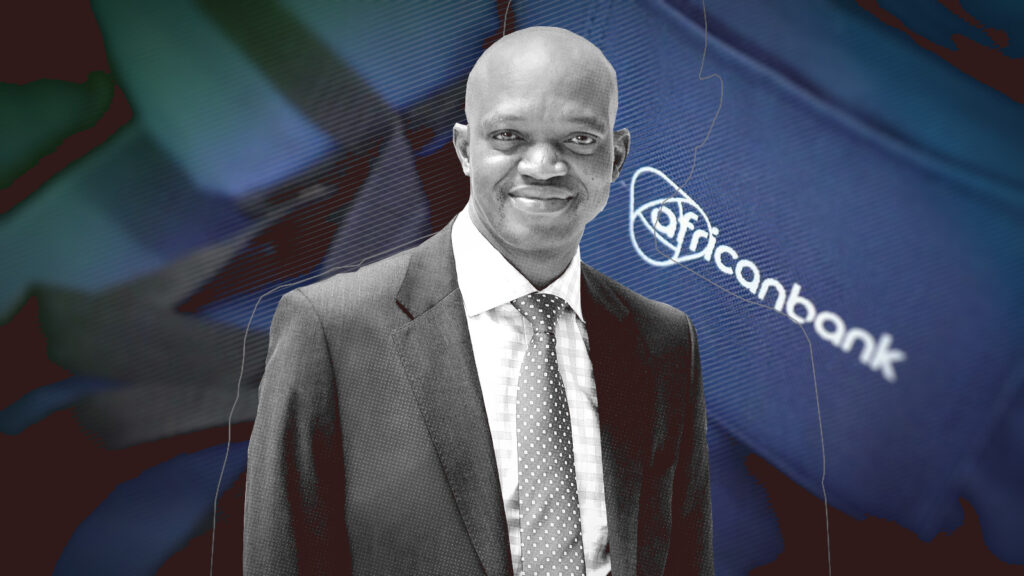
Zweli Manyathi has gone from a taxi driver to the CEO of one of South Africa’s largest banks, African Bank.
Manyathi spoke about his life to Lesaka Technologies South Africa CEO Lincoln Mali, who had previously worked for Manyathi.
He began his political career in 1976, the year of the Soweto Uprising. He was involved in daily clashes with the police and the military.
He saw the brutal retaliation of the struggle firsthand, seeing friends die or flee into exile. To escape arrest, Manyathi would also flee to Kwaggafontein in Mpumalanga.
In Kwaggafontein, he took manual labour and odd jobs to survive, which included working as a labourer for a bridge builder and driving taxis.
Despite his struggles, Manyathi would pursue higher education, earning two degrees from the University of South Africa (UNISA).
Ahead of South Africa’s first democratic elections, Nelson Mandela selected a cohort of young individuals, including Manyathi, to study overseas to acquire high-level professional skills.
The goal was to make sure that South Africa’s new leaders had the relevant skills to address the country’s needs, with many having worked in financial services.
He would then go on to study at several top institutions across the globe, including Baruch College (City University of New York), Oxford University, and Harvard University.
After completing his education overseas, he returned to South Africa and entered the banking sector. However, his career began at the bottom, with his first role being a messenger, delivering documents.
Instead of focusing on promotions, he concentrated entirely on mastering his current role, which would lay the foundation for his later work.
A banking CEO
Manyathi would go on to hold several high-profile roles in South Africa’s banking industry, including serving as CEO of FNB Branch Banking and FNB Corporate Banking.
He was also the CEO of Business and Commercial at Standard Bank, where he oversaw strategic direction and contributed to the delivery of financial services.
He joined African Bank’s boards in September 2022 as an executive director and Chief Executive: Business & Commercial.
He took over as interim Group CEO in March 2026 following the sudden resignation of Kennedy Bungane after reporting poor performance and a financial reporting error.
African Bank then announced in August that Manyathi had been appointed permanent Group CEO after months in the interim role.
His start in the top job came amid a series of issues facing African Bank, which recorded a net after-tax loss of R624 million for the six months ended March 31 2026.
The bank then announced that it is contemplating a massive restructuring, which could affect 1,200 employees and result in 90 branches closing across South Africa.
The group said that costs were outpacing its risk-adjusted revenue and that it had reached a point where it had to review staff costs.
Trade union SASBO slammed African Bank’s premature announcement of its contemplation of the Section 189A consultation process, and its public nature.
The bank also announced that its planned initial public offering was pushed back to 2030 amid heightened costs, delaying the South African Reserve Bank’s exit from the bank.
African Bank was on a massive acquisition drive in the first half of the 2020s, with billions spent to enter business banking.
This included acquiring Grindrod Bank for R1.5 billion; Ubank’s assets for R80 million; and Sasfin Capital Equipment Finance and Commercial Property Finance Businesses for R3.25 billion.
It exited a deal to acquire Eskom’s R5.7 billion Home Loan book, which would have marked its entry into secured lending, instead focusing on integrating the other completed acquisitions.
Despite its struggles, African Bank remains one of the nation’s largest banks, with over 6 million customers and hundreds of branches.















 Loading ...