

R165 for a full tank of petrol in South Africa


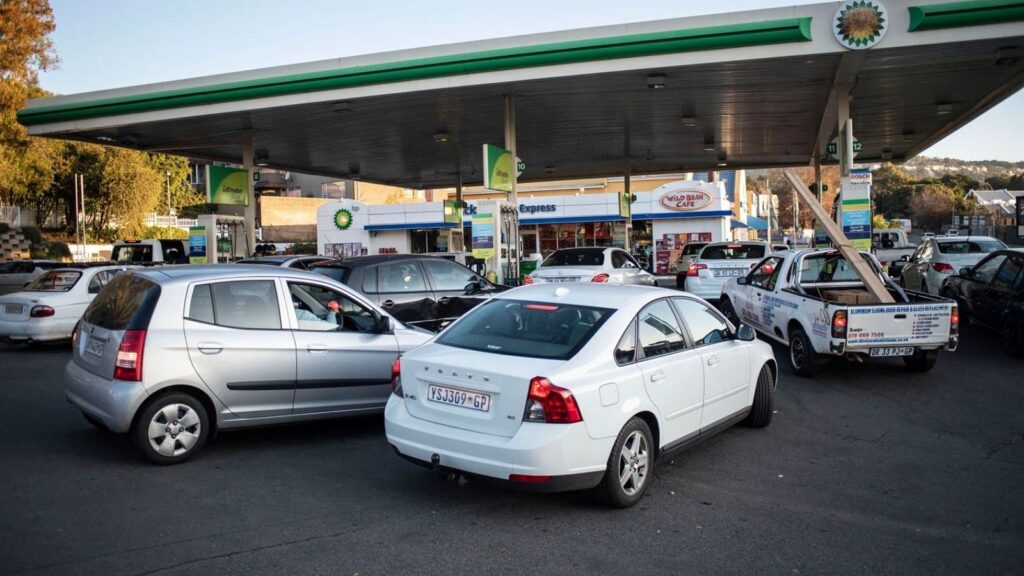
A full tank of petrol that cost South African motorists less than R165 in 1996 now costs more than R2,000.
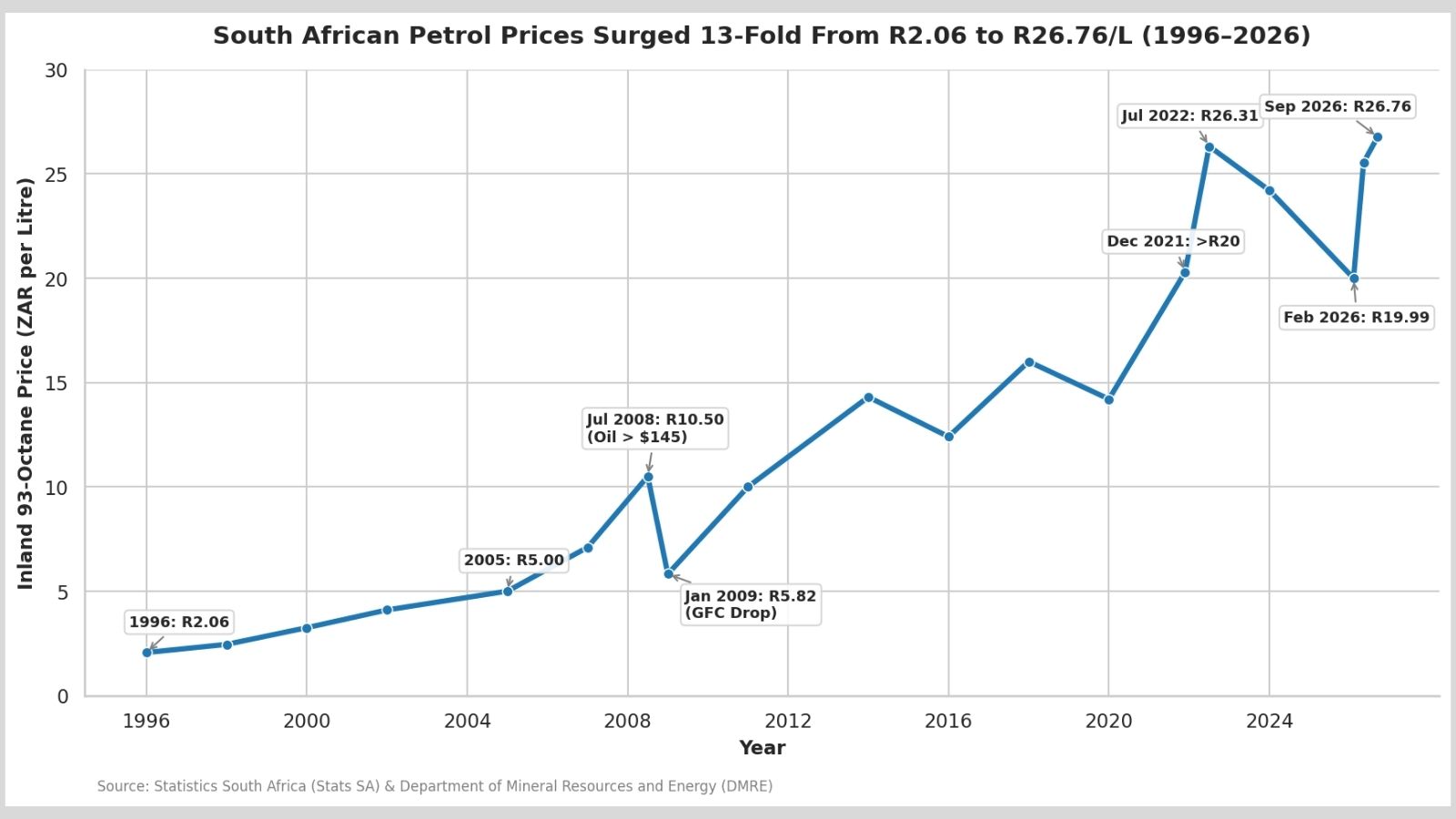
Data from Statistics South Africa (Stats SA) showed that the price of inland 93-octane petrol has risen from around R2.06 per litre in 1996 to R26.76 per litre in September 2026.
This works out to an increase of about R24.70 per litre, or roughly 1,199% in nominal terms.
At R2.06 per litre, filling an 80-litre tank in 1996 would have cost about R164.80. At R26.76 per litre, the same fill-up now costs R2,140.80.
Stats SA’s historical analysis showed how quickly fuel prices have changed over the past three decades.
“The R1 per litre mark was reached in November 1985 and increased to R5 two decades later. The price then doubled in just three years, breaching the R10 level in 2008,” it said.
The 2008 increase was linked to international oil prices. Stats SA noted six consecutive petrol price increases that year, while crude oil prices climbed above $145 per barrel.
The increase was then followed by an equally dramatic decline as the global financial crisis took hold. “Oil prices rapidly cooled as the global financial crisis took hold,” Stats SA said.
“The petrol price tumbled to a low of R5.82 per litre in January 2009 from a peak of R10.50 in July 2008.” It added that “it would take another two years before the price reached R10 again.”
The next major knock came after the Covid-19 pandemic. “Christmas cheer was dampened in December 2021 when motorists had to pay more than R20 per litre,” Stats SA said.
Prices subsequently reached another record in July 2022. Stats SA noted that the price eased from R26.31 in July 2022, only for April and May of 2026 to spoil the party.
Stats SA then explained that the price fell from the July 2022 peak of R26.31 to a low of R19.99 per litre in February 2026.
Stats SA’s figures showed that petrol prices have repeatedly surged and fallen in response to international oil prices, exchange-rate movements and major global economic events.
The agency’s analysis also notes that the May 2026 price was the highest on record for inland 93-octane petrol at that point.
More bad news
The effect on household budgets is significant because fuel is not an isolated expense. Higher petrol and diesel prices increase the cost of transporting people and goods, which can feed through into food, services and other household expenses.
Stats SA has previously highlighted the wider inflation impact of fuel. During the 2022 fuel-price shock, it said transport accounted for 44% of the July headline inflation rate, with fuel prices playing a major role.
The long-term comparison therefore provides a striking measure of how much the cost of running a petrol-powered vehicle has changed: an 80-litre tank has gone from costing roughly R165 to more than R2,140 over 30 years.
Looking ahead, October could bring another sharp increase for motorists.
The latest Central Energy Fund (CEF) figures indicate that the price of 95 unleaded petrol could increase by almost R2.80 per litre.
This would take the inland price to around R29 per litre and potentially surpass the June 2026 peak of R28.06.
Diesel could face an even larger increase, with a projected rise of almost R3 per litre, pushing wholesale diesel prices above R33 per litre. This would be well above the previous May record of R31.88.
If these projections materialise, motorists could face another significant increase in the cost of filling up in October, which adds further pressure on household transport costs and the wider economy.
| Tank Capacity (Litres) | Cost in 1996 (R2.06/l) | Cost in Sept 2026 (R26.76/l) | Price difference | % Increase |
|---|---|---|---|---|
| 45 Litres (Small Hatchback) | R92.70 | R1,204.20 | +R1,111.50 | 1,199.03% |
| 60 Litres (Medium Sedan/SUV) | R123.60 | R1,605.60 | +R1,482.00 | 1,199.03% |
| 80 Litres (Large SUV/Bakkie) | R164.80 | R2,140.80 | +R1,976.00 | 1,199.03% |















 Loading ...