

South Africa’s secret R84 billion economy


South Africa’s illicit economy is worth billions, with global rankings placing the country as one of the worst in the world for organised crime.
The illicit economy comprises numerous criminal activities, such as smuggling, the sale of counterfeit goods, and illegal mining.
In a recent study by Frans Cronje Private Clients, titled Shadow State Rising, the illicit economy was valued at roughly R84.6 billion each year.
The amount represents a significant portion of South Africa’s total GDP, with illicit tobacco and alcohol sales accounting for the largest share, along with illegal mining operations.
In its study, Frans Cronje Private Clients drew parallels between illegal operations and South Africa’s formal economy, noting that both operate in similar ways.
While both operate similarly, the illicit economy generates no tax revenue, meaning its R84 billion value represents a significant economic blow to the country.
Organised crime is a significant issue in South Africa, and the country also performs poorly on the global stage.
The Global Organised Crime Index ranks each country based on the prevalence of different illegal activities and its ability to combat them, represented by a criminality score and a resilience score.
The index ranked South Africa as having the 7th-highest criminality score among 193 surveyed countries, at 7.43 out of 10.
South Africa also received the second-highest criminality score in Africa and the highest out of 13 Southern African countries.
The index cited several weaknesses in South Africa’s capacity to combat illegal activities, including its response to goods smuggling.
It noted that gaps in border controls contributed to the country’s struggles with counterfeit and illegal goods entering its economy.
“The counterfeit goods market is pervasive, driven by weak border enforcement and the involvement of criminal networks operating across the Mozambique-South Africa border,” it said.
“Seizures of counterfeit clothing, footwear, electronics and pharmaceuticals indicate the scale of the market, which has strong transnational ties”.
“Illicit trade in excise goods, particularly tobacco and alcohol, is significant,” the index noted, echoing the observation made by Frans Cronje Private Clients’ study.
The index noted that despite government intervention efforts, such as the Border Management Authority, illicit trade remains prevalent.
South Africa’s resilience
Despite having one of the highest global criminality scores, South Africa also had a respectable resilience score of 5.67 – the third highest in Africa.
The score also placed South Africa 44th among the 193 ranked countries, with the index noting its strong legal framework for combating organised crime.
While the index praised the country’s “robust legal framework to combat organised crime”, it noted that governance issues continuously erode public trust.
“Government transparency is a challenge despite an extensive legal framework for accountability,” it said. “Challenges such as maladministration and financial mismanagement erode public trust.”
“Despite governance improvements, challenges such as corruption, weak rule of law, and economic inequality hinder resilience.”
It also noted that the agencies responsible for combating the illicit economy face several significant pressures.
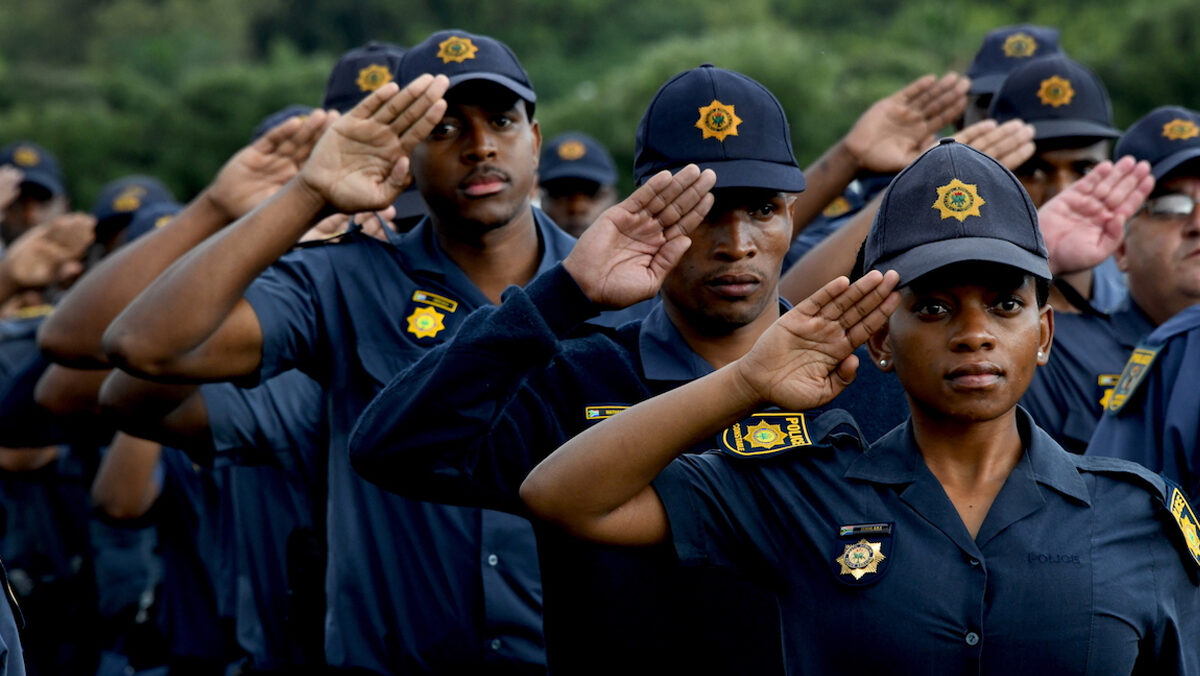
“Law enforcement agencies, including the South African Police Service, are under significant strain due to corruption, mismanagement and inefficiency,” it said.
The ongoing Madlanga Commission has demonstrated the scale of governance issues across South Africa’s crime prevention agencies.
The inquiry has implicated several high-ranking officials in criminal operations and corruption, and was recently extended by President Cyril Ramaphosa.
The Organised Crime Index also noted financial constraints as a major limitation in South Africa’s ability to combat illicit activities.
“Financial constraints hinder law enforcement, and a significant funding shortfall affects investigative capacity,” it said.
“Prevention efforts against organised crime are underfunded and inconsistently implemented.”
The Index also cited Business Against Crime South Africa (BACSA) as a positive contributor to the country’s fight against organised crime.
The BACSA acts as an intermediary between the public and private sectors in South Africa in crime prevention.
The Consumer Goods Council of South Africa (CGCSA) recently called for a stronger relationship between the public and private sectors to combat the illicit economy.
It proposed a new Anti-Crime Platform that would build on the BACSA to provide a foundation for “prevention, disruption, enforcement and measurable outcomes” in addressing the illicit economy.
While the Organised Crime Index viewed the BACSA positively, it noted that private-sector confidence remained a concern.
“Business Against Crime South Africa is a key intermediary between government and private sector actors in combating organised crime,” it said.
“However, violent crime, infrastructure decay and regulatory uncertainty undermine business confidence and investment.”












 Loading ...