

The National Bargaining Council for Road Freight and Logistics denies ownership of R2.6 billion in workers’ funds


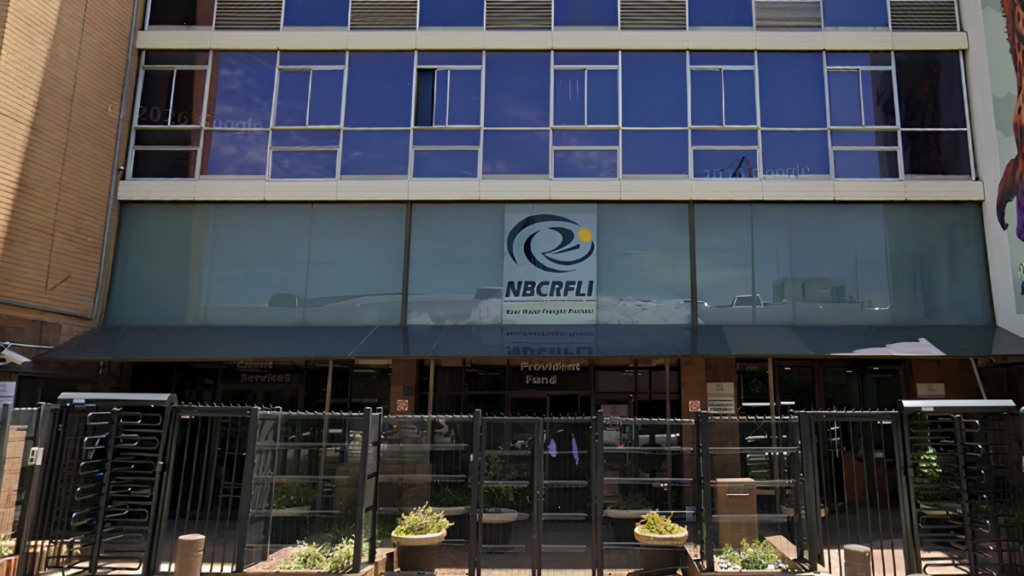
The National Bargaining Council for the Road Freight and Logistics (NBCRFLI) has denied allegations of financial mismanagement involving R2.59 billion in employee benefit funds.
This comes after an analysis of the NBCRFLI’s audited financial statements raised concerns about the Council’s financial reporting and its reliance on investment earnings.
The matter stems from a 2024 case in which Innovative Staffing Solutions (ISS) took the NBCRFLI to court after the Council stopped making its financial statements public.
The High Court ruled against the Council and ordered it to publish its financial statements for 2018 to 2025 and to pay ISS’s legal fees.
When the published financial records were analysed, R2.59 billion that was intended for worker benefits was listed on the Council’s financial records as if it were the Council’s own property.
The Council did not produce separate audited financial statements for each fund, which violates legal requirements.
The ISS called on the Registrar and the Department of Employment and Labour to verify compliance and to require the publication of the separate benefit fund accounts.
However, the NBCRFLI said that the ISS’s statements were retaliatory and that the ISS was spreading misinformation about the Council.
“This false alarm is a familiar tactic to tarnish Council’s image for standing its ground against ISS’s non-compliance,” said the NBCRFLI.
The Council said that the statements from the ISS follow the Council’s refusal to withdraw an industry circular regarding pending writs of arrest against the ISS CEO for failing to comply with the Main Collective Agreement.
It said that the R2.59 billion belongs solely to industry employees and that this amount represents funds collected to manage Sick Pay, Holiday Pay, and Leave Pay Funds, which are distributed to eligible workers as needed and are not considered Council property.
The Council highlighted that ISS had previously reported similar allegations to the Independent Regulatory Board for Auditors (IRBA), whose investigation found no wrongdoing regarding the Council’s financial records.
Unqualified audit opinions for 10 years
The NBCRFLI said that under the Labour Relations Act, the IFRS for SMEs Accounting Standards, the Main Collective Agreement, and its Constitution, it is not required to produce separate financial statements for each individual fund.
Instead, it is legally required to prepare a single consolidated annual financial statement that covers both the Main Council and its benefit funds.
The Council said that external auditors reviewed both the Council and its benefit funds and that it received unqualified audit opinions for 10 consecutive years, up to the financial year ending February 2026.
It also said that the claims that the funds operated at a deficit are inaccurate. The Council said that in 2023, the Sick Pay, Holiday Pay, and Leave Pay funds had asset surpluses exceeding liabilities, amounting to R118,925,865.
In 2022, this figure was R4,572,969, while in 2021, assets equalled liabilities. For the 2024/25 financial year, the Council said the Wellness Fund generated an income of R371,346,468 against expenses of R348,951,695, resulting in a net surplus of R22,394,773.
Total benefit payments to industry workers reached R3,405,306,928 in the 2025/26 financial year, compared to R3,285,077,573 in 2024/25, according to the Council.
Additionally, the NBCRFLI claimed it had processed 14,048 unclaimed benefit payments, valued at R14,783,388.16, for the financial year ending in February 2026.
It also said that all holiday pay bonus applications for the previous year were successfully processed by December 19, 2025, ahead of the festive season.
According to the NBCRFLI, Clause 12(1) of the Council’s Constitution explicitly permits the use of investment income to support operational costs.
The Council said that this has enabled it to maintain industry levies at the same level for over a decade.

















 Loading ...