

Alarm bells ringing for South Africa


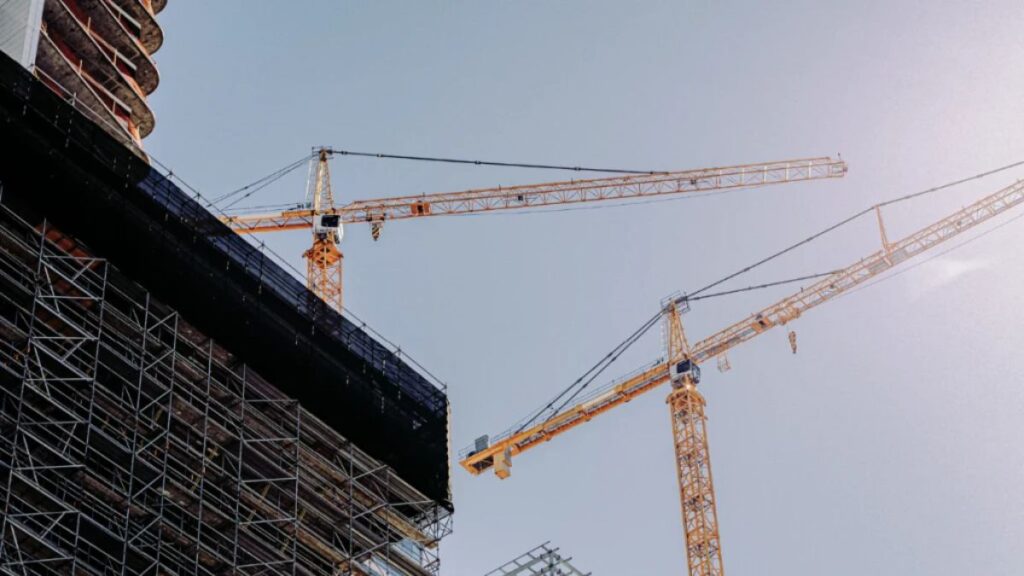
Investment in South Africa fell to 13.6% of GDP in the second quarter, as the public sector struggles to turn planned development into reality.
The second quarter was a weak period for South Africa, as the country’s GDP contracted for the first time in six consecutive quarters.
The contraction came amid global uncertainty around oil prices and an interest rate hike from the South African Reserve Bank (SARB), further cooling the economy.
With the economic contraction, investment as a percentage of GDP was also worryingly low, at 13.6%.
Business Leadership South Africa (BLSA) CEO Busiswe Mavuso said the investment percentage was at its lowest in five years.
She said this was despite South Africa’s turnaround in the energy and logistics sectors since 2021, with the private sector still not fully confident in the country.
“The economy must prove it is working better before businesses commit long-term investment capital,” she said.
She said public-private partnerships aim for a higher investment rate, but it remains lower than what is considered necessary for the country.
“The business-government partnership has targeted 20% of GDP as a medium-term goal, though we have long seen 30% as the level needed to support credible economic growth,” she said.
Frans Cronje Private Clients economist, Frans Cronje, has previously discussed the relationship between the fixed investment rate and a country’s economic growth.
In a video for the Common Sense, Cronje said South Africa needs to improve its fixed investment rate if it wants to foster economic growth and job creation.
He said the global average for fixed investment in emerging economies was approximately 25%, and that South Africa would need to aim for this if it wants to have 4% economic growth.
“If that happens, the growth rate in South Africa will lift to around 4%, and if that happens, then the unemployment rate, which is currently around 30%, will come down,” he said.
Public sector investment

While the private sector is often looked to for investment, Mavuso said the government also plays a part in South Africa’s long-term development.
She said that the public sector has historically accounted for a large share of the country’s overall investment.
“The public sector is a major investor, historically responsible for about one third of investment,” she said.
She noted that in the February budget, Finance Minister Enoch Godongwana said the public sector is committed to investing over R1 trillion over the next three-year period.
“That would be material to the overall figures, given we currently see about R1 trillion of investment per year,” Mavuso said.
She said the issue with public sector investment is converting planned developments into live projects.
In June, Infrastructure SA highlighted how difficult it is to get projects live, due to the government’s current tender process.
The government body reported that, in 2025, 2,549 tenders had been advertised, but only 433 had been awarded.
“With only one in six tenders being awarded, the R1 trillion budget is never going to be spent,” Mavuso said.
Despite the concerning trend, Mavuso said she is confident that public-private partnerships can effectively address the issues.
“These constraints are solvable,” she said. “Business has worked successfully with the public sector on many fronts, including turning around the performance of the electricity sector and the logistics system.”
“I believe we are well-positioned to support the public sector to accelerate the procurement of infrastructure projects.”
She said that the public sector’s biggest issue is a lack of skills, as specialist staff leave government for private-sector roles.
“Government delivery has been hampered by the exodus of skilled staff from the public sector,” she said.
“The president’s efforts to professionalise the civil service and turn around its capabilities are the right approach, and progress is slowly becoming evident.”






 Loading ...