

South Africans pay a R1 billion ‘robbery tax’ every month


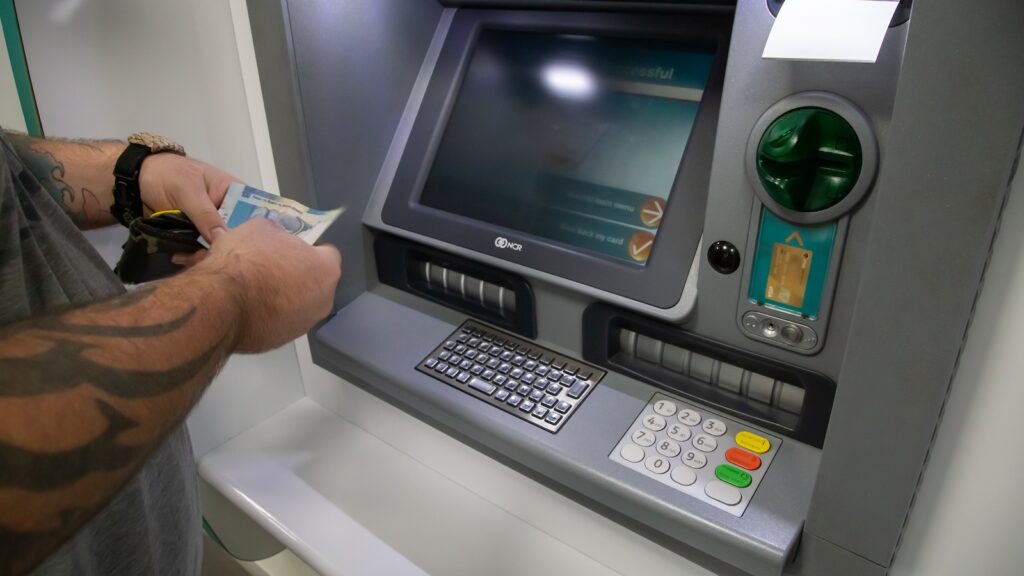
South Africans effectively pay a R12 billion “robbery tax” every year because of theft, muggings and other cash-related crime.
This is according to the South African Reserve Bank’s (SARB) Cost of Cash Industry Report 2026.
The report showed that crime is one of the biggest hidden costs of using physical cash, with consumers collectively losing R12 billion a year as a result of stolen or robbed cash.
“The cash crime value of R12 billion or 14% and travel time costs of R8.3 billion or 9% show that safety risks and time spent travelling are major hidden costs,” the SARB said.
The finding forms part of a much broader calculation of what cash costs South Africans each year.
The report estimated that the total annual consumer cost of cash is R88.5 billion, with R43.5 billion, or 49%, coming from direct costs and R44.9 billion, or 51%, from indirect costs.
Bank fees account for the largest direct cost. South Africans spend R31 billion a year on cash transaction charges, including R17.7 billion in withdrawal fees and R13.3 billion in deposit fees.
Consumers also spend another R12.5 billion on travelling to ATMs and bank branches, including taxi fares, fuel and other transport expenses.
Lost time accounts for R27.8 billion a year, comprising R19.5 billion spent waiting in queues and R8.3 billion travelling to cash points.
Additionally, retailers and informal traders pass on about R3.9 billion in cash-handling costs through the prices consumers pay for goods and services.
A further R1.3 billion is lost through foregone interest when consumers hold money as physical cash rather than in interest-bearing accounts.
“The figures show that the cost of cash is not limited to visible bank fees, but also includes significant hidden costs related to time, security, indirect retailer and informal traders costs, and access,” the SARB said.
40% of South Africans still prefer cash

The report also found that people earning between R0 and R1,250 a month spend about 5% of their income on cash-related costs. By comparison, consumers earning more than R20,000 a month spend about 1% of their income on these costs.
The security problem also affects businesses and the infrastructure supporting the cash economy.
A case study in the report described how repeated armed robberies over an extended period forced a national retailer operating in a low-income area to stop accepting cash to protect its employees and customers.
The move had a significant impact on the business because many local customers did not have access to cards. The retailer subsequently experienced a sales decline of more than a third.
The SARB estimated that the broader cash supply chain costs another R27.1 billion a year to operate.
Banks account for R21.6 billion of this, while retailers and informal businesses account for R4.3 billion and essential industry services account for R1.2 billion.
Cash-in-transit operations alone cost about R6.95 billion annually and transport around R2.8 trillion in physical currency across the economy.
The report also found large differences in the cost of accessing cash. Bank branches cost about R1.53 for every R100 handled, compared with R0.68 through ATMs and just R0.12 through supermarket till cash-back services.
Despite the costs and security risks, cash remains important. About 40% of South Africans still prefer cash for future payments, rising to 65% for taxi fares, 66% for spaza shops and 68% for informal traders.
The SARB has therefore recommended expanding till cash-back services, increasing shared ATMs in underserved areas and encouraging shared cash transport and storage infrastructure to reduce the overall cost of cash.











 Loading ...