

Say goodbye to boarding passes and passports at airports


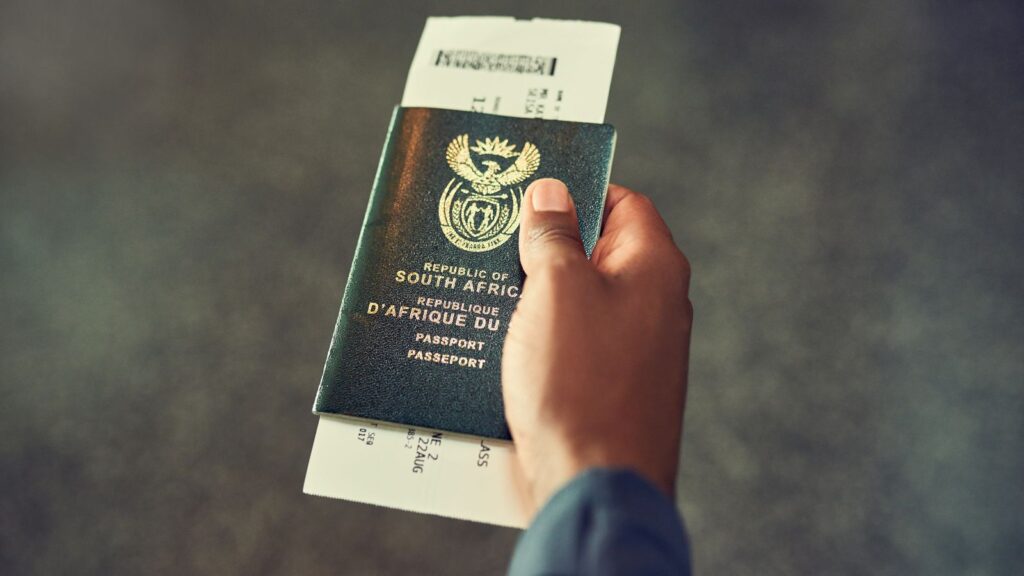
South Africans and travellers around the world could eventually say goodbye to traditional passports and boarding passes.
This comes as the aviation industry moves towards digital travel credentials and biometric airport security systems. The shift is being driven by demand for faster, simpler, and more convenient travel.
Data shows that passengers are increasingly willing to use technology to reduce the time spent checking in, boarding flights, and passing through immigration.
A global survey by the International Air Transport Association (IATA), which collected more than 10,000 responses from over 200 countries, found that just over 80% of passengers were interested in using digital passports for online check-in.
However, according to Linden Birns, managing director of Plane Talking, while travellers appear ready to embrace the technology, governments are struggling to keep pace.
Birns said one of the survey’s biggest findings was the gap between passengers’ willingness to adopt digital travel solutions and governments’ ability to implement them.
Governments still use different passport systems, travel authorisations, and visa requirements, making it difficult for digital credentials to work seamlessly across international borders.
Birns said many countries had also not followed the passport recommendations of the United Nations’ International Civil Aviation Organisation (ICAO), which established international standards for aviation and travel documents.
The lack of consistency has created problems at airports, including situations where passengers attempt to use electronic immigration gates that cannot recognise passports issued by certain countries.
According to Birns, establishing common standards and ensuring that different countries’ systems can communicate with one another will be one of the biggest challenges facing the industry.
However, Birns said governments had a strong incentive to modernise their systems, especially if they wanted to attract international tourism, trade, and investment.
He pointed to South Africa as an example of a country looking to improve its systems, with the Department of Home Affairs and the Border Management Authority exploring ways to modernise travel and border processes.
Digital services at airports within reach

However, implementing digital travel credentials will require significant investment and cooperation between different government departments and organisations.
In South Africa, this would include Home Affairs, the Border Management Authority, Airports Company South Africa and the South African Revenue Service.
Birns said the benefits could extend well beyond replacing physical passports and boarding passes.
Digital travel credentials could eventually be used across a much wider range of services, including airport security, border controls, hotel check-ins and airline bookings.
However, the move towards biometric identification and digital passports also raised concerns about personal information and data security.
The IATA survey found that around 60% of respondents were concerned about biometric data breaches.
Birns said the biggest concerns included the possibility of personal information being stolen, how biometric information would be shared with other organisations, and a lack of clarity around how data would be stored and managed.
He said governments would need to agree on a common framework for issuing and accepting digital passports and travel credentials, as well as for protecting personal information.
The good news is that South Africa and the broader international aviation industry are moving towards digital services.
Earlier this year, Andy Smith, director of industry and innovation at SITA, said the technology is now within reach. “It’s a very exciting journey and one we’ve been on for a while,” said Smith.
“Where we’re getting to now is the ability for travellers to get a very positive idea that they are going to be able to travel through an airport, across borders, seamlessly and without having to present either their passport or their boarding pass.”
Smith said the system would allow travellers to complete much of the process before even leaving for the airport.
“Before you set out for the airport, you know that you have completed all the airline processes,” he said.
“You know that you’re going to have a seamless experience through the airport, and more importantly, when you get to your destination, you’re going to have a very simplified arrival experience.”
IATA noted that governments can now begin putting in place legal, technical, and operational frameworks to issue and accept these Digital Travel Credentials across borders.


















 Loading ...