

Major retailer closes 120 stores in South Africa


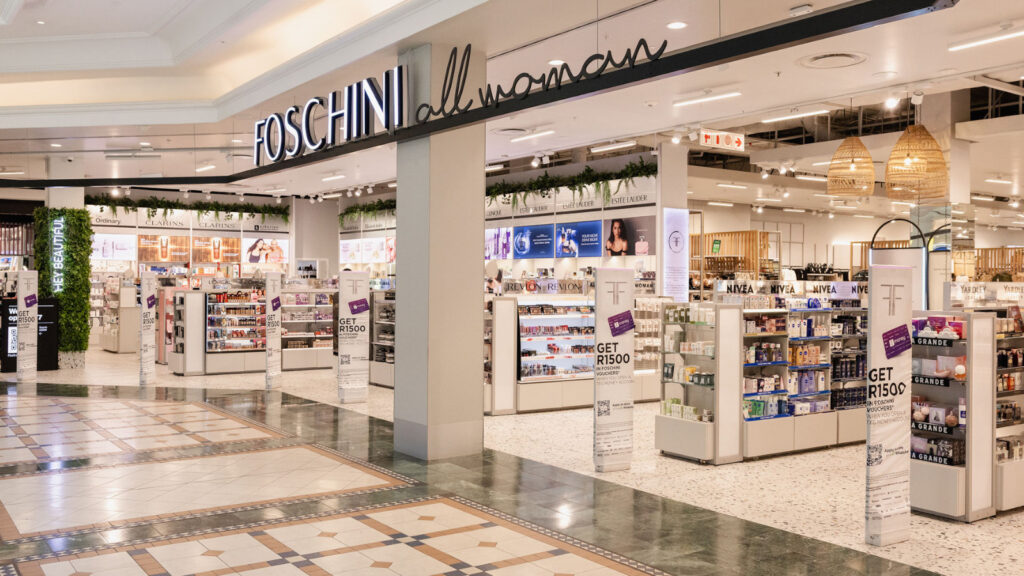
The Foschini Group (TFG) saw sales grow in Africa, while its international ventures suffered from weak economies and a constrained environment.
For its 2026 financial year, TFG’s Africa segment sales grew 3.8%, with clothing accounting for most of the segment’s sales.
Most merchandise categories in Africa saw sales growth in the last financial year, with cellular being the only exception, recording a 5.1% decline.
TFG also said it had increased its market share in South Africa, partly through simplifying its business model and closing underperforming stores.
In total, the group closed 120 of its South African stores in the interim period and opened 41—a net loss of 79 stores. The group now has a total of 3,585 outlets.
TFG noted that South Africa’s economy has been constrained, limiting consumer spending.
“Consumer sentiment and discretionary spend in South Africa remained subdued as higher fuel prices and the resumption of interest rate increases weighed on disposable income,” the group said.
In 2026, the South African Reserve Bank has opted to hike interest rates twice, by 25 basis points each time, in response to inflationary pressure from higher fuel prices.
The retailer did not see this challenge ending soon, citing concerns about further rate hikes in South Africa.
While TFG was able to grow sales in Africa, its London and Australian divisions saw declines over the last six months.
For London, sales declined 2.2% in the interim period, while Australia declined 4.4%, resulting in a net sales decline of 0.4% for the group.
In London, the retailer said its weaker performance was due to the country’s poor economic conditions.
It said the sales decline came as “trade continues to be impacted by the prolonged weakness in the UK economy.”
A similar issue was noted in Australia, where TFG said discretionary spending was weaker across the market.
“Sales for the period contracted by 4.4% in AUD, as discretionary spend remained under significant pressure across the market,” the group said.
Challenging months ahead

TFG said the operating difficulties it had noted across the three countries were unlikely to end in the next six months of its financial year.
“With higher fuel prices and the resumption of interest rate increases in South Africa and Australia, consumer confidence and spending are expected to remain constrained for the foreseeable future across all three territories,” it said.
Fuel prices have remained elevated since the start of the conflict between the US and Iran in February 2026, which heavily impacted the global oil trade.
Despite these economic challenges, TFG said it is entering the second half of its year in a good position with a smaller footprint and reduced debt.
“While the first half has been difficult, the Group enters the second half with a leaner cost base, a smaller store footprint, strong online momentum, lower inventory and reduced net debt,” the group said.
“The Group remains focused on executing its priorities, prudent capital allocation and on capital-light growth through its digital channels.”
For the last six months, the group’s revenue increased marginally by 0.1% to approximately R31.4 billion, while its operating profit dropped by 6.5% to R2.1 billion.
Headline Earnings Per Share (HEPS) declined in the interim period by 6.8%, with the group declaring an interim dividend of 121 cents per share.
The Foschini Group interim financial results
| Six months ended 30 September 2026 | Six months ended 30 September 2025 | Change % | |
| Group revenue | R31.4 billion | R31.4 billion | 0.10% |
| Profit for the period | R827 million | R994 million | –16.8% |
| Headline earnings | R860 million | R950 million | –9.47% |
| HEPS (cents) | 272.8 | 292.6 | –6.8% |
| Dividend (cents) | 121 | 130 | –6.9% |














 Loading ...