

Important South African city at risk of becoming a ghost town


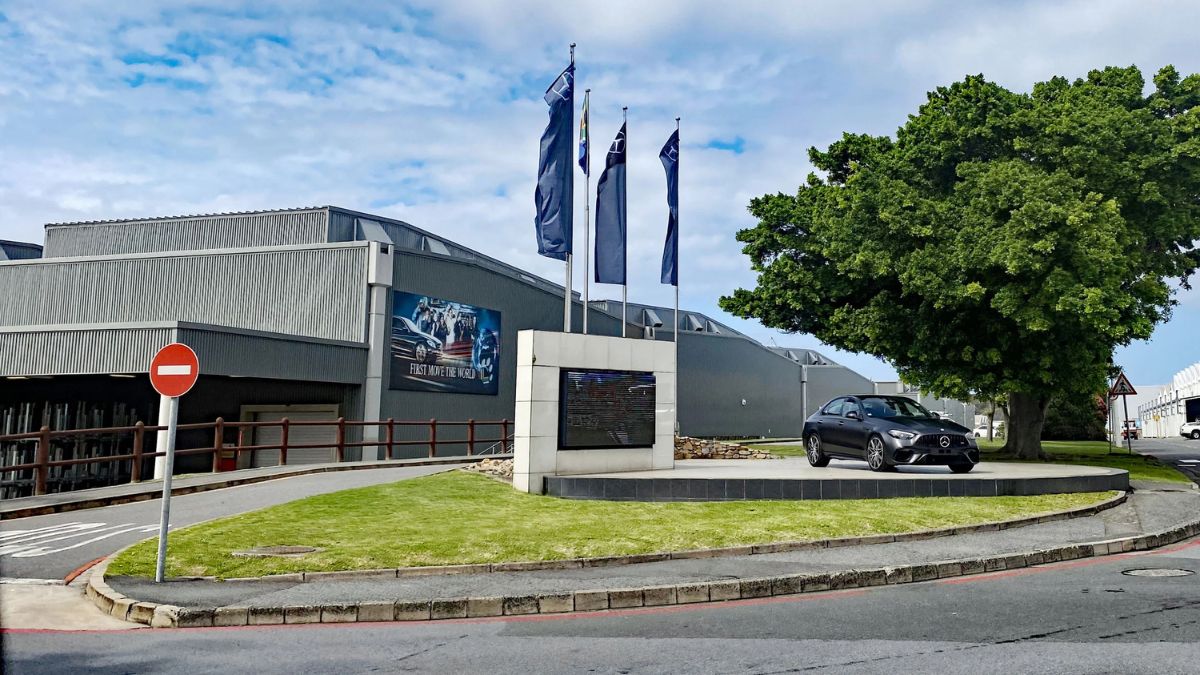
East London, one of South Africa’s oldest industrial cities, risks becoming a ghost town if Mercedes-Benz South Africa (MBSA) decides to scale back or shut down its local manufacturing operations.
The warning comes as the city’s automotive industry faces mounting pressure following the United States government’s decision to exclude South Africa from the African Growth and Opportunity Act (AGOA), which provided preferential access to the American market.
At the end of last year, Mikel Mabasa, chief executive of the automotive business council Naamsa, warned that the consequences for East London could be devastating if the Mercedes-Benz factory stops operating.
“East London could potentially face the burden of being classified as a ghost town if the Mercedes-Benz plant, an anchor of that local economy, comes to a grinding halt,” he said.
The East London plant has been producing vehicles since 1962 and has become a major pillar of the local economy. It employs approximately 2,400 people and produced around 70,000 vehicles in 2024.
MBSA and its suppliers contribute an estimated 25% of East London’s economy, which means any significant reduction in production could affect thousands of workers and businesses beyond the factory itself.
The plant has historically relied heavily on exports of its C-Class sedan to the United States.
However, President Donald Trump’s administration introduced a 30% tariff on South African imports in 2025, which has already significantly undermined the competitiveness of vehicles manufactured in the country.
South Africa’s exclusion from AGOA adds further pressure, although the agreement’s benefits had already been substantially reduced by existing American tariffs. The automotive industry was South Africa’s largest user of AGOA preferences.
Following the introduction of the tariffs, South Africa’s automotive exports to the US fell by 29%, from R28.67 billion in 2024 to R20.43 billion in 2025.
Light vehicle exports declined by 31.7% to R16.57 billion, while direct component exports fell by 12.8% to R3.86 billion.
Cannot imagine East London without Mercedes-Benz
NAACAM chief executive Renai Moothilal said losing AGOA would add another cost to an industry already under significant pressure.
“The direct cost of losing AGOA is modest next to existing tariff measures, but in a globally competitive industry every percentage point counts,” he said.
The association has also recorded 15 company closures and more than 7,500 gross job losses among component manufacturers over the past three years.
Mercedes-Benz’s difficulties in East London are not limited to trade policy. The company has been reassessing its global manufacturing footprint as it shifts towards more profitable luxury vehicles and SUVs.
Its C-Class exports from South Africa have been under pressure, while the company has also experienced weaker sales in North America.
Mercedes-Benz is reportedly considering bringing another manufacturer into its East London facility to share production costs and address overcapacity. However, this would require further investment.
The company has not made a final decision about the plant’s future, which is particularly significant given that it invested approximately €600 million in modernising the facility in 2022.
Business leaders have warned that South Africa’s broader trade relationship with the US remains important.
Business Unity South Africa said the loss of preferential access could affect several thousand jobs, particularly in agriculture and automotive manufacturing, although the overall economic impact would be relatively limited.
The organisation said the bigger concern was the possibility of further deterioration in diplomatic relations between the two countries.
For East London, however, the consequences could be much more severe. Acting Eastern Cape Premier Mlungisi Mvoko previously warned that losing Mercedes-Benz would be devastating for the city.
“You cannot imagine East London without Mercedes-Benz. MBSA exports almost 90% of their cars to the US. In our interaction with them, they said that, given these tariffs, it would be difficult,” he said.
With thousands of livelihoods linked directly and indirectly to the factory, Mercedes-Benz’s East London operations have become a major concern for the city and the Eastern Cape economy.
















 Loading ...