

Strict BEE requirements in South Africa being challenged


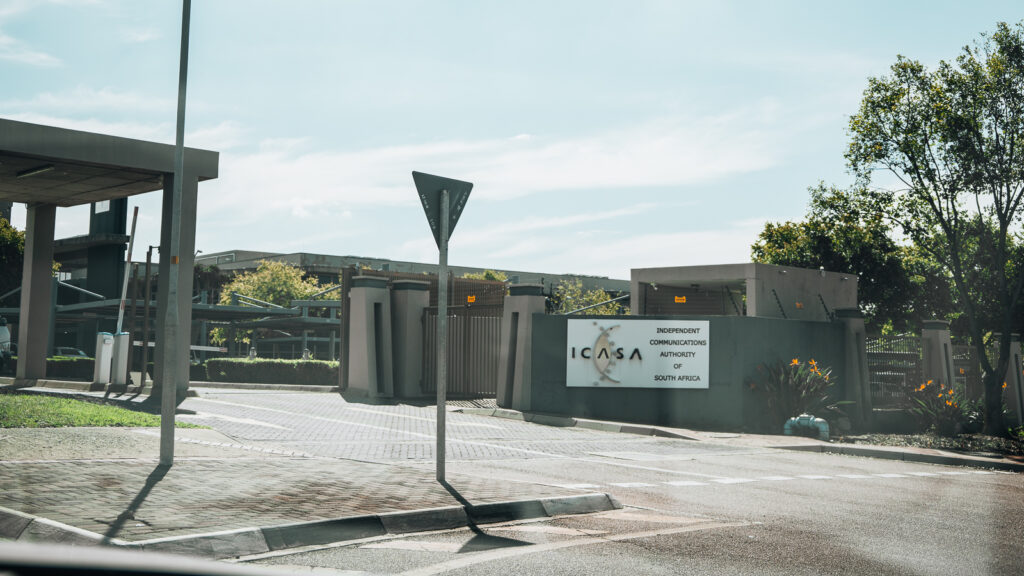
Business group Sakeliga has launched a legal challenge against strict Black Economic Empowerment (BEE) conditions attached to South Africa’s communications sector.
The group has applied to the Pretoria High Court to challenge the Independent Communications Authority of South Africa’s (ICASA’s) imposition of racial ownership quotas on internet service providers and other communications operators.
Specifically, the group is challenging the provisions in the Electronic Communications Act (ECA) which require a minimum 30% ownership by historically disadvantaged groups for individual licence holders.
This ownership rule has come into focus this year as a core hurdle for companies like Elon Musk’s Starlink to start up operations in South Africa.
In December 2025, Digital Technology and Communications Minister Solly Malatsi issued a policy notice directing ICASA to urgently consider aligning its ownership regulations with the ICT Sector Code.
This would open a pathway for companies to get licences beyond the 30% BEE requirement by adopting an Equity Equivalent Investment Programme (EEIP).
However, in May 2026, ICASA announced that the 30% requirement in the ECA couldn’t be bypassed, and that a legislative amendment to the ECA would be required.
ICASA thereby concluded that it could not depart from the 30% requirement unless Parliament amends the Act.
Sakeliga said that this is not the case and is now going to court to challenge this interpretation.
Sakeliga said that while the regulations require ICASA’s licensing conditions to include the percentage of equity ownership, this is not the only path.
Section 9(2)(b) of the ECA states:
(2) The Authority must give notice of the application in the Gazette and (b) include the percentage of equity ownership to be held by persons from historically disadvantaged groups, which must not be less than 30%, or such other conditions or higher percentage as may be prescribed under section 4(3)(k) of the ICASA Act;
Sakeliga contends that the words “or such other conditions” give ICASA a choice, and that ICASA’s interpretation renders those words meaningless.
“On ICASA’s reading, the 30% requirement becomes a rigid quota that applies to every applicant for an individual licence, implying that every application for an individual licence or licence transfer must meet the rigid quota or fail,” Sakeliga said.
The group said that ICASA’s position is that no business may obtain, renew or transfer a licence to provide internet access, broadcasting services like television and radio, or operate network infrastructure unless at least 30% of its shares are held by black people or those from groups otherwise designated as historically disadvantaged.
“Any business—both foreign and domestic—that does not meet the quota is denied a licence and precluded from offering internet access and other services, employment, and contributing to productivity and growth.”
No rigid quotas

Sakeliga is arguing that ICASA has no lawful basis to apply what it has now deemed a rigid quota, and that the race of a business’s shareholders is not a valid precondition for providing internet and other communications services.
The business group said that it would like the High Court to strike down the restrictive race law altogether, but at the very least compel ICASA to offer equity-equivalent alternatives.
“In so doing, the state would replace a racial quota with a racial handicap, which—while remaining objectionable—constitutes an improvement over the current quota system,” it said.
Sakeliga is specifically asking the court to review and set aside ICASA’s May 2026 decision and declare it inconsistent with the Constitution and invalid.
It also wants a declaration that section 9(2)(b), when properly interpreted, does not impose the fixed minimum of 30% equity ownership by persons deemed to be from historically disadvantaged groups as a precondition for the grant, renewal or transfer of an individual licence, and permits ICASA to prescribe other conditions.
If the court finds that ICASA’s interpretation is correct, Sakeliga will seek a declaration that section 9(2)(b) is unconstitutional and invalid to that extent, because it imposes an irrational and arbitrary quota.
The application is brought against ICASA and its Chairperson. The Minister is cited as the executive member responsible for the ECA.
















 Loading ...