

Disaster for domestic workers in South Africa


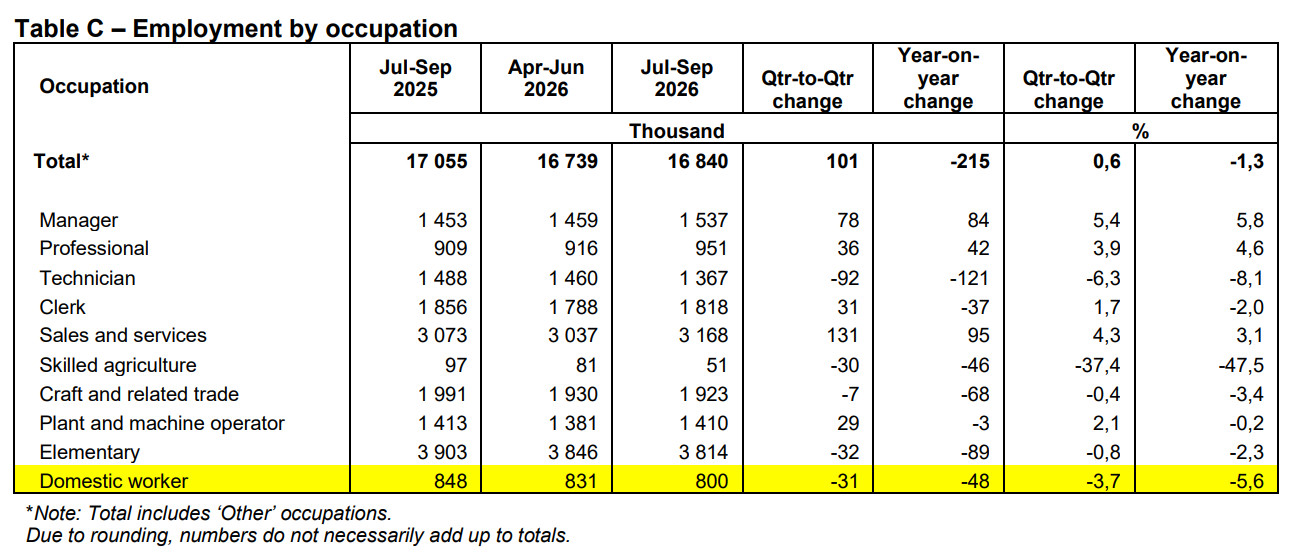
Domestic worker jobs in South Africa crumbled by 3.7% in the third quarter of 2026, with 31,000 jobs going up in smoke.
This is according to the latest Quarterly Labour Force Survey (QLFS) from Stats SA, marking the lowest number of domestic worker jobs in the country since the COVID-19 pandemic in 2020.
The data show that there are 800,000 domestic workers employed in the country, down 3.7% from Q2 and 5.6% from Q3 2025.
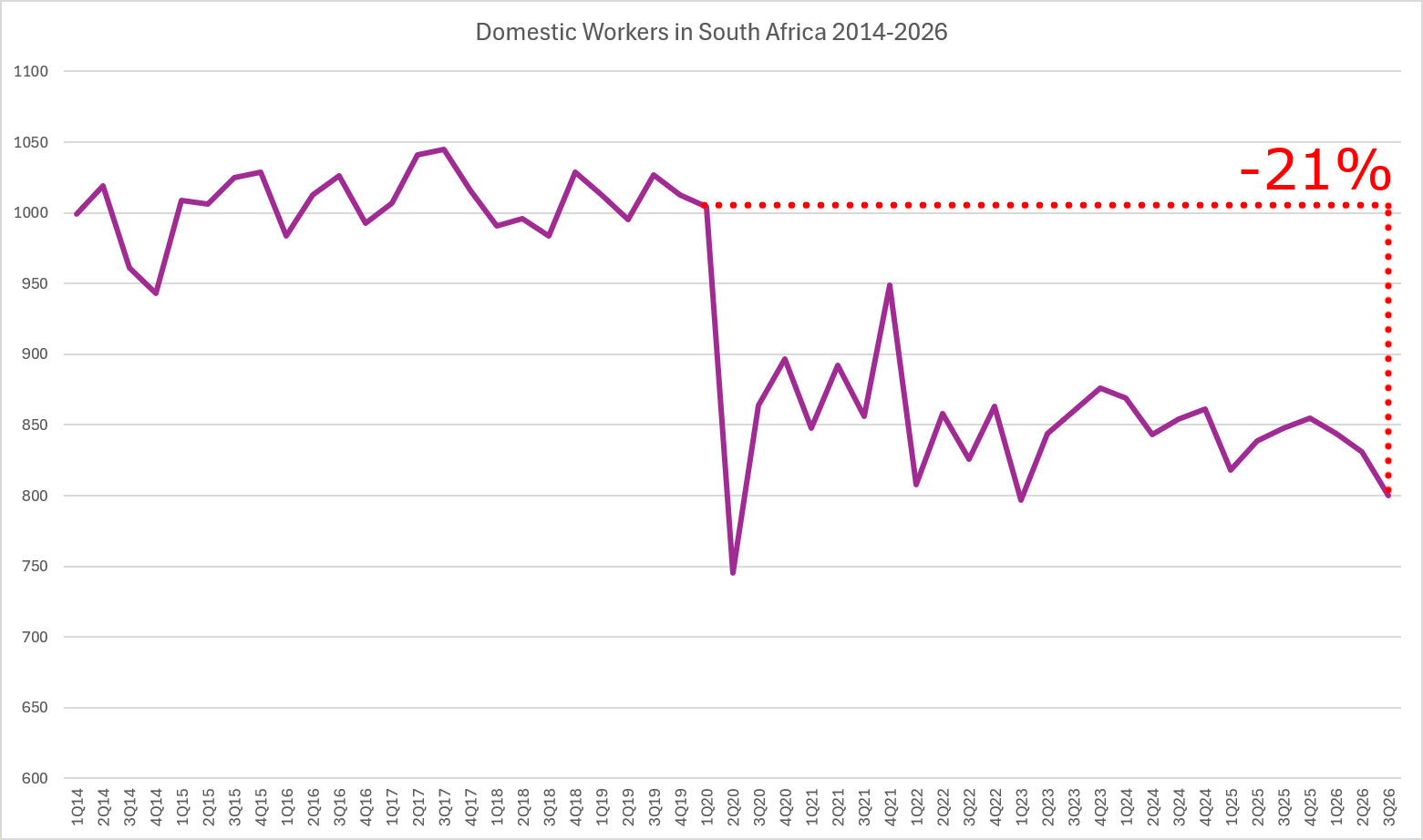
The only time fewer domestic worker jobs were recorded was in the second quarter of 2020, when 745,000 jobs were counted.
This was the quarter when a hard lockdown hit South Africa in the wake of the COVID-19 pandemic, which shuttered entire industries and sectors of the economy.
797,000 jobs were counted in Q3 2023, but at the time that reflected a smaller 11,000-job year-on-year drop. This time, 48,000 domestic worker jobs disappeared year-on-year.
Reflecting the significant loss of domestic workers in the country, employment in private households was down 7.9% year-on-year, Stats SA said.
This reflected a total loss of 87,000 jobs year-on-year—more than half (55%) of which were domestic workers.
While domestic worker jobs slowly returned following the pandemic, they never reached pre-COVID levels and have remained below 900,000 since 2021.
Pre-pandemic (Q4 2019), figures fluctuated around 1 million domestic workers. When factoring in the seasonal variations and potential base, groups like SweepSouth put the figure closer to 1.2 million.
Using official data, domestic worker jobs in Q3 2026 are 21% lower than before COVID-19, reflecting a permanent loss of what was once a thriving segment of the workforce.
Anti-foreigner protests hit
The reasons for the non-recovery in the sector are manifold, ranging from the higher cost of living, which places financial pressure on households, to increased emigration and red tape for employers.
More recently, anti-immigrant sentiment and the threat of violence towards foreign nationals have likely fed through to the data.
The Q3 review period covers July to September 2026. These are the months directly following a wave of anti-immigrant protests in the country.
Following a rise in anti-foreign sentiment and xenophobic violence around a protest-group-set deadline of 30 June 2026, thousands of migrant workers fled South Africa back to their home countries.
A Bloomberg report in July noted that authorities had processed about 67,000 migrants for deportation or voluntary repatriation in recent months, following mass protests against illegal foreign nationals.
Reports later pointed to more than 178,000 African immigrants having fled or been deported from South Africa following the deadline.
While this would have a direct impact on employment numbers in the domestic worker sector, the xenophobia also coincided with the processing of the new Employment Services Amendment Bill, which is adding pressure on the employer side.
The bill aims to bring sweeping changes to the rules governing the employment of foreign nationals in South Africa.
Most notably, the bill proposes imposing a R100,000 fine on employers hiring illegal foreign workers as a first offence.
This penalty can escalate to up to R1 million or even jail time if employers continue to disregard the country’s employment laws.
Critically, the bill applies to all employers, including private households.
This means any homeowners who employ domestic workers without the legal right to work in South Africa could face significant penalties.


















 Loading ...