

Over R1 trillion own goal for South Africa



South Africa’s logistics industry is costing the country R1.16 trillion a year, equivalent to almost 15% of gross domestic product (GDP).
This is due to the high cost of moving goods across the country and the potential savings that could be unlocked through greater efficiency.
According to Malcolm Herbert, a director at Sapphire Financial Services, the figure reflects the cost of trucks and fuel, with warehousing, inventory management, staffing and the geographical distribution of businesses all contributing to the enormous expense.
“Logistics in this country is costing us almost 15% of GDP. It seems like a crazy number,” Herbert said in an interview.
He explained that South Africa’s reliance on road freight is a major contributor, with approximately 85% of the country’s freight transported by road rather than rail.
However, Herbert said businesses often underestimate the wider costs involved in managing distribution networks.
These include the cost of holding inventory, operating warehouses, employing the people responsible for managing logistics and ensuring that goods reach their destinations.
Additionally, Herbert said companies that have expanded over the years often find themselves with larger overhead structures, additional distribution centres, and more freight moving around than they actually need.
These arrangements can be difficult to unwind because they have developed gradually alongside the business.
Fleet age and fuel efficiency are other considerations, particularly as diesel prices place pressure on transport operators.
Herbert said there is potentially significant room to reduce South Africa’s logistics bill, although the savings depend on several factors.
He referred to a theoretical model that suggested that approximately R149 billion could potentially be removed from the country’s logistics costs.
He cautioned that this was not a guaranteed saving, but said improving the efficiency of the country’s rail network would be an important part of achieving it.
Ports are a major problem
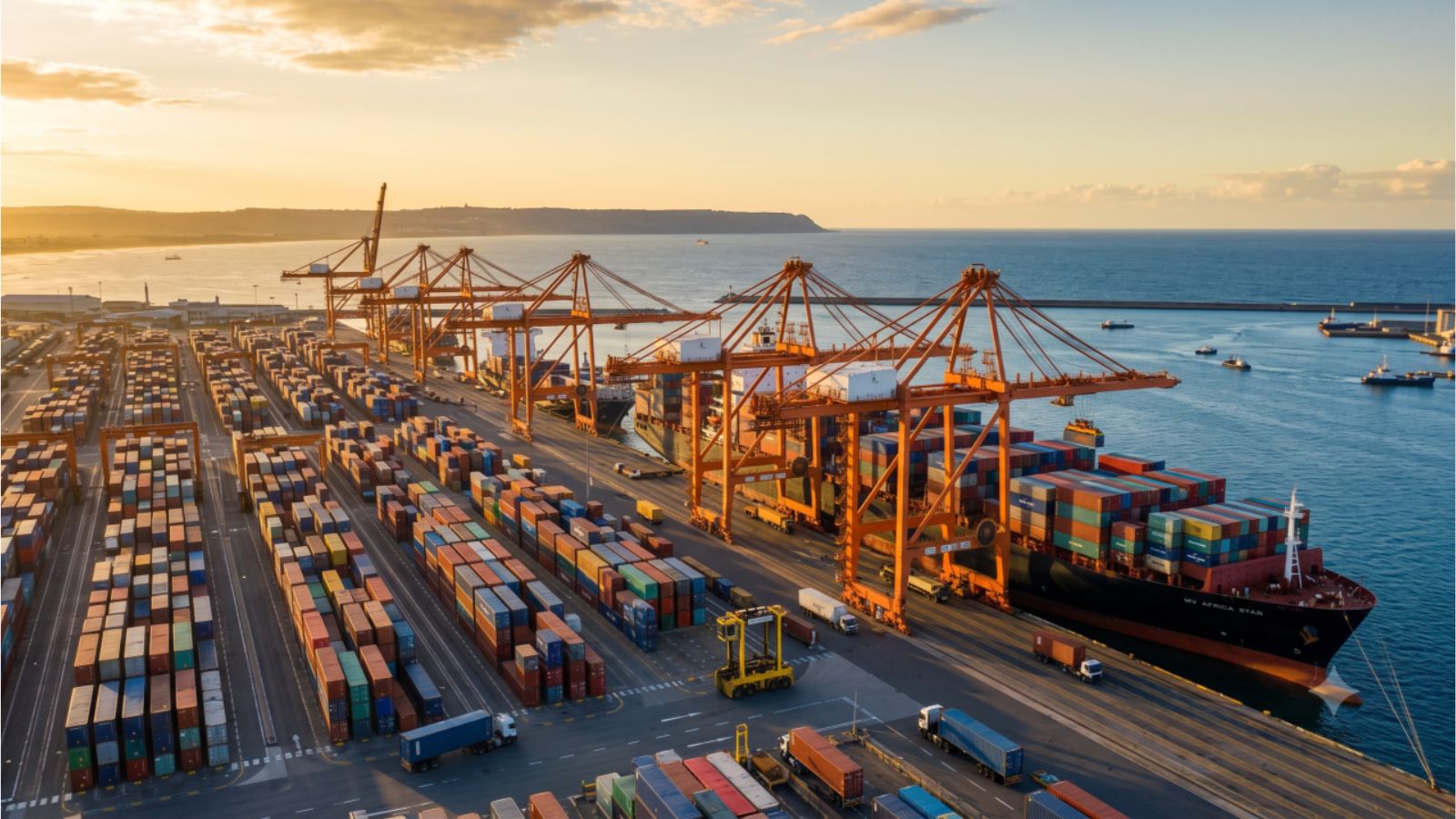
South Africa’s current 85:15 split between road and rail freight means the rail system is struggling to service the country’s actual logistics requirements, despite its potential to reduce transport costs.
Port congestion is another major source of inefficiency, with delays creating knock-on effects throughout supply chains.
Herbert cited a recent shipment that was delayed in Durban harbour for more than a month.
He explained that when goods are held up for four weeks, production can be delayed and businesses are forced to reorganise their logistics schedules.
If the delayed freight was supposed to be consolidated with other shipments, companies may also lose the opportunity to transport everything together, resulting in additional shipments and expenses.
Herbert said the potential savings represent money that could otherwise remain in businesses rather than being absorbed by inefficient supply chains.
“Even if the number is smaller or bigger at the end of the day, that is absolutely a margin for the companies.”


















 Loading ...