

Bad news for employers in South Africa


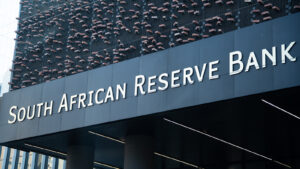
The South African Reserve Bank (SARB) has noted that South Africans may demand higher wages in the coming months, driven by the surge in fuel prices over the last year.
In a special bulletin, the Reserve Bank said the impact of fuel price increases on wage growth would likely not be immediate but would unfold slowly over the coming months.
The bulletin tracked both wage expectations and real wage growth in the aftermath of a major fuel price hike.
The study found that while wage expectations responded immediately, real wage growth occurred slowly.
“Wage growth does not respond significantly on impact,” the SARB said. “Instead, the response emerges with a lag, becoming statistically significant after one quarter and reaching about 1.5 percentage points after two quarters.”
“These results suggest that oil price shocks are eventually transmitted to realised wages, but that the pass-through occurs gradually rather than immediately.”
The Reserve Bank attributed this gradual change to how wages are typically negotiated in South Africa, through collective bargaining.
Wage agreements are often negotiated for extended periods, with annual increases agreed on in advance.
The SARB noted that “negotiated wage agreements and multi-period wage contracts may limit the short-run adjustment of wages.”
“Many wage agreements are negotiated for multiple years, with future wage increases specified in advance or linked to inflation outcomes.”
“Consequently, wages may not respond immediately to shocks such as an increase in oil prices, even when those shocks raise inflation and inflation expectations.”
While fuel price increases may not have an immediate impact on wage growth, they still affect salaries as they are renegotiated.
One area in which the SARB noted a more sudden impact was wage expectations, which the Reserve Bank said could indicate future increases.
“If changes in wage expectations are subsequently reflected in realised wage growth, these expectations may therefore provide an earlier indication of emerging wage pressures,” it said.
“While realised wages may be slow to adjust because of existing wage agreements, wage expectations can be revised immediately following a shock.”
Not a perfect indicator

While the Reserve Bank noted a relationship between wage expectations and future wage growth, it said that this correlation was not set in stone.
Instead, the SARB said wage expectations could serve as an indicator of emerging wage-setting pressures, rather than relying solely on realised wage data.
“These results should not be interpreted as conclusive proof of a causal relationship between wage expectations and realised wage growth,” it said.
“More broadly, the results indicate that survey-based wage expectations may provide an earlier indication of emerging wage pressures than realised wage data alone.”
It noted that trade unions often sustain wage expectations for longer periods after a surge in fuel prices, which is important given their role in wage negotiations.
Overall, the SARB said wage-setting pressures may emerge after fuel price shocks, even if wage data does not immediately reveal this.
“The important implication is therefore that realised wage data may understate wage-setting pressures during the period before wages are renegotiated,” it said.
Fuel prices have risen sharply in South Africa over the past year, leading to inflation consistently outpacing the country’s 3% target.
In October 2026, the country’s inflation rate reached 5.2%, the highest monthly rate this year and its highest level since May 2024.
Fuel prices have surged in South Africa due to high global oil prices triggered by conflicts such as the US-Iran conflict.
This conflict led to the closure of the Strait of Hormuz, a key shipping lane for the global oil trade, causing oil prices to consistently break above the $100 per barrel mark through 2026.

















 Loading ...