

Trouble for Dis-Chem in shopping malls in South Africa


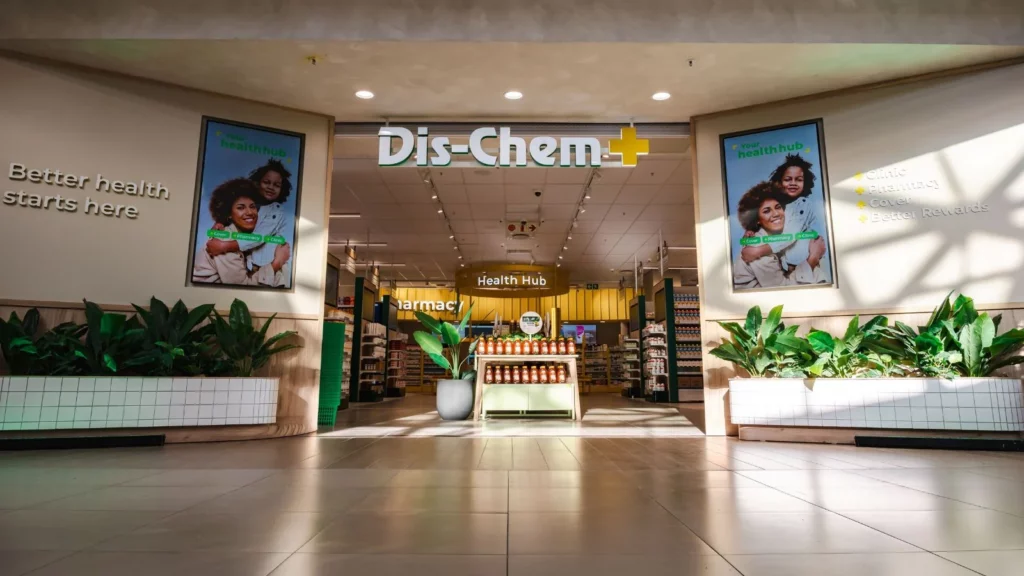
Pharmacy retail group Dis-Chem faces a tougher time buying up the competition and may face future hurdles in entering shopping malls in South Africa.
This comes as the Competition Commission of South Africa has recommended tighter controls and regulatory changes to prevent the country’s retail pharmacy market from becoming a duopoly.
The recommendations are contained in an Impact Study conducted by the Commission, following Dis-Chem’s acquisition of independent pharmacies over the past 10 years.
Between 2016 and 2025, Dis-Chem completed 23 retail pharmacy acquisition transactions, which cumulatively added 72 independent pharmacy stores to its corporate network
These acquired stores accounted for approximately 23% of Dis-Chem’s total 317 corporate store footprint by its 2026 financial year.
The Commission noted that only three of these transactions triggered “notification thresholds” in regulations for further scrutiny.
This, it said, indicated that Dis-Chem was engaging in a “merger creep” strategy, which has long-term implications for market competition, especially for independent groups.
As part of the study on the acquisitions, the commission found that the country is at risk of a pharmacy market oligopoly, or even a duopoly between Dis-Chem and Clicks.
According to the Commission, the full impact of Dis-Chem’s acquisition sweep on competition is not easy to characterise in any one way.
The assessment established that retail pharmacies compete on price, service quality, location and convenience among many other factors.
However, in the case of Dis-Chem’s sweep, the group gained many important competitive advantages due to its integration of firms into its wholesale and distribution operations.
This enabled the group to achieve demand-driven economies of scale and improve its procurement and bargaining power, the Commission said.
This translated to better distribution, better stock availability and lower costs.
Importantly, this also made the group an appealing tenant for high-traffic locations, such as shopping malls.
This has serious implications for independent pharmacies’ long-term competitiveness, given their lack of scale and integration and limited access to these preferred sites and locations, the commission said.
For consumers, Dis-Chem’s rapid expansion has led to pricing benefits, including lower dispensing fees, lower prices for unscheduled medicines, and a wider choice of front-shop products.
However, the Commission said that the market appears to be on a trajectory toward consolidation at the retail and wholesale levels, which could be detrimental to consumers in the long run.
Competition Commission says that changes are needed

To prevent South Africa from becoming a duopoly or oligopoly, the Commission recommended that the government implement regulatory changes.
This includes tighter merger controls, so that more factors are taken into consideration by authorities when takeovers are put to them.
It suggested that the pharmacy licensing regime may also need to be reviewed to “assess what is optimal for ensuring a competitive future retail pharmacy market”.
This would integrate competition criteria directly into licensing assessments and transfer approvals, rather than relying solely on population density ratios and geographic proximity limits.
It also wants licensing rules in shopping centres to prevent property developers from terminating independent leases to accommodate corporate chains.
The Commission said it is actively engaging the National Department of Health on the licensing regime and its competition implications.
The Commission also highlighted the need to bring corporate franchise operations under regulatory oversight.
It suggested that authorities move away from evaluating local market concentration strictly by store counts and include measures such as revenue market share.
Notably, the commission said that mechanisms need to be established to monitor and assess “merger creep” of this kind.


















 Loading ...